If you’re using postcards for real estate marketing, the strategy matters more than the design.
“Just Listed,” “Just Sold,” and farming campaigns all serve different goals. The best choice depends on whether you want immediate leads, long-term visibility, or consistent brand recognition in a specific area.
Why Most Real Estate Postcards Don’t Work
A lot of agents send postcards… but few see results.
Not because postcards don’t work, but because the strategy is unclear.
They mix messages. They send once and stop. They don’t align the campaign with a goal.
The result? No calls. No listings. No ROI.
If you want postcards to actually generate business, you need to choose the right type for the right moment.
The 3 Core Real Estate Postcard Strategies

Most successful real estate campaigns fall into one of these three categories:
- Just Listed → Create awareness fast
- Just Sold → Build trust and credibility
- Farming → Stay top-of-mind over time
Each one works, but only if used correctly.
1. Just Listed: When You Need Immediate Attention
A “Just Listed” postcard is designed to do one thing: get eyes on a property quickly.
This is your moment to:
- Attract potential buyers
- Show sellers you’re active
- Generate immediate interest in the area
A well-designed Postcards can help you get that visibility fast—especially when distributed locally.
When it works best:
- New listings in competitive areas
- Properties that need quick exposure
- Agents trying to establish presence in a neighborhood
Where people go wrong:
- Too much information
- No clear call to action
- Poor image quality
Keep it simple. One strong photo. One clear message.
2. Just Sold: When You Want to Build Authority
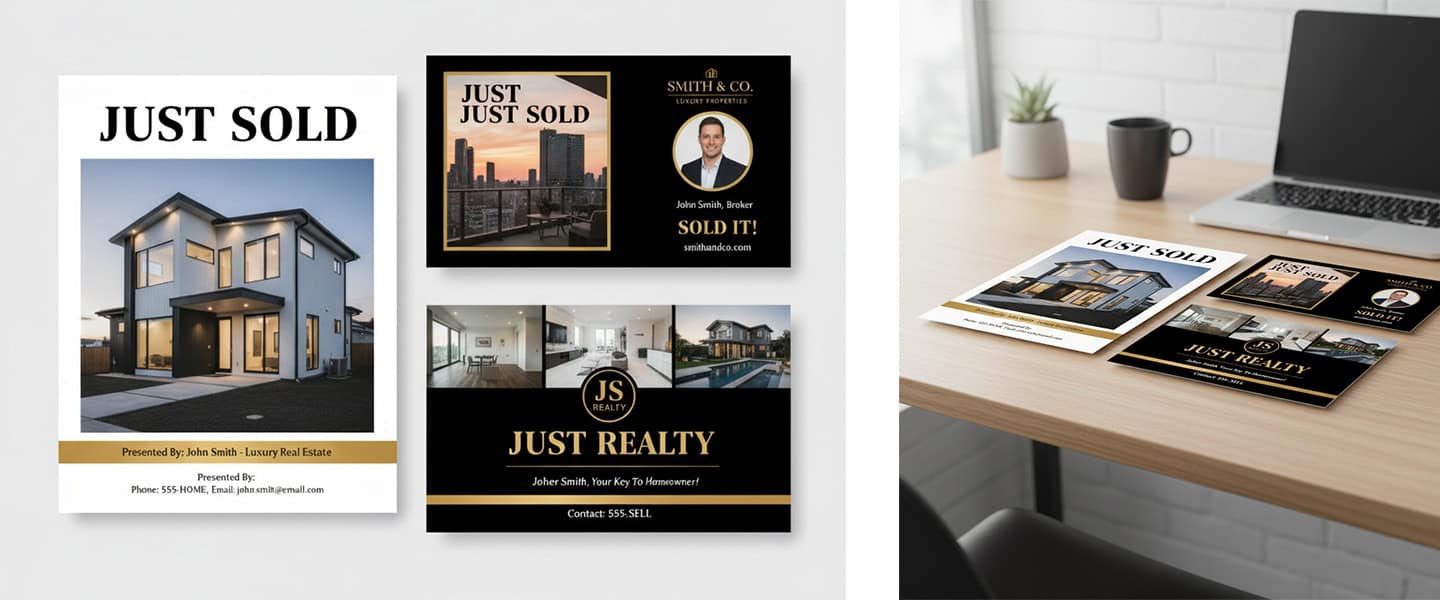
“Just Sold” postcards are not about the property, they’re about you.
They signal:
- You get results
- You close deals
- You understand the local market
Over time, this builds trust with homeowners who may be thinking about selling.
When it works best:
- After closing a deal
- In neighborhoods where you want more listings
- As part of a consistent branding strategy
What makes it effective:
- Clear proof (“Sold in X days”, “Over asking price”)
- Clean, professional design
- Repetition over time
If you want to understand how these campaigns fit into a broader strategy, this guide on
Spring Real Estate Postcards: Farming, Just Listed & Open House Campaigns That Convert
breaks it down further.
3. Farming: When You Want Long-Term Listings
Farming is where most agents hesitate, but it’s also where the biggest opportunities are.
Instead of sending one postcard, you:
- Choose a specific neighborhood
- Send consistently over time
- Become the agent people recognize
This is not about immediate results. It’s about being the obvious choice when someone decides to sell.
When it works best:
- You want consistent listings
- You’re focused on a specific area
- You’re building a long-term brand
What makes it work:
- Consistency (monthly or bi-weekly)
- Clear, recognizable branding
- Relevant local messaging
This is where most agents either win, or give up too early.
Which Strategy Should You Choose?
This is where most people get stuck.
Here’s the simplest way to decide:
- If you need immediate attention → go with Just Listed
- If you want to build credibility → use Just Sold
- If you’re playing the long game → commit to Farming
The mistake isn’t choosing one, it’s trying to do all three without a clear plan.
What Actually Drives Results (Not Just Activity)

Sending postcards isn’t enough.
What matters is:
- Consistency
- Clear messaging
- Matching the strategy to your goal
If you’re just getting started, you might also want to look at 6 Essential Print Materials Every Real Estate Agent Needs to Stand Out Locally to see how postcards fit into a bigger system.
Final Recommendation
Start simple. Pick one strategy based on your goal:
- Need visibility → Just Listed
- Want trust → Just Sold
- Want listings → Farming
Then execute it consistently with high-quality Postcards that reflect your brand.
Ready to Launch Your Campaign?
Explore real estate postcard options here: Postcards