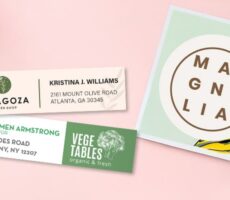
You don’t necessarily need custom-printed boxes to make an order feel like it came from your business.
Sometimes, one well-placed sticker can do the job.
A plain shipping box can carry your logo. Tissue paper can be sealed with a branded message. A bakery bag can become more recognizable with a colorful sticker. An online order can include a small “Thank you” sticker that makes the package feel more personal.
For small businesses working with limited packaging budgets, custom stickers offer a flexible way to add branding without redesigning every box, bag, envelope, or container you use.
If you’re still deciding on materials, finishes, or formats, our custom sticker printing guide covers the main options to consider.
The question is: where should you put them, and what should they say?
Here are practical custom sticker ideas for packaging—from the outside of the box to what customers discover after they open it.
Before the Package Is Opened: Make the Outside Recognizable
The customer’s experience starts before they see the product.
If you’re shipping orders in plain boxes, mailers, bags, or envelopes, stickers can introduce your branding immediately.
Turn a Plain Box Into Branded Packaging
Start with the simplest option: your logo.
Place a branded sticker on:
- Shipping boxes
- Paper bags
- Mailers
- Envelopes
- Takeout packaging
- Product boxes
You don’t necessarily need to cover the package with branding. One strategically positioned logo can be enough.
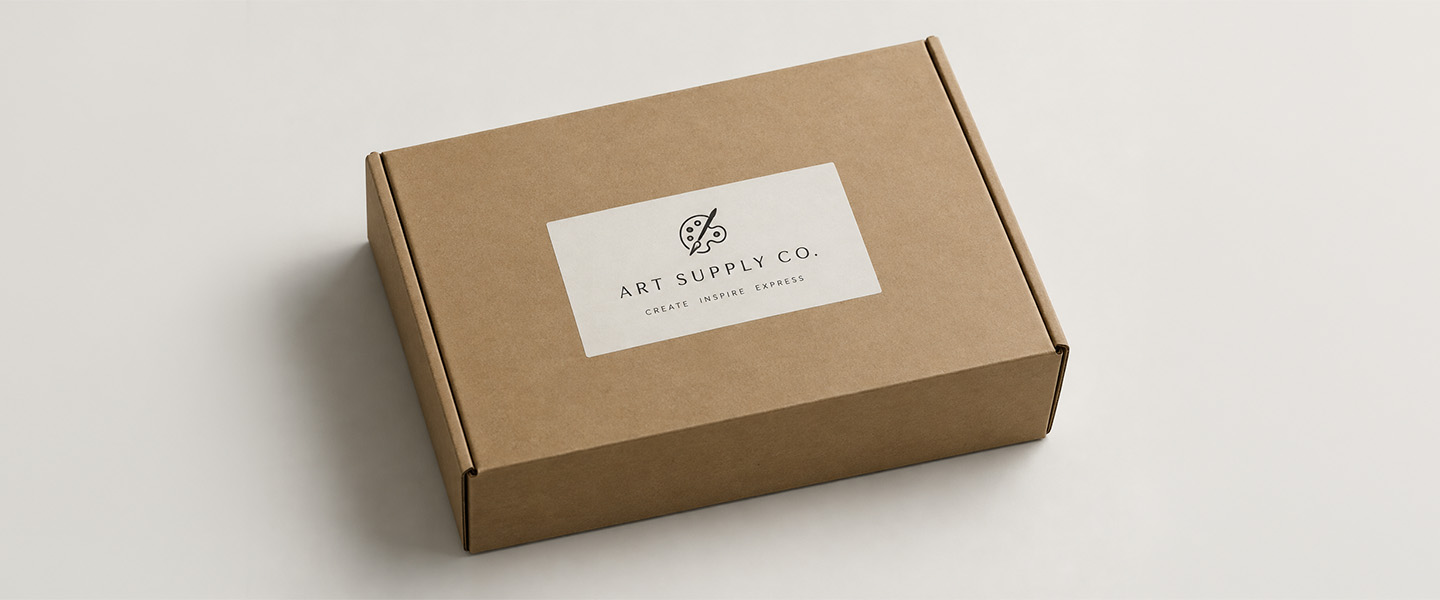
Imagine two identical kraft boxes.
One is completely blank.
The other has a clean circular sticker featuring the company’s logo and brand colors.
The second box immediately feels more intentional—even though the underlying packaging hasn’t changed.
This can be particularly useful for small ecommerce businesses that aren’t ready to invest in fully customized boxes.
Shopify includes custom stickers and tape among its small-business packaging ideas, noting that these elements can add recognizable brand imagery to otherwise simple packaging.
Go Beyond the Logo
A logo isn’t your only option.
Try turning the outside sticker into part of your brand personality.
A coffee company might use:
Something good is brewing inside.
A candle company:
Your cozy night just arrived.
A bakery:
Made with butter. And lots of it.
A pet brand:
Your human ordered this for you.
A stationery company:
Warning: may cause excessive organization.
These messages give the package personality before the customer even opens it.
The tone should sound like your business, though. A playful phrase that works for a pet brand may feel completely wrong for a luxury skincare company.
While They’re Opening It: Make the Unboxing Feel Intentional
Now the customer opens the package.
This is where stickers can do more than display a logo—they can become part of the packaging experience.
Use a Sticker as a Tissue Paper Seal
Wrap the product in tissue paper and secure it with a branded sticker.
It’s simple, but it creates an extra step in the unboxing experience:
Open package → see wrapped product → break branded seal → discover product.
For a more coordinated presentation, you could combine a sticker seal with custom tissue paper.
The sticker doesn’t necessarily need to repeat the exact same branding as the tissue.
For example:
Tissue: Repeating logo pattern
Sticker: Packed just for you.
Or:
Tissue: Brand colors
Sticker: Logo
Keeping the elements related without making them identical can make the packaging feel more thoughtfully designed.
Seal Paper Bags With a Branded Sticker
This works particularly well for:
- Bakeries
- Cafés
- Farmers market vendors
- Boutiques
- Gift shops
- Handmade-product businesses
- Pop-up stores
Instead of ordering a different custom bag for every product or season, you can use a neutral bag and change the sticker.
A bakery could use the same kraft bags throughout the year but rotate stickers:
Spring: illustrated flowers
Summer: Hello, sunshine.
Fall: autumn color palette
Holiday season: festive brand illustration
The base packaging stays the same while the visual identity changes.
Make the Sticker Say Thank You
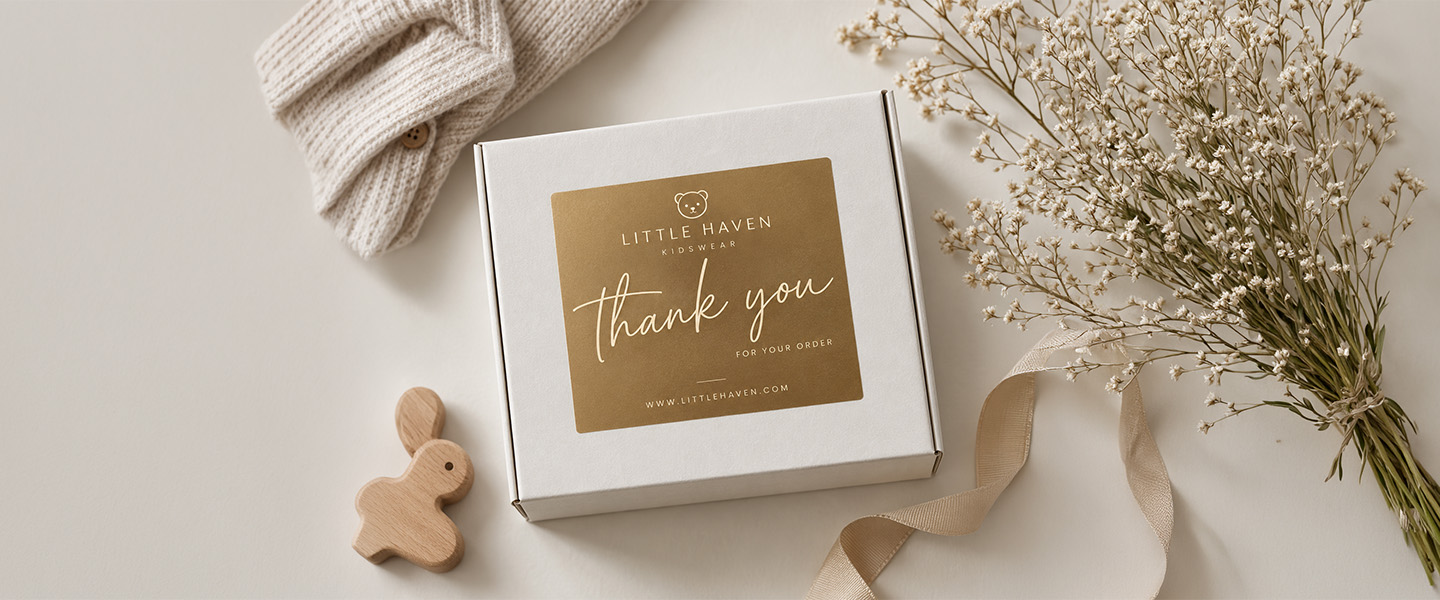
A package is also an opportunity to acknowledge the person who bought from you.
A small sticker could simply say:
Thank you for supporting our small business.
But you can make it more specific to the brand.
For example:
Fashion boutique
You have excellent taste. Thanks for shopping with us.
Coffee brand
Thanks a latte.
Bookstore
Thanks for giving another book a home.
Plant shop
Thanks for helping something new grow.
Beauty brand
Packed with care, just for you.
The goal isn’t to find the cleverest possible phrase.
It’s to make the interaction feel human.
For brands that want more room to write a personal message, a sticker can also work alongside a printed notecard rather than trying to fit the entire thank-you message onto the packaging itself.
Use Stickers to Show Who Packed the Order
Here’s an easy idea for small teams:
Packed with care by: Maya ♡
or:
Packed by Alex
with space for a handwritten name or initials.
This works especially well for:
- Handmade businesses
- Small ecommerce brands
- Bakeries
- Subscription boxes
- Boutiques
- Artisan products
It subtly reminds the customer that a real person prepared their order.
You can even create several versions featuring team members’ names if that fits the personality of the business.
Turn Packaging Stickers Into Product Information
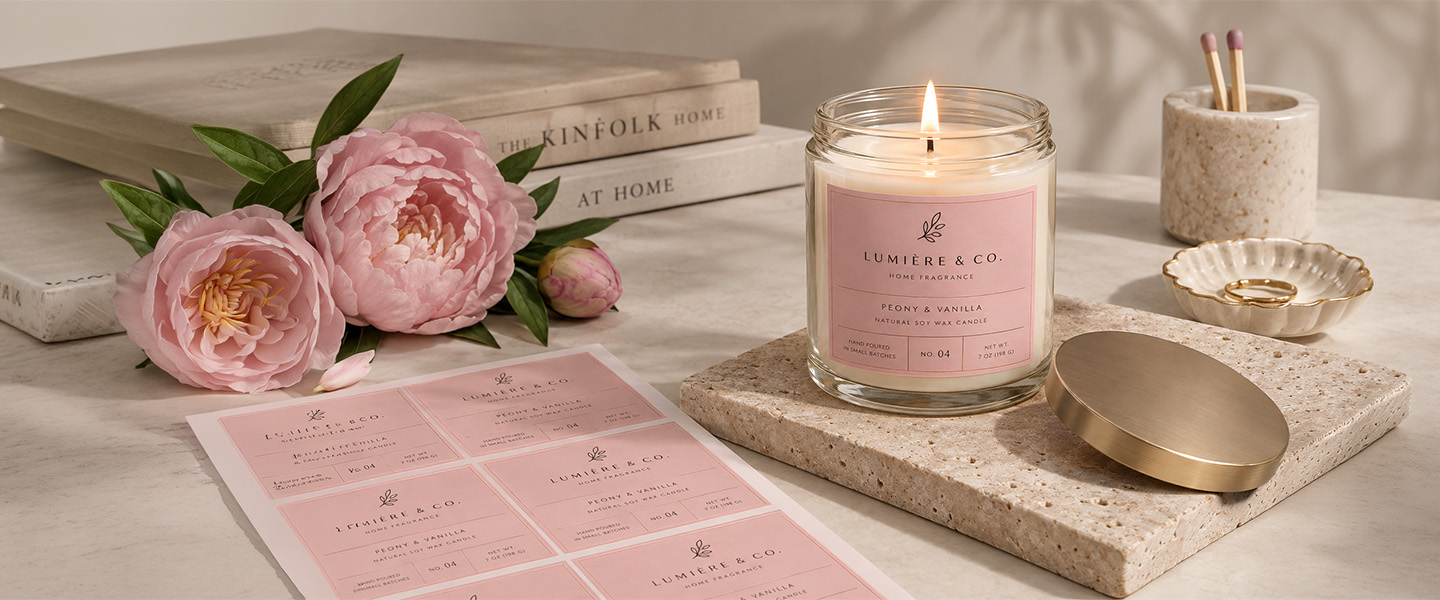
Not every sticker has to be decorative.
Sometimes the most useful sticker is the one that answers a question.
For example:
Candle business
First burn?
Let the wax melt to the edges before extinguishing.
Clothing brand
Care tip
Wash cold. Hang dry.
Handmade ceramics
Handmade with care
Slight variations make every piece unique.
Food product
A sticker might help identify:
- Flavor
- Batch
- Product variation
- Storage information
- Preparation instructions
Gift business
A little something for you.
or:
Don’t open until December 25!
This can be especially helpful when the business uses the same basic packaging for multiple variations of a product.
However, be careful when stickers contain required product information. Packaging and labeling requirements vary by product category. In the U.S., for example, the Fair Packaging and Labeling Act requires certain consumer commodities to display information such as product identity, responsible business information, and net quantity, while FDA-regulated products can have additional requirements.
If a sticker is serving as an actual product label rather than decorative branding, check the regulations that apply to your product before designing it.
Add a QR Code That Has a Purpose
A QR code can turn a small packaging sticker into a bridge between the physical order and your online business.
But don’t add one just because there’s empty space.
Give customers a reason to scan.
Instead of:
Scan me
try:
Scan for care instructions
or:
See how your order was made
or:
Scan for 10% off your next order
or:
Show us how you styled it
or:
Watch the setup guide
A packaging QR code could lead to:
- Product instructions
- Video tutorial
- Recipes
- Loyalty program
- Review page
- Social media
- Reorder page
- Product-care guide
- Behind-the-scenes content
- Customer support
- Next-purchase offer
Always test the QR code at its actual printed size before ordering a large quantity of stickers.
Create a “Share Your Order” Sticker
If unboxing is part of your brand experience, invite customers to share it.
For example:
Show us your unboxing!
@yourbrand
Or:
We want to see it.
Tag @yourbrand
Or:
Made it to you!
Share with #YourBrand
This can be especially relevant for visually appealing products such as:
- Jewelry
- Clothing
- Candles
- Cosmetics
- Stationery
- Gifts
- Handmade products
- Food
Don’t make social sharing feel like an obligation.
The sticker should be an invitation, not homework.
Make the Sticker Something Customers Want to Keep
Here’s where packaging stickers get more interesting.
The sticker doesn’t necessarily have to stay on the packaging.
You can include an additional branded sticker inside the order as a small freebie.
Shopify specifically highlights packaging inserts and limited-edition sticker drops as ways brands can distribute stickers beyond their immediate packaging function.
The difference is important.
Compare:
Sticker A:
YOURCOMPANY.COM
versus:
Sticker B:
A fun illustration connected to the brand that someone might actually put on a notebook, laptop, planner, or water bottle.
Sticker B can still be recognizable without looking like a miniature advertisement.
That balance between promotion and something customers genuinely enjoy is also important when you use custom stickers to strengthen your brand.
For example, a coffee brand might create an illustrated coffee cup with a tiny logo.
A bookstore could make a:
Just one more chapter
sticker.
A plant store could use:
Plant parent
with a branded illustration.
A bakery could create an illustrated croissant or cupcake.
The strongest giveaway stickers often give customers something they enjoy while still feeling unmistakably connected to the brand.
Create Collectible Sticker Series
Instead of printing one design forever, create a series.
For example:
Coffee shop
Espresso
Latte
Cold brew
Matcha
Bookstore
Romance reader
Fantasy reader
Mystery reader
Sci-fi reader
Pet business
Dog parent
Cat parent
Treat inspector
Professional napper
Customers may receive a different sticker with each order.
You can even turn it into a small loyalty mechanic:
Collect all four.
This works best when the designs are good enough that customers actually want them.
Don’t manufacture scarcity just for the sake of it. The collectible concept should fit naturally with the brand and audience.
Use Limited-Edition Seasonal Stickers
One advantage of stickers is that you can change a small part of the packaging without changing the entire packaging system.
Instead of creating new boxes for every holiday, keep the base packaging and update the sticker.
Ideas include:
- Valentine’s Day
- Spring
- Mother’s Day
- Summer
- Back-to-school
- Halloween
- Black Friday
- Holiday season
- New Year
For example, a candle company that normally uses:
Made to make home feel good.
could introduce a holiday sticker:
Smells like the holidays.
A bakery could switch its standard logo sticker for a seasonal illustration while keeping the same bags and boxes.
This gives small businesses room to experiment without rebuilding every piece of packaging.
Use Stickers to Highlight a Limited Edition
Seasonal isn’t the only reason to change the design.
Stickers can identify:
LIMITED EDITION
NEW
BEST SELLER
SMALL BATCH
SEASONAL FLAVOR
SPECIAL RELEASE
This can help distinguish products when the underlying packaging is similar.
Imagine a coffee company using the same kraft bag for several varieties. A different color or illustrated sticker for each roast can help customers distinguish them while maintaining a consistent overall packaging system.
Add a Reorder Reminder
Sometimes the best packaging idea is one that helps generate the next purchase.
A sticker could say:
Running low?
Scan to reorder.
This can work particularly well for products customers purchase repeatedly:
- Coffee
- Tea
- Skincare
- Pet supplies
- Food
- Supplements
- Candles
- Household products
You could place the sticker somewhere the customer will encounter it after using the product rather than immediately during unboxing.
For example, a reorder sticker on the bottom or back of a container may become relevant weeks later.
That’s a very different job from a logo sticker on the shipping box—and that’s the point.
Different stickers can support different moments in the customer experience.
Turn a Sticker Into a Next-Purchase Offer
You can also encourage repeat business with a simple offer:
Loved your order? Here’s 10% off the next one.
CODE: THANKYOU10
Or:
Come back soon.
Use code NEXTORDER by 2026.
If you’re including more detailed promotional information, consider pairing the sticker with a printed postcard inside the package. The sticker can handle the branding while the postcard provides enough room for the offer, product recommendations, QR code, and terms.
That keeps you from cramming too much information onto one tiny sticker.
Sticker, Postcard, Tissue Paper—or All Three?
You don’t need every packaging element available.
Think about what each one is supposed to accomplish.
| Packaging Element | Best Job |
| Logo sticker | Make plain packaging recognizable |
| Tissue seal | Create a more intentional unboxing |
| Thank-you sticker | Add personality |
| QR sticker | Connect packaging to digital content |
| Giveaway sticker | Give customers something to keep |
| Postcard insert | Communicate a longer message or offer |
| Custom tissue paper | Extend branding throughout the package |
A small ecommerce brand could start with:
Plain mailer + logo sticker + thank-you card
Then later move to:
Plain box + custom tissue + sticker seal + promotional insert
You don’t need to add five pieces just because you can.
Packaging should support the product, not overwhelm it.
A Few Packaging Combinations to Try
Rather than thinking about individual stickers, it can help to imagine the entire package.
For an Etsy-Style Handmade Business
Outside: Small logo sticker
Inside: Tissue sealed with “Made by hand for you”
Extra: Illustrated sticker customers can keep
Message: Handwritten thank-you note
For a Local Bakery
Packaging: Plain kraft box
Seal: Large branded sticker
Small sticker: Flavor or product name
Seasonal variation: Holiday illustration
For an Ecommerce Clothing Brand
Outside: Minimal logo sticker
Inside: Branded tissue
Insert: Postcard with care instructions
Giveaway: Lifestyle sticker related to the brand
For a Candle Company
Product: Product-identification label compliant with applicable requirements
Box: “Your cozy night starts here” sticker
Inside: Care-instruction card
Extra: Seasonal illustrated sticker
For a Subscription Box
Outside: Monthly theme sticker
Inside: Tissue seal
Products: Individual identification stickers where appropriate
Insert: What’s-inside card
Extra: Collectible sticker that changes each month
Notice that the sticker doesn’t have the same job in every example.
That’s what makes it versatile.
Design the Sticker for Where It Will Actually Go
Before creating your artwork, grab the actual box, bag, jar, tissue paper, or mailer you’re planning to use.
Then ask:
Where will the sticker sit?
A design that looks great by itself may not work once it’s placed across a box seam or wrapped around a curved surface.
Consider:
Size.
Will the sticker overpower the packaging or disappear on it?
Shape.
Does a circle, square, rectangle, or custom-looking graphic work best with the packaging?
The production method can matter too, especially for more distinctive shapes. Our guide to die-cut vs. kiss-cut stickers explains how the two options differ.
Contrast.
Will the design remain visible against a kraft box, white mailer, dark bag, or patterned tissue?
Amount of text.
Can someone actually read it at the finished size?
Placement.
Will it seal something, identify something, or simply decorate it?
Shopify similarly recommends considering where customers will actually use or encounter a sticker when choosing its size and design.
Don’t Make Every Sticker a Tiny Billboard
One of the easiest packaging mistakes is putting the full business identity on everything.
Logo.
Website.
Instagram.
Tagline.
QR code.
Phone number.
Offer.
Product name.
Hashtag.
All on a two-inch sticker.
You don’t need it.
Give each sticker one main job.
A logo sticker should brand.
A QR sticker should drive a scan.
A thank-you sticker should thank.
A product sticker should identify.
A giveaway sticker should be worth keeping.
The package as a whole can communicate the brand without every individual component repeating the same information.
One Important Note About Product Labels
There’s a difference between using stickers to decorate packaging and using them as official product labeling.
If you’re selling regulated or packaged consumer goods, required information may depend on what you’re selling and where you’re selling it.
In the U.S., the Fair Packaging and Labeling Act covers certain consumer commodities and includes requirements around information such as the identity of the product, responsible business, and net quantity. FDA requirements also apply to categories such as foods, cosmetics, drugs, and medical devices.
So if you’re selling products such as food, cosmetics, supplements, or other regulated goods, don’t assume a beautiful logo sticker contains everything legally required on the package.
Check the regulations applicable to your product and location.
FTC Fair Packaging and Labeling Act information
FDA resources for food businesses
Frequently Asked Questions About Custom Stickers for Packaging
How can small businesses use stickers for packaging?
Small businesses can use stickers to brand plain boxes and bags, seal tissue paper, thank customers, identify products, share QR codes, highlight seasonal releases, provide basic instructions, promote repeat purchases, or include a small branded freebie inside an order.
Where should I put a sticker on packaging?
It depends on its purpose. A logo sticker can go on the outside of a box or bag, while a seal sticker can close tissue paper. QR-code or instruction stickers should be positioned somewhere customers can easily see and scan or read them. Always test placement on the actual packaging before ordering a large quantity.
What should I put on a packaging sticker?
Start with one purpose. Depending on the sticker, that could be your logo, a thank-you message, QR code, product information, care instruction, seasonal message, promotional code, or short brand phrase.
Avoid trying to fit all of those onto one sticker.
Are stickers a good option for small-business packaging?
They can be particularly useful for small businesses that use stock boxes, mailers, bags, or tissue paper and want to add branding without customizing every packaging component. Stickers also make it easier to create seasonal or limited-edition variations.
Can I put a QR code on a packaging sticker?
Yes, provided the code remains large and clear enough to scan. Give customers a reason to use it, such as accessing care instructions, reordering a product, watching a tutorial, joining a loyalty program, or redeeming an offer. Test the finished sticker before printing in bulk.
Can packaging stickers be used as product labels?
Sometimes, but decorative packaging stickers and required product labels are not necessarily the same thing. Products subject to labeling regulations may need specific information. Check applicable federal, state, local, and product-specific requirements before using a sticker as an official label.
What makes a good packaging sticker design?
A good design is easy to understand at its finished size, works against the packaging material and gives the sticker a clear purpose. Strong contrast, readable typography, appropriate dimensions, and consistent branding matter more than fitting as much information as possible onto it.
Make the Package Feel Like Your Brand
You don’t need to redesign every shipping box to create packaging customers recognize.
Start with the moments that matter.
What should they see when the package arrives?
What should they experience when they open it?
And is there something worth discovering inside?
One business might need nothing more than a logo seal. Another might use branded tissue and a thank-you sticker. An ecommerce brand might include a collectible design customers can keep. A subscription business might create a different sticker every month.
The best approach isn’t necessarily the one with the most packaging.
It’s the one where each piece has a reason to be there.
Explore custom sticker printing from Overnight Prints to create branded stickers for your next packaging project.