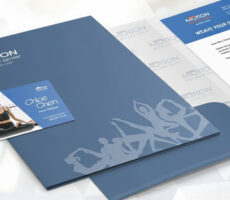
Most customers won’t comment on your notepads.
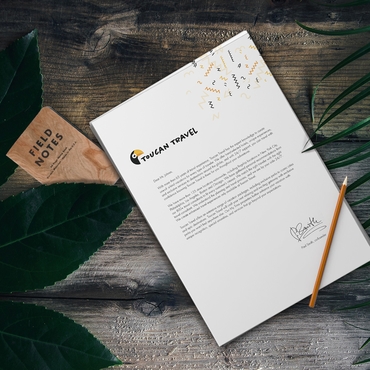
They won’t compliment your letterhead.
They won’t mention your envelopes at all.
And yet, these are some of the first things they notice when they interact with your business.
Office print materials don’t draw attention to themselves. They work quietly, in the background, shaping how professional, organized, and trustworthy a business feels, often before a single word is spoken.
That’s why office branding print materials play a bigger role in customer perception than many businesses realize.
Customers are always observing, just not out loud
When customers step into an office, receive paperwork, or interact with physical documents, they’re subconsciously scanning for cues:
- Does this place feel put together?
- Do details match?
- Does this business feel established?
They rarely articulate these thoughts. Instead, they form an impression and move on.
So a common question is: do customers really notice office prints if they never mention them?
Yes, because noticing doesn’t always mean commenting. It means registering.
Why subtle print matters more than bold branding in offices
Marketing print is designed to stand out.
Office print is designed to blend in, flawlessly.
That distinction matters.
In an office setting, boldness can feel out of place. What customers respond to instead is:
- Consistency
- Clean design
- Familiar structure
Office print materials signal that the business has systems, routines, and standards, all things customers associate with reliability.
Notepads: the print customers interact with the most
Notepads are often the most handled print item in an office.
They’re passed across desks.
Used during conversations.
Referenced after meetings.
Which raises an interesting question: why do notepads influence perception if they’re so ordinary?
Because they’re ordinary on purpose.
A well-designed notepad suggests:
- Preparedness
- Thoughtfulness
- Attention to daily details
Even small things, logo placement, spacing, paper quality, reinforce the idea that this business didn’t improvise.
When a customer leaves with a note written on a branded pad, the business stays with them longer than the meeting itself.
Letterhead: when communication becomes official
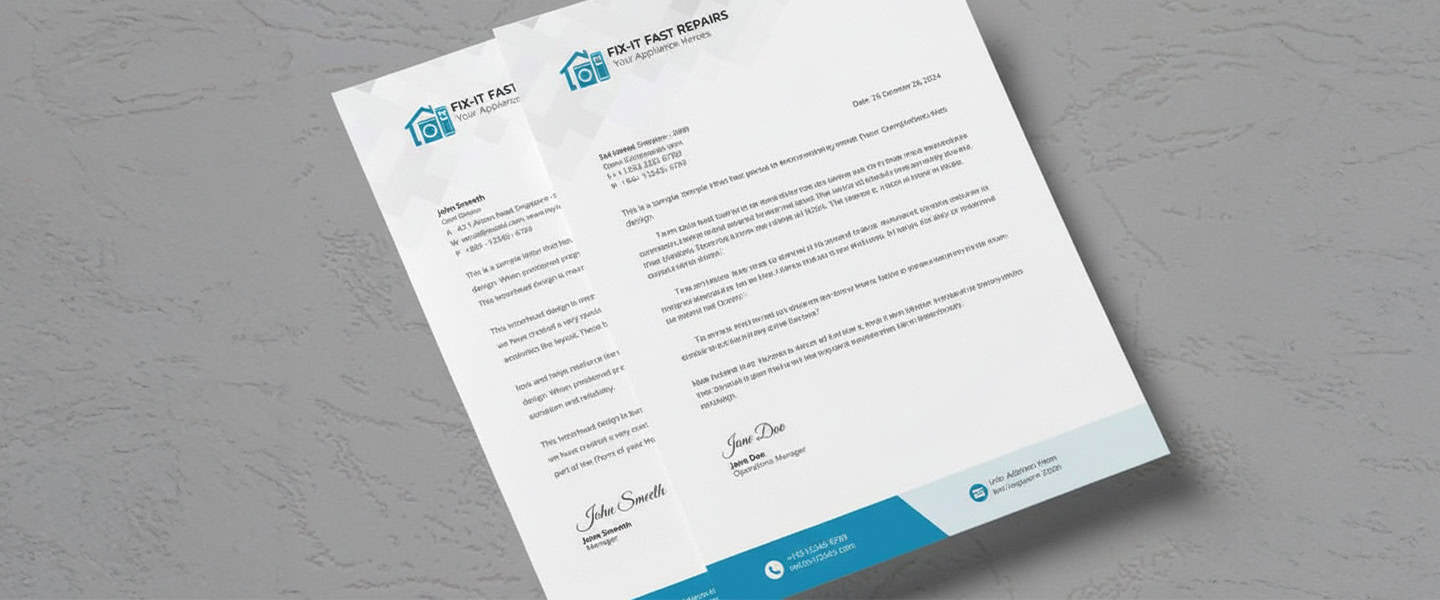
Letterhead often appears at moments when things matter a little more:
- Proposals
- Agreements
- Follow-ups
- Formal confirmations
At that point, customers aren’t just absorbing information, they’re assessing credibility.
So it’s natural to ask: does letterhead still matter if documents are digital?
Yes, because letterhead isn’t about paper. It’s about framing.
A document on letterhead feels intentional. It tells the reader:
“This isn’t casual. This counts.”
As discussed in Custom Letterhead & Envelopes: Why Professional Stationery Still Matters in 2026, formal structure often reassures customers more than polished language alone.
Envelopes: the impression before the impression
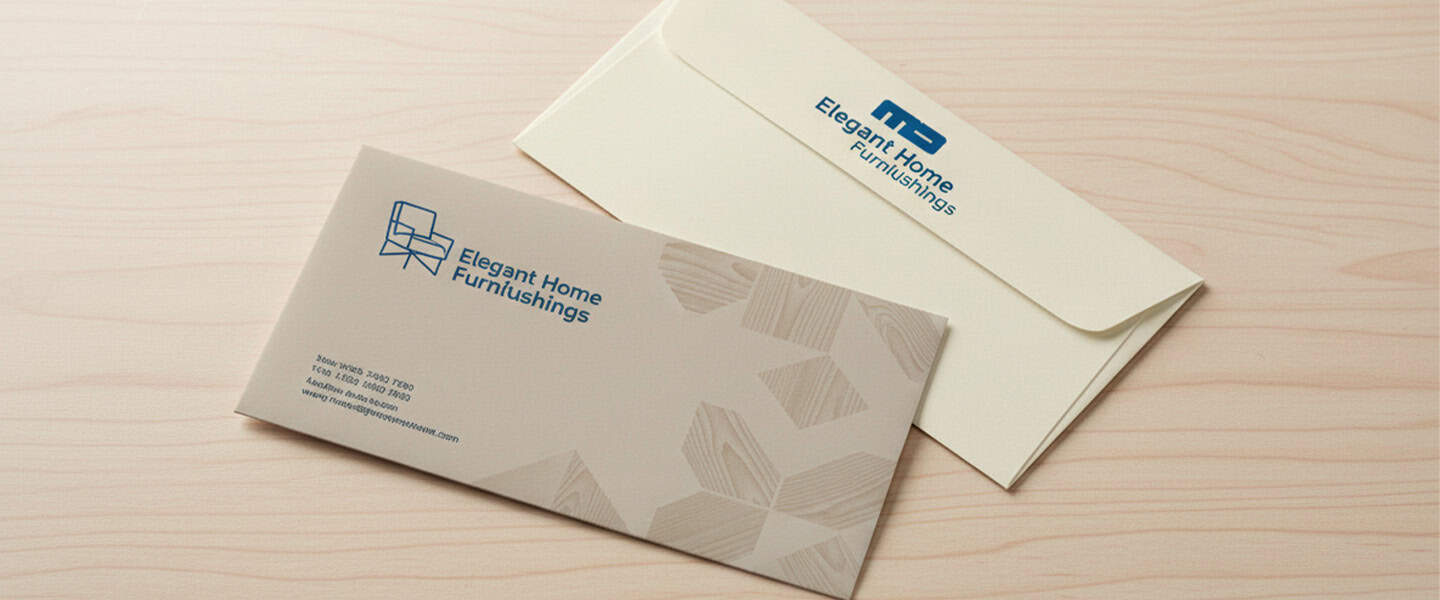
Sometimes the first thing a customer sees isn’t your office or your documents, it’s the envelope.
That moment happens quickly, but it sets expectations immediately.
Customers might not think, “This envelope is well branded.”
But they do think, “This feels legitimate.”
Which leads to another common question: do envelopes really affect how communication is perceived?
Absolutely.
Branded envelopes signal:
- Care in presentation
- Respect for the recipient
- Consistency across touchpoints
They quietly frame what’s inside as important, before it’s even opened.
Consistency is what customers actually notice
Customers may not remember individual details, but they notice when things align.
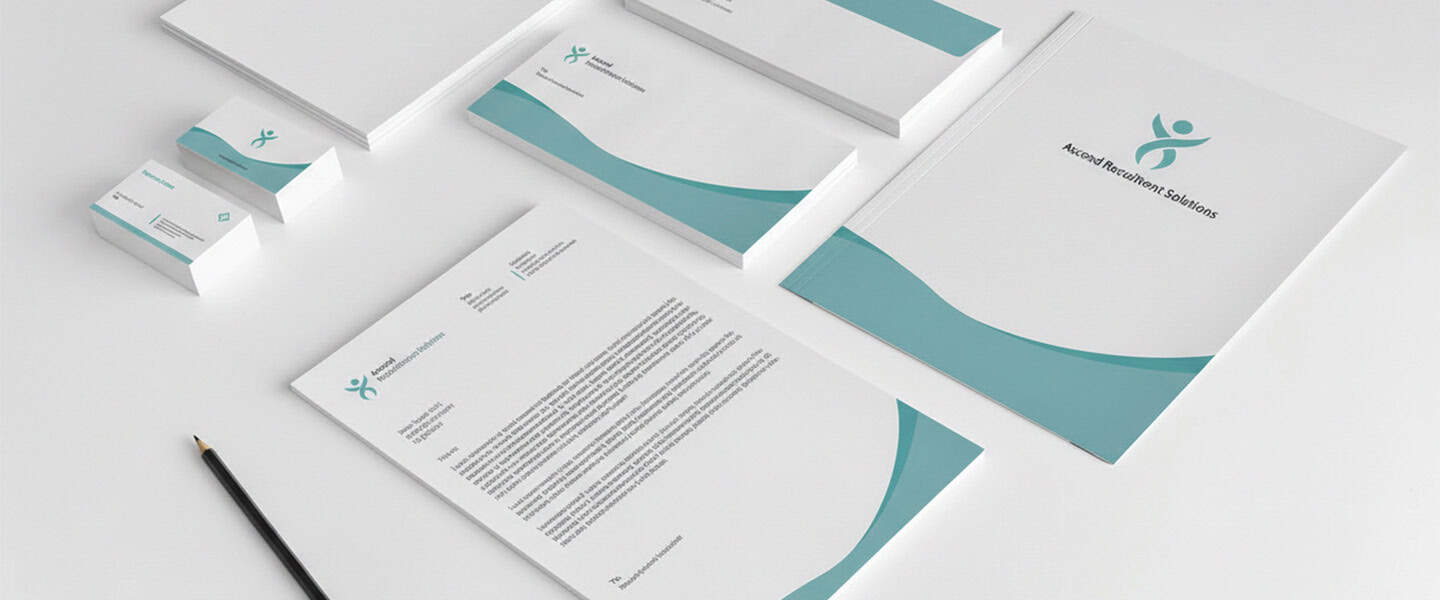
When notepads, letterhead, and envelopes:
- Share the same visual language
- Feel cohesive
- Match the tone of the business
the overall experience feels smooth.
This consistency reduces friction. Customers don’t have to wonder whether a document is official or whether communication is trustworthy, they assume it is.
That assumption is powerful.
What happens when office print is missing or mismatched
Office print rarely draws attention when it’s done well, but it does stand out when it’s missing.
Customers notice when:
- Notes are taken on blank paper
- Documents look improvised
- Materials feel mismatched or outdated
Even if they can’t pinpoint why, the experience feels less polished.
So another fair question is: can inconsistent office print hurt credibility?
Yes, not dramatically, but gradually. It introduces hesitation, which is often enough to weaken trust.
Office print isn’t about branding, it’s about reassurance
Office branding print materials don’t try to sell. They try to reassure.
They reassure customers that:
- This business is prepared
- Communication is intentional
- Processes exist behind the scenes
That reassurance makes everything else easier, conversations, pricing discussions, follow-ups.
Why these details matter more over time
Office print rarely creates a “wow” moment.
Instead, it creates a steady one.
Customers who interact with a business multiple times accumulate small impressions:
- Each document
- Each note
- Each piece of communication
Over time, these add up to a clear conclusion:
“This business knows what it’s doing.”
Final thought: the quiet work of office print
Office prints don’t compete for attention.
They don’t announce themselves.
They don’t demand praise.
They simply support the experience, quietly and consistently.
And that’s exactly why customers notice them…
even if they never say a word.