
Choosing the right sticker depends on where you’ll use it, how durable it needs to be, and how you want your design to look. For packaging and everyday branding, small to medium stickers are usually the most versatile; for outdoor or high-contact surfaces, choose a durable material such as vinyl; and for promotional giveaways, die-cut stickers around 3 inches offer a strong balance of visibility and portability.
Throughout the guide, you’ll find useful links like Sticker vs Label Printing to help you understand the difference between decorative stickers and functional product labels, and Holiday Packaging Ideas for seasonal inspiration.
Sticker Sizes for Printing: Which Size Should You Choose?
For most promotional stickers, 2–3 inches is a versatile starting point, while smaller sizes work well for packaging seals and larger stickers provide more visibility for giveaways, windows and displays.
Sticker sizes can vary widely, and the right dimensions depend on how you plan to use them. Some businesses need small stickers for packaging, while others prefer oversized designs for branding or events.
Below are the most common sizes and when they work best:
Small Stickers (1″–2″)
Small stickers are perfect for packaging seals, logo stickers, small icons, or decorative accents.
Many cafés, boutiques, and subscription boxes use 1–1.5 inch round logos to seal tissue or wrapping. If you’re creating a branded unboxing moment, these are ideal.
Medium Stickers (2″–3″)
This is the most versatile size category. Medium stickers work well as:
- Giveaways
- Laptop decals
- Branded merch
- Product labels
- Price tags
- In-store promo stickers
A 2.5–3 inch sticker is big enough to see clearly but small enough to use anywhere.
Large Stickers (3″–5″)
Large stickers are excellent for statement branding. These are often used as merch pieces, event handouts, or limited-edition designs. Skate shops, gyms, and breweries often choose this size for giveaways that customers love sticking on their bottles, notebooks, or gear.
Sheet Stickers vs. Die-Cut Stickers
- Sticker sheets work well when you want multiple designs on one sheet — great for boutique thank-you kits or holiday packaging.
- Die-cut stickers follow the shape of your design, giving them a polished, premium look.
If you’re unsure which size category fits your use case, think about how customers will interact with the sticker. A seal needs to be small. A giveaway needs to be medium. A merch piece should be larger.
Standard Sticker Size Reference Chart
If you’re unsure what size to choose, these industry-standard dimensions can help:
| Sticker Type | Common Size |
| Small Logo Sticker | 1″–1.5″ Round |
| Packaging Seal | 2″ Round |
| Product Label | 2″ × 3″ |
| Laptop Sticker | 3″ × 3″ |
| Water Bottle Sticker | 3″–4″ |
| Bumper Sticker | 3″ × 10″ |
| Event Giveaway Sticker | 3″–5″ |
| Window Sticker | 5″+ |
Finish & Material Options
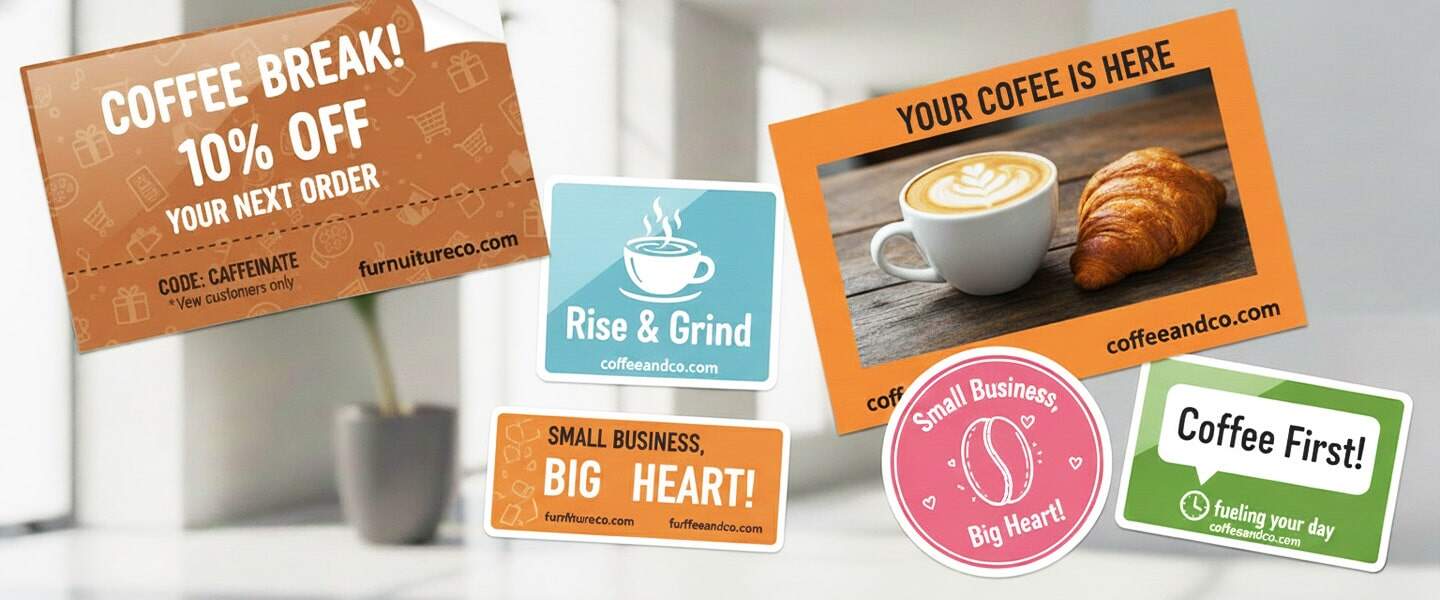
The finish and material you choose determine not only how your sticker looks but also where and how it can be used. In 2026, sticker printing continues to offer a wide selection of premium finishes and durable materials.
Here are the most common options:
Glossy Stickers
Glossy stickers are vibrant, smooth, and durable. They’re great for colorful designs, product giveaways, and outdoor use. The shine enhances bold colors and makes graphics pop.
Matte Stickers
Matte stickers look clean and modern. They’re ideal for minimalist branding, earthy color palettes, and products with a premium feel. Matte finishes avoid glare, making them easy to read in any light.
Clear Stickers
Clear stickers blend into the surface you apply them to, which creates a sleek, professional, “printed directly on the product” look. They’re popular with beauty brands, beverage companies, and minimal packaging designs.
Paper Stickers
Paper stickers are easy to write on and perfect for temporary promotions, labeling baked goods, gift packaging, or seasonal tags. They’re also less expensive compared to vinyl options.
Vinyl Stickers
Vinyl is waterproof, weatherproof, and highly durable, making it the best choice for outdoor use, bottles, vehicles, laptops, or high-contact surfaces. Vinyl is also the go-to choice for merch stickers.
If you’re designing stickers that function more like labels (i.e., product ingredient info or barcodes), the article Sticker vs Label Printing explains how to choose correctly.
Product Link: Stickers
| Option | Best for | Main benefit |
| Glossy | Colorful designs and promotions | Vibrant, shiny appearance |
| Matte | Minimal and premium branding | Low glare and understated look |
| Clear | Bottles and transparent packaging | Design blends into the surface |
| Paper | Temporary labels and packaging | Practical and easy to write on |
| Vinyl | Outdoor/high-contact applications | Greater durability |
Types of Stickers and When to Use Them
Not all stickers are created for the same purpose. Choosing the right type helps improve durability, appearance, and customer experience.
Die-Cut Stickers
Custom-cut to the exact shape of your design. Ideal for giveaways and branded merchandise.
Kiss-Cut Stickers
The sticker is cut while leaving the backing intact. Easier to peel and often used for retail sales.
Sticker Sheets
Multiple designs printed on a single sheet. Popular for planners, subscription boxes, and promotional kits.
Transfer Stickers
Used primarily for lettering, window graphics, and decals.
Clear Stickers
Perfect for premium packaging and products where you want the design to appear printed directly on the surface.
Sticker Printing Methods for Small Businesses
Modern sticker production uses several different printing methods depending on quantity, quality requirements, and material.
Digital Printing
Best for small runs, fast turnaround times, and custom designs.
Offset Printing
Ideal for large-volume orders where consistency and cost efficiency matter most.
Wide Format Printing
Used for oversized decals, wall graphics, and large promotional stickers.
For most small businesses ordering custom stickers, digital printing offers the best combination of affordability, flexibility, and print quality.
Creative Uses for Small Businesses
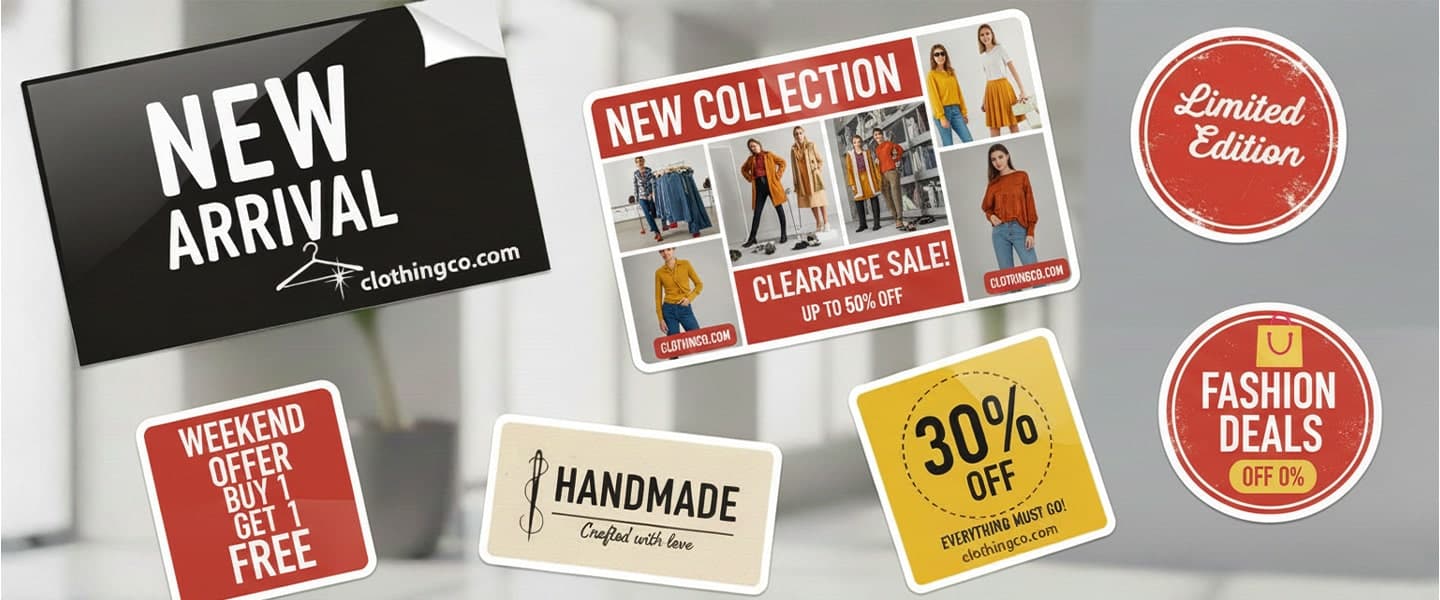
Stickers are one of the most versatile print materials you can add to your marketing toolkit. They’re low-cost, creative, and help build emotional connections with customers.
Here are some of the most effective ways small businesses are using stickers today:
1. Packaging Seals & Unboxing Moments
Custom stickers add instant branding to plain boxes, tissue paper, or envelopes. They make unboxing feel more intentional, a strategy covered in Holiday Packaging Ideas.
2. Freebies Inside Every Order
Customers love branded stickers. They often place them on water bottles, laptops, planners, or cars. This turns every customer into a walking billboard for your brand.
3. In-Store Promotions & Retail Displays
Stickers are great for callouts like “New Arrival,” “Limited Edition,” “30% Off,” or “Handmade.” They help guide customers through your store effortlessly.
4. Event Giveaways
Whether you’re hosting a workshop, attending a fair, or setting up at a pop-up market, stickers instantly attract attention and create conversation.
5. Coffee Shops & Restaurants
Cafés often use stickers on to-go cups, packaging, loyalty cards, or pastry bags. The creative story about a café doubling its online reviews using stickers and coasters, featured in your Coaster & Sticker Review Strategy blog, shows just how powerful stickers can be for small food businesses.
6. Seasonal Campaigns
Limited-edition holiday stickers are inexpensive and create excitement without requiring a full rebrand. Seasonal stickers can be used on packaging, menus, gift boxes, and store displays.
Limited-edition holiday stickers are inexpensive and create excitement without requiring a full rebrand. Instead of relying on overnight sticker printing, many brands plan these campaigns slightly in advance to ensure better print quality and consistency.
7. Product Labels & Ingredient Badges
This includes candles, skincare, handmade goods, foods, and wellness products. Stickers can highlight ingredients, flavors, or scent profiles.
Stickers work across industries because they’re tactile, memorable, and shareable.
What Are the Best Stickers for a Small Business?
The best sticker depends on how your business plans to use it. Die-cut stickers work well for branded giveaways and merchandise, small logo stickers are useful for packaging and order seals, and durable vinyl stickers are better for items that may face moisture or frequent handling.
For businesses starting with one versatile option, a medium-sized branded sticker is often a practical choice because it can be used for packaging, giveaways, events, and customer orders.
Sticker Marketing Strategies That Still Work in 2026
Many businesses underestimate how effective stickers can be as a marketing channel.
Successful brands often use stickers to:
- Encourage social media sharing
- Increase brand visibility on laptops and water bottles
- Create collectible limited-edition designs
- Improve packaging presentation
- Reward repeat customers
- Promote seasonal campaigns
Unlike many digital ads, stickers can remain visible for months or even years after they’re distributed.
Stickers can also complement other offline campaigns. See our guide to postcard marketing strategies that work for more ideas.
Sticker Design for Print vs. Digital Design: What’s Different?
Designing a sticker for professional printing requires a few considerations that don’t always apply to graphics created only for screens.
For printed stickers, pay attention to:
- Resolution: Use 300 DPI at the final print size to help keep images and details sharp.
- Color mode: Prepare colors according to your printer’s file requirements, which may include CMYK.
- Bleed: Extend backgrounds and design elements beyond the trim line when required so unwanted white edges don’t appear after cutting.
- Safe zones: Keep important text and logos away from cut lines.
- Shape and cut lines: Die-cut stickers may require additional consideration around the contour of the design.
- Final size: Design with the sticker’s actual printed dimensions in mind rather than relying on how large it appears on a screen.
A sticker design can look sharp on a phone or computer and still produce disappointing print results if the file resolution, dimensions, or print setup aren’t correct.
Best Practices for Sticker Design
Good design makes your stickers more effective and more likely to be used by customers. Whether you’re designing your first sticker or upgrading an existing set, keep these best practices in mind:
Keep Your Design Simple and bold
Stickers are often viewed quickly or from a distance. A simple design with a strong focal point works better than something complex.
Use High-Contrast Colors
This ensures your sticker is readable on any surface. High contrast is especially helpful for matte stickers or small sizes.
Test Your Shape
Die-cut stickers look premium and tend to attract more attention. Make sure your shape doesn’t create tiny edges that peel too easily.
Maintain Brand Consistency
Your stickers should visually match your business cards, menus, flyers, website, and packaging.
Upload High-Resolution Files (300 DPI)
Sharp edges and clean lines make a huge difference in print quality.
Think About Where Customers Will Stick Them
Laptop? Water bottle? Packaging? Choose materials and finishes accordingly.
A great sticker doesn’t just look good, it travels. It becomes a small piece of your brand that lives on surfaces long after the purchase.
What DPI Should Stickers Be? Why 300 DPI Matters for Printing
For professional sticker printing, artwork should generally be prepared at 300 DPI at the final print size, unless your printer provides different file requirements.
One of the most common reasons stickers print poorly is low-resolution artwork.
For professional results, artwork should be created at 300 DPI (dots per inch) at the final print size.
A file designed at 72 DPI may look fine on a screen but can appear blurry or pixelated when printed.
Before uploading your artwork:
- Use vector files whenever possible
- Export images at 300 DPI
- Convert colors to CMYK when required
- Check text and logo sharpness at actual size
High-resolution files produce cleaner edges, sharper text, and better color reproduction.
How Creators Are Selling Custom Stickers in 2026
Artists, illustrators, and content creators continue to build successful businesses around custom stickers.
Popular sales channels include:
- Etsy shops
- Personal websites
- Pop-up markets
- Conventions and events
- Subscription boxes
Many creators start with a small collection of 3-inch die-cut vinyl stickers and expand into sticker packs, seasonal collections, and branded merchandise as demand grows.
Because stickers are affordable to produce and easy to ship, they remain one of the most accessible products for new creators.
The same principles apply across other print materials. Learn more about creating effective print designs that get read.
Frequently Asked Questions About Sticker Printing
What is the most popular sticker size?
For most businesses, 3-inch die-cut stickers are the most popular because they work well on laptops, water bottles, packaging, and promotional giveaways.
What material is best for outdoor stickers?
Vinyl stickers are the preferred option for outdoor use because they are waterproof, weather-resistant, and highly durable.
What resolution should sticker artwork be?
Professional sticker artwork should be created at 300 DPI or supplied as vector files for the sharpest print quality.
What’s the difference between a sticker and a label?
Stickers are typically used for branding, decoration, or promotions, while labels usually contain functional information such as ingredients, barcodes, or product details.
Are glossy or matte stickers better?
Neither is universally better. Glossy stickers provide brighter colors and more shine, while matte stickers offer a softer, premium appearance without glare.
Can small businesses use stickers for marketing?
Absolutely. Stickers are one of the most affordable promotional tools available and can increase brand visibility through packaging, giveaways, events, and retail displays.