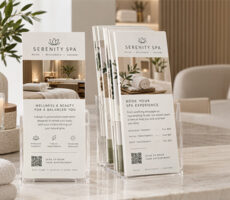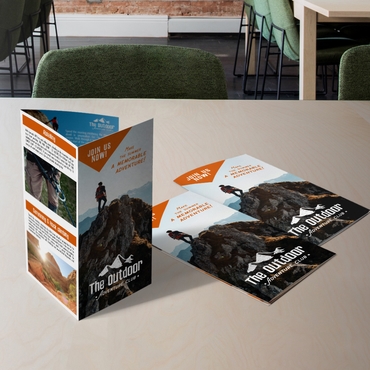
A well-designed brochure gives people something they can hold, flip through, and keep. It’s not just a piece of paper, it’s a storytelling tool.
For small businesses, nonprofits, and event organizers, brochures can explain what you do, showcase products, and guide customers toward taking action, but the difference between a brochure that gets tossed aside and one that makes an impact lies in the design.
Here’s a step-by-step guide to creating brochures that actually sell your story.
Which Brochure Fold Should You Choose?
| Fold Type | Best For | Panels | Difficulty |
|---|---|---|---|
| Tri-Fold | Services | 6 | Easy |
| Z-Fold | Storytelling | 6 | Medium |
| Half-Fold | Products | 4 | Easy |
| Gatefold | Luxury Brands | 6 | Advanced |
7 Brochure Examples That Work in 2026
Restaurant Brochure
- Menu highlights
- QR code ordering
- Loyalty program
Realtor Brochure
- Property photos
- Neighborhood information
- Agent contact info
Trade Show Brochure
- Product overview
- Case studies
- Demo QR code
Healthcare Brochure
- Services
- Insurance information
- Appointment booking
Nonprofit Brochure
- Mission
- Impact statistics
- Donation QR code
These examples make the article much more useful.
Step 1: Define the Purpose
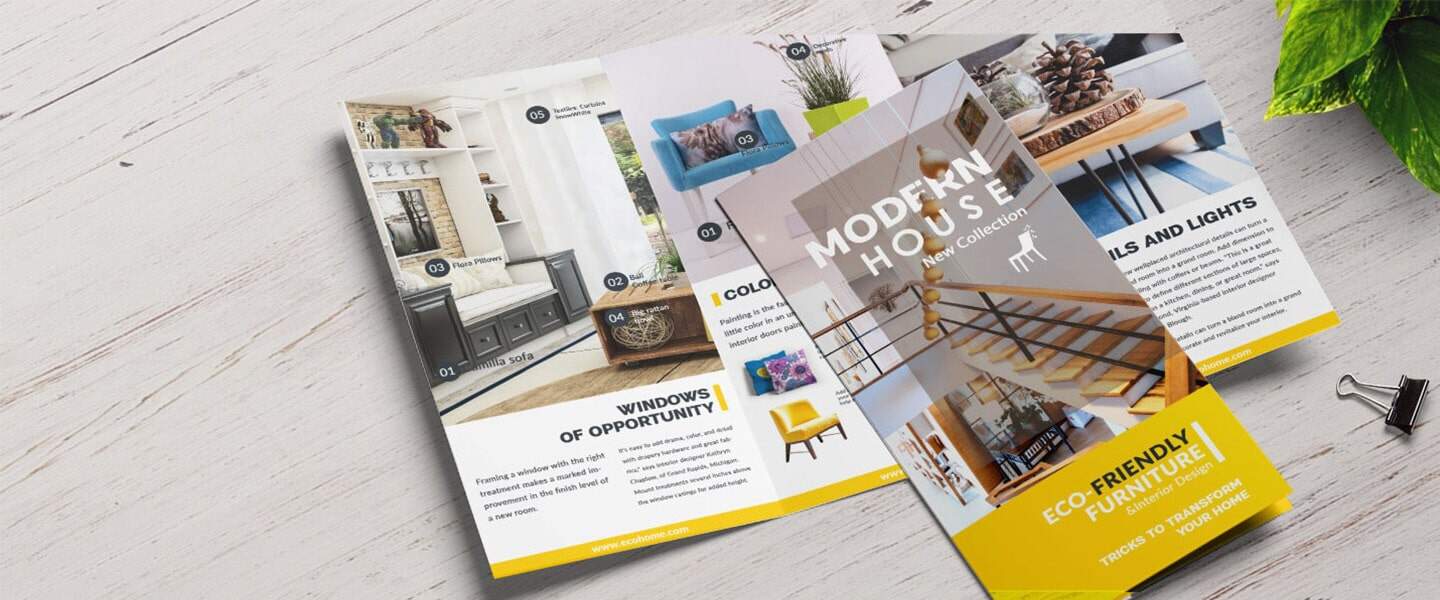
Before you start designing, ask yourself: what do I want this brochure to achieve?
- Are you promoting a seasonal event?
- Introducing your services?
- Sharing your company’s origin story?
- Driving traffic to your website?
Clarity at this stage determines everything else — the layout, tone of voice, and even which print finishes to choose. A brochure that tries to do everything often ends up doing nothing.
Related Blog: How to Design Effective Marketing Brochures
Step 2: Choose the Right Format
Not all brochures are created equal. Brochures come in multiple folds and sizes:
- Tri-fold: Classic, compact, great for service menus or quick overviews.
- Z-fold: More dynamic, perfect for storytelling or step-by-step guides.
- Half-fold: Spacious, often used for product showcases.
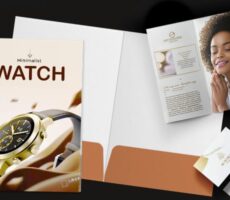
- Gatefold: Dramatic opening effect, ideal for big reveals or luxury branding.
Think about how you want people to interact with your brochure. If you’re walking them through a journey, for example, how your business helps solve a problem, a Z-fold can feel like unfolding a story.
Step 3: Craft a Story-First Layout
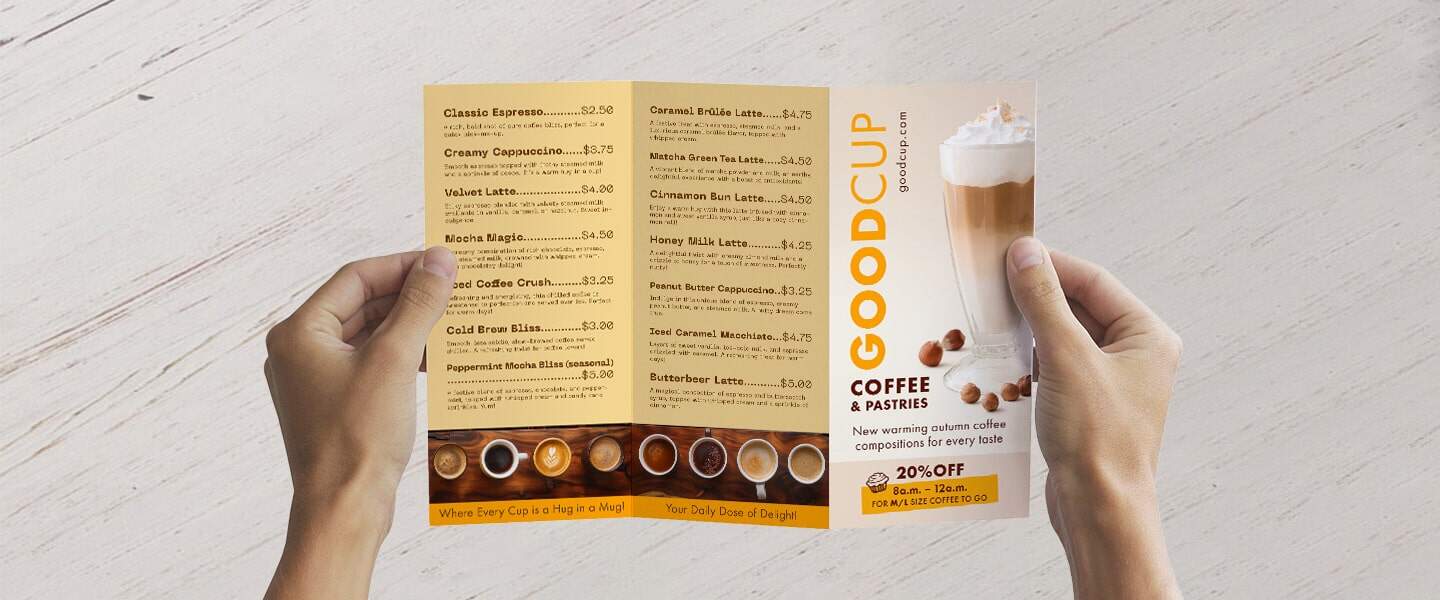
A brochure isn’t just a canvas for random text and images. It’s a story. Start with a clear headline on the front panel that sparks curiosity or highlights a benefit (“Better Printing, Faster Results”).
Inside, structure your content like chapters: introduction, details, proof, and call-to-action. Avoid clutter. White space is your friend. Each panel should have one clear focus so readers don’t feel overwhelmed.
Related Blog: Folders That Sell: How to Use Pocket & Presentation Folders
Step 4: Write Copy That Connects
The words inside your brochure should feel less like a sales pitch and more like a conversation. Use short sentences, benefit-driven statements, and language your customers actually use. Instead of saying:
❌ “We provide innovative solutions to customer-centric problems.”
Say:
✅ “We help small businesses save time and money on print.”
Every panel should end with a gentle nudge, “Call today,” “Visit our website,” or “Stop by our booth.”
Step 5: Add Visuals That Speak Louder
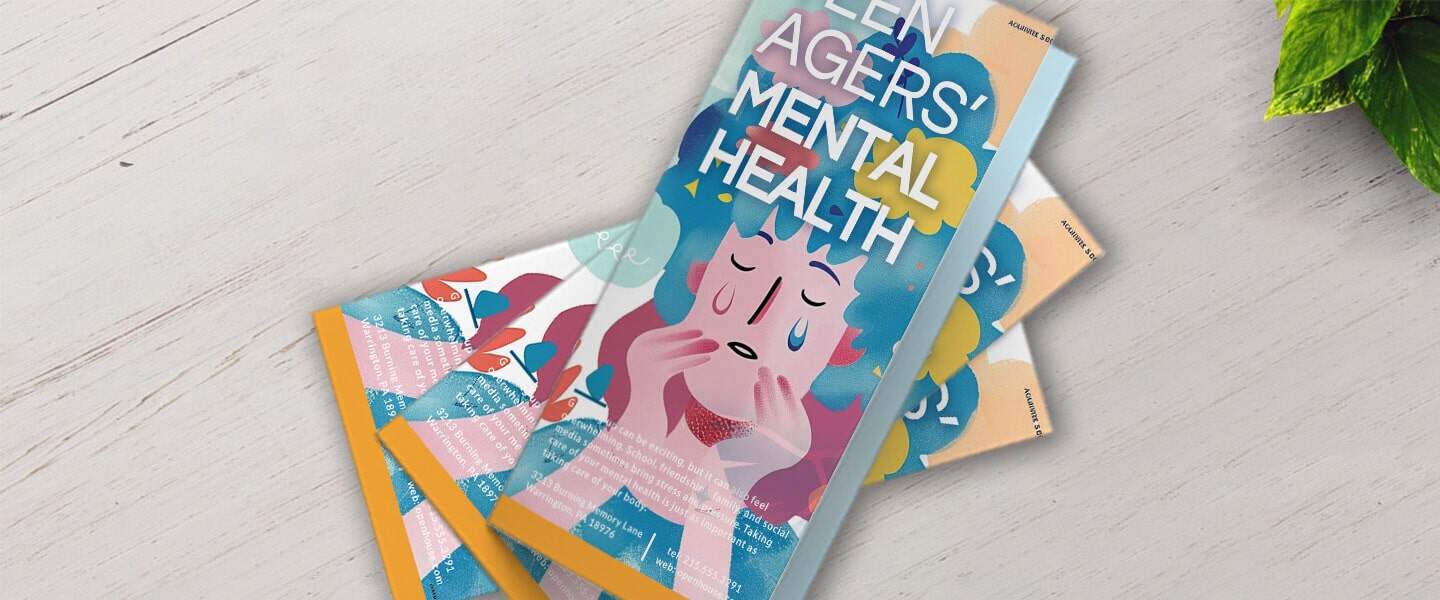
Strong imagery is what keeps people flipping. Use professional photos of your products, team, or real customers instead of generic stock art. Infographics can also break down complex ideas into digestible visuals.
And don’t forget brand consistency. Colors, fonts, and logos should align with your other marketing materials like business cards, rack cards, and posters.
Related Blog: The Science of Color in Print: Colors That Sell
Step 6: Integrate Print With Digital
A modern brochure should do more than sit on a table. Add QR codes linking to your website, menus, or booking system. Include social handles so readers can follow you online.
This way, your brochure becomes a bridge between the physical and digital world, a marketing piece that keeps working long after the event or campaign ends.
Related Blog: Surprising Print Stats Small Businesses Must Know
Step 7: Print With Quality in Mind
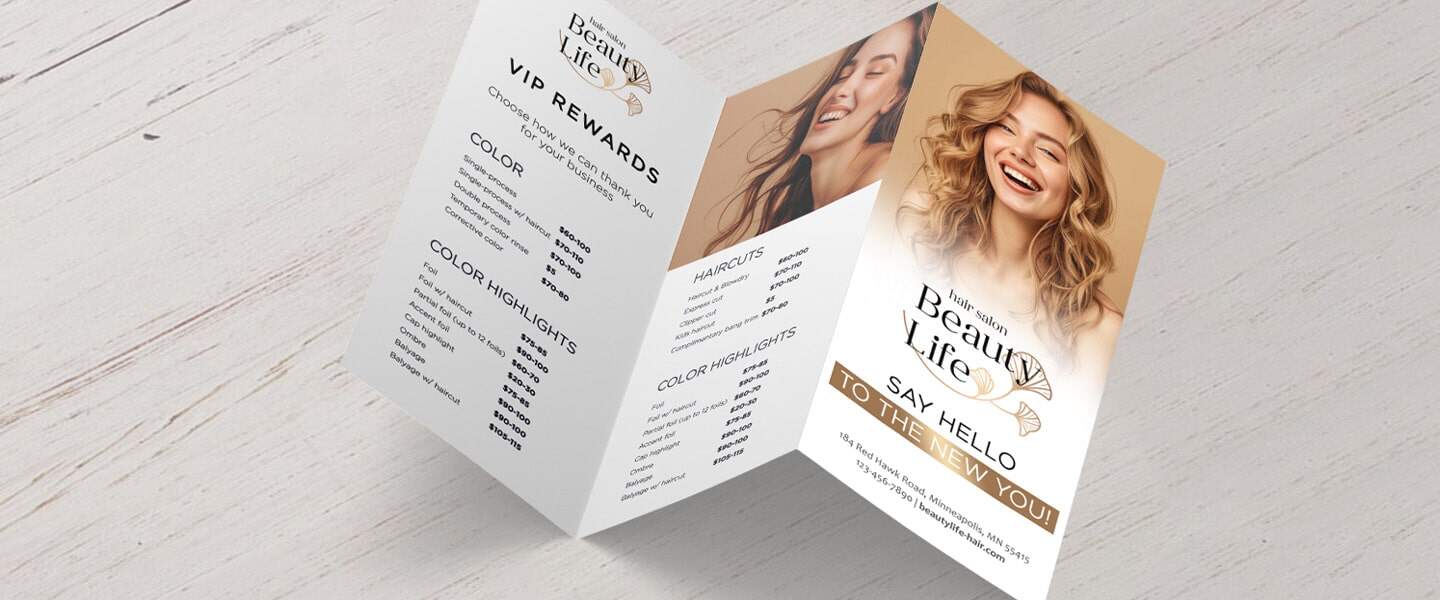
Even the best design can fall flat if the print feels flimsy. Choose paper stock and finishes that match your brand’s personality:
- Matte for a modern, understated look
- Glossy for vibrant, photo-heavy designs
- Premium folds for luxury and detail
Pair brochures with presentation folders for professional handouts at trade shows or conferences, or distribute them alongside postcards and flyers for multi-touch campaigns.
Why Brochures Still Work in 2026
Even in a digital-first world, brochures remain one of the few marketing tools people can physically take home, keep on a desk, and revisit later.
When paired with QR codes, personalized offers, and high-quality printing, brochures can generate leads long after an event, meeting, or sales presentation ends.
Whether you’re promoting a service, launching a product, or preparing for a trade show, a well-designed brochure helps turn attention into action.
FAQ
What is the best brochure fold for small businesses?
Tri-fold brochures are the most versatile option because they provide enough space for services, pricing, contact information, and calls-to-action without overwhelming readers.
What should a brochure include?
Most brochures should include:
- Headline
- Benefits
- Images
- Customer proof
- Contact information
- Clear CTA
Are brochures still effective in 2026?
Yes. Brochures work especially well at trade shows, local events, retail locations, real estate open houses, healthcare offices, and sales meetings.
How many panels should a brochure have?
Most businesses choose 4 to 6 panels depending on the amount of information they need to present.