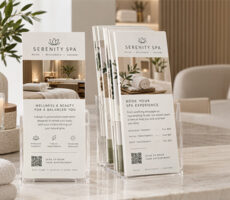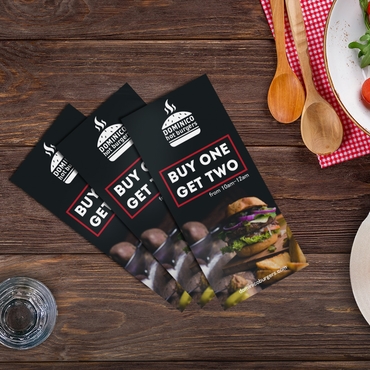
The main difference between a rack card and a brochure is the amount of information each format is designed to communicate. Rack cards are compact and built to capture attention quickly, while brochures provide more space to explain products, services and benefits. Choose a rack card for simple promotions and high-traffic displays, a brochure for detailed information, or both when you need to attract attention and then help customers evaluate an offer.
Key Takeaways
- Rack cards work best for quick visibility and simple messages.
- Brochures are better when customers need more information before deciding.
- Distribution location and customer attention should guide your choice.
- Some businesses benefit from using both formats at different stages.
- Design and content should be adapted to the format rather than reused unchanged.
Rack Cards vs. Brochures: What’s the Real Difference?
A customer noticing a rack card in a hotel lobby may give it only a few seconds.
Someone receiving a brochure during a consultation may spend several minutes reading it.
That’s the biggest difference between the two formats.
Rack Cards are designed for fast attention. Brochures give businesses more room to explain products, services, and benefits.
Neither is automatically better.
The right choice depends on where customers find your material, how much information they need, and how much attention they’re likely to give it.
What Is a Rack Card?
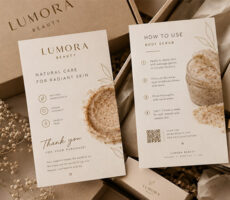
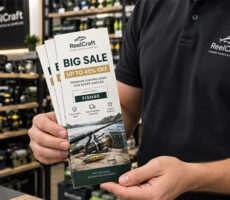
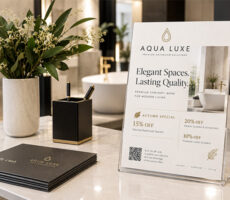
A rack card is a narrow printed marketing piece designed to display in brochure racks, counters, hotels, visitor centers, restaurants, attractions and other high-traffic locations. Rack cards typically use a strong headline, eye-catching image, short message and clear call to action to capture attention quickly.
Unlike a folded brochure, a rack card usually presents a more focused message and is designed to be understood within seconds.
What Is a Brochure?
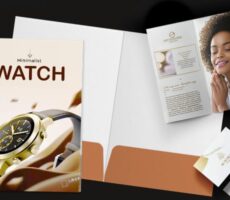
A brochure is a printed marketing piece that gives businesses more space to explain products, services, benefits or other detailed information. Brochures are often folded into panels, allowing information to be organized into sections that guide readers through the message.
Compared with rack cards, brochures are generally better suited to situations where customers need more information before taking action.
When Should You Use a Rack Card?
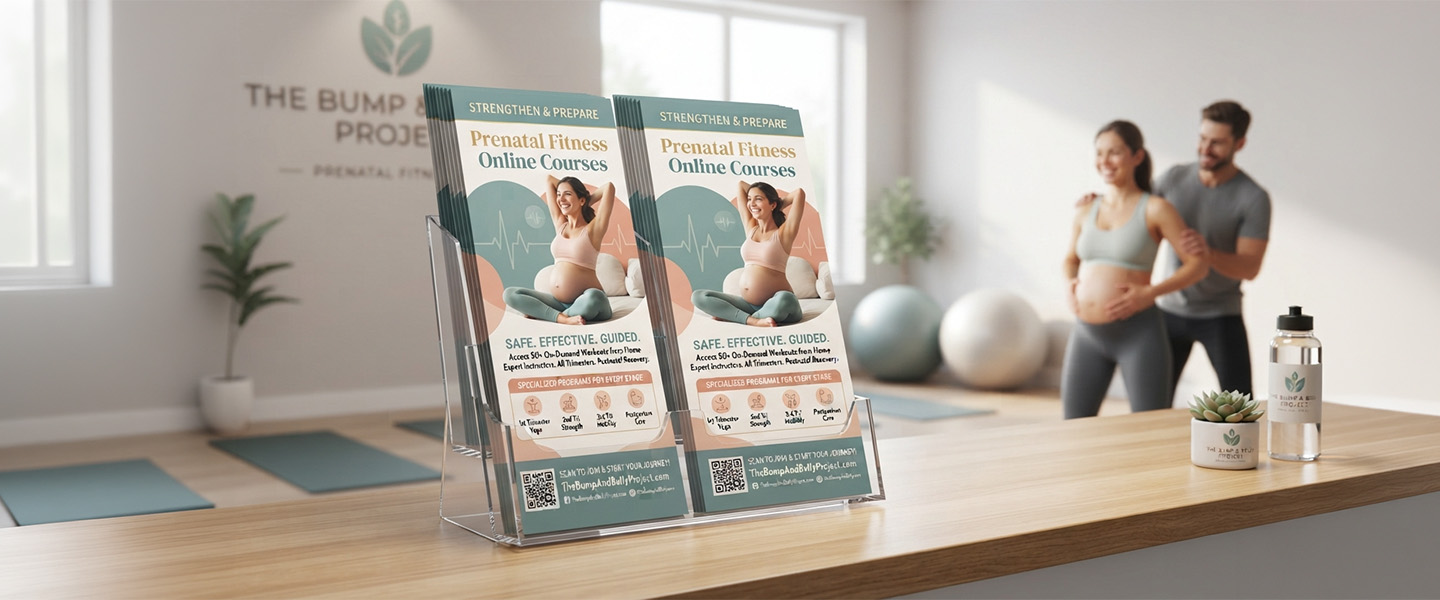
Rack cards work particularly well in places where customers are casually browsing or discovering local businesses.
Think:
- Hotels
- Visitor centers
- Cafés
- Waiting rooms
- Local attractions
- Retail counters
- Community spaces
- Events
Their narrow format encourages simple messaging.
A strong rack card usually needs:
- One clear headline
- One strong visual
- A short supporting message
- Essential business information
- One CTA
This makes them particularly useful for restaurants, tourism businesses, attractions, salons, fitness studios, events, and other businesses competing for attention in high-traffic locations.
If you’re comparing similar compact formats, read our guide to Rack Cards vs. Flyers to see how placement and distribution affect the choice.
When Should You Use a Brochure?
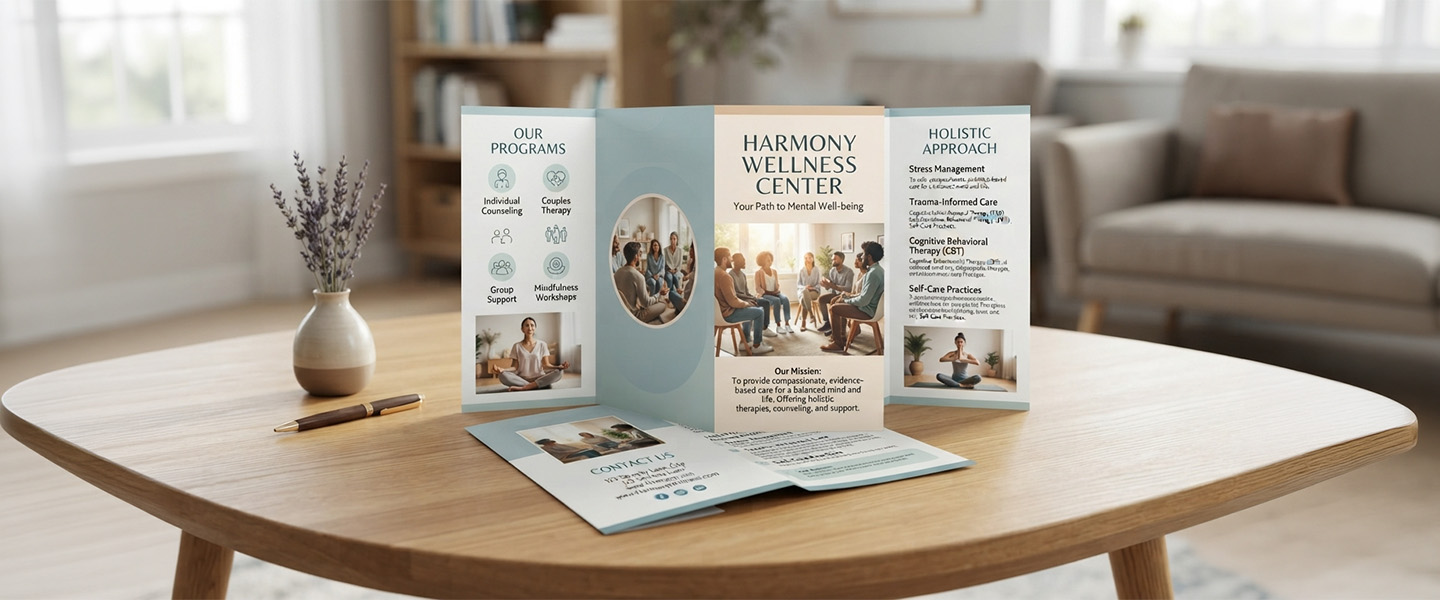
Brochures work better when customers need more information before taking action.
A Brochure gives you space for:
- Service descriptions
- Product information
- Benefits
- Photography
- Testimonials
- FAQs
- Processes
- Pricing when appropriate
- Contact information
This can make brochures a stronger option for real estate, healthcare, consulting, education, home services, professional services, and other businesses where customers need more context.
The extra space also lets you guide readers through information in a specific order.
If you’re planning the layout, see our guide to Z-Fold, Tri-Fold or Gate Fold Brochures before designing.
Rack Cards vs. Brochures: Quick Comparison
| Feature | Rack Cards | Brochures |
| Main Goal | Capture attention | Explain information |
| Content | Short and focused | More detailed |
| Reading Time | Quick | Longer |
| Best Placement | High-traffic displays | Meetings, counters, consultations |
| Design Priority | Immediate visibility | Content organization |
| Best For | Promotions, tourism, events | Services, products, sales materials |
The decision isn’t really about which format holds more information.
It’s about how much information the customer needs at that moment.
Which Format Works Best by Business Type?
| Business or Goal | Best Choice | Why |
| Tourism attraction | Rack Card | Easy discovery for travelers |
| Restaurant promotion | Rack Card | Quick visual message |
| Local event | Rack Card | Dates and details are easy to scan |
| Real estate | Both | Discovery + detailed property information |
| Consultant | Brochure | Services need more explanation |
| Healthcare practice | Brochure | More room for service information |
| Home improvement | Brochure | Customers often need details before deciding |
| Tour company | Both | Attract first, explain packages later |
Your industry doesn’t have to determine the answer.
The campaign goal matters more.
Sometimes You Need Both
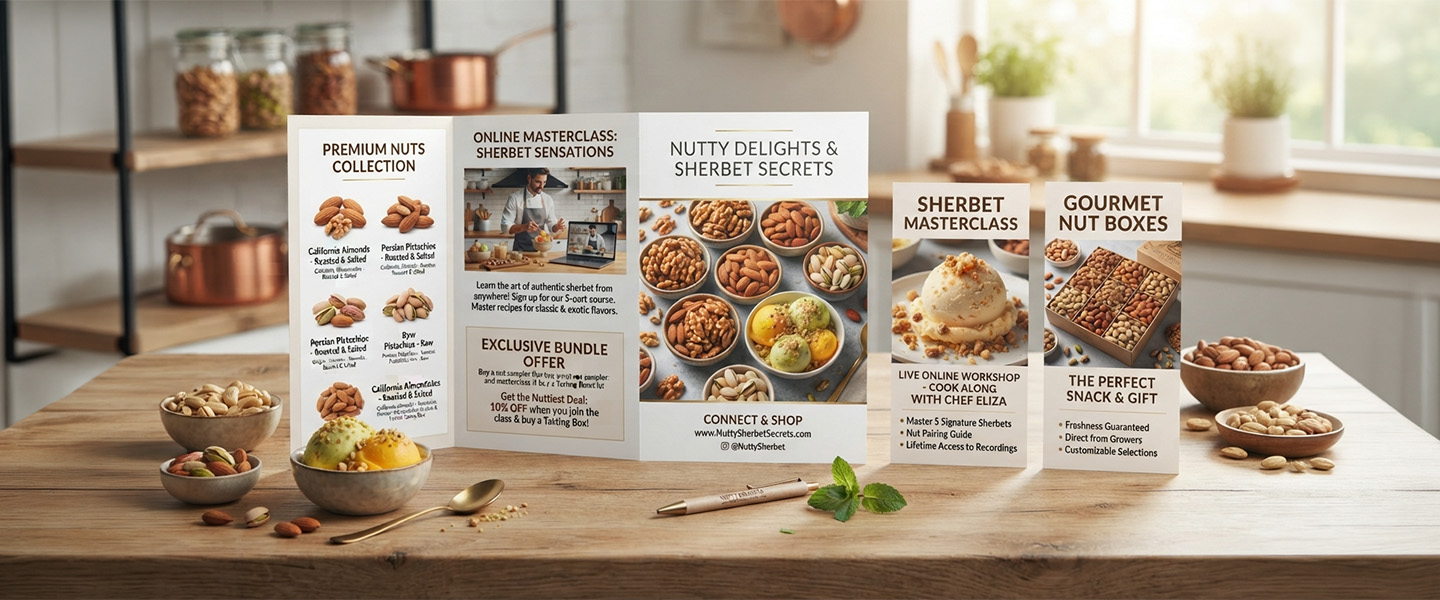
Rack cards and brochures can support different stages of the same customer journey.
A tourism company, for example, might place rack cards in hotels to attract travelers.
Once someone becomes interested, a brochure could provide detailed packages, schedules, maps, and pricing.
A real estate agent might distribute rack cards at community events but use brochures during listing presentations.
Think of it this way:
Rack card → Get noticed
Brochure → Help customers evaluate
Using both can make sense when your business needs to do both jobs.
How Should the Designs Differ?
Don’t simply shrink a brochure design onto a rack card.
Rack Cards Need:
- Larger headlines
- Less text
- Strong visuals
- Immediate clarity
- One primary CTA
Brochures Need:
- Clear sections
- Strong information hierarchy
- Easy-to-read typography
- Logical panel flow
- Supporting visuals
- A clear CTA
For brochures, the fold should be decided before the layout is finalized.
And regardless of format, understanding What People Read First on a Flyer can help you build stronger visual hierarchy for local print marketing.
How to Choose Between a Rack Card and Brochure
Ask yourself five questions:
- How much information does the customer need?
One quick message favors a rack card. Multiple services or details favor a brochure. - Where will customers find it?
Hotels, cafés, visitor centers, and display racks favor rack cards. Meetings and consultations often favor brochures. - How much attention will they give it?
Design for the attention you realistically have. - What do you want them to do?
A simple “Visit Today” or “Scan to Book” may only need a rack card. More considered decisions may require a brochure. - How complicated is your offer?
The more explanation customers need, the more valuable brochure space becomes.
Common Mistakes to Avoid
Putting Too Much on a Rack Card
Don’t shrink your text to make everything fit. Prioritize the message instead.
Using a Brochure When You Don’t Need One
More space isn’t automatically better. If the message is simple, a rack card or Flyer may communicate it more effectively.
Ignoring Distribution
Design around where customers will actually encounter the material.
Weak Visual Hierarchy
Customers should immediately understand what matters most. For more guidance, see How to Design Effective Marketing Brochures.
No Clear CTA
Whether you’re using a rack card or brochure, tell customers what to do next.
Why Choose Overnight Prints?
Overnight Prints offers professional Rack Cards, Brochures, and Flyers for local marketing campaigns.
Choose your format based on how customers will discover and interact with your message—not simply how much information you can fit on the page.
Frequently Asked Questions About Rack Cards vs. Brochures
What is the difference between a rack card and a brochure?
The main difference is how much information each format is designed to communicate. Rack cards are compact and designed to capture attention quickly with a focused message, while brochures provide more space for detailed information across sections or folded panels.
What is a rack card?
A rack card is a narrow printed marketing piece designed for quick visibility. It typically includes a strong headline, eye-catching visual, short message, business information, and a clear call to action. Rack cards are commonly displayed in hotels, visitor centers, restaurants, retail counters, waiting rooms, and other high-traffic locations.
What is a brochure?
A brochure is a printed marketing piece that gives businesses more space to explain products, services, benefits, or other important information. Brochures are often folded into panels, making it easier to organize content, images, contact information, and calls to action.
What size is a rack card?
A common rack card size is 4 × 9 inches, a narrow format designed to fit easily into display racks. The compact size makes rack cards easy to pick up while still providing enough space for a headline, image, short message, and contact information.
Are rack cards cheaper than brochures?
The cost depends on factors such as size, paper stock, quantity, finishes, and printing options. Because rack cards typically use a simpler, flat format, they may cost less than more complex folded brochures in some cases. The best comparison is based on the specifications and quantity needed for your campaign.
When should you use a rack card?
Use a rack card when you need to communicate a simple message quickly. They work particularly well for promotions, attractions, restaurants, tours, events, salons, fitness studios, and other businesses that want to attract attention in high-traffic locations.
When should you use a brochure?
Use a brochure when customers need more information before taking action. Brochures are useful for explaining multiple services, products, benefits, processes, pricing, or other details that would be difficult to fit clearly on a rack card.
Are rack cards good for marketing?
Yes. Rack cards can be effective marketing tools when they are placed where your target audience is likely to see them. Their compact format works especially well for local discovery, tourism, events, promotions, and businesses that need to communicate a clear message quickly.
Are rack cards better than flyers?
Neither format is always better. Rack cards are particularly useful for organized display racks and locations where people browse printed materials, while flyers are more flexible for handouts, events, counters, and broader distribution. The better option depends on how and where you plan to reach your audience.
Can you use rack cards and brochures together?
Yes. Rack cards and brochures can support different stages of the customer journey. A rack card can attract attention and introduce an offer, while a brochure can provide more detailed information once a customer becomes interested. Using both can be effective when your campaign needs to generate awareness and help customers evaluate their options.
Conclusion
Rack cards and brochures solve different local marketing problems.
Rack cards are best for quick attention and discovery.
Brochures are better for detailed information and deeper engagement.
For some businesses, using both is the strongest strategy: a rack card attracts attention, while a brochure helps an interested customer learn more.
Before choosing, think about where customers will see the material, how much attention they’ll give it, and what information they need next.
Explore Rack Cards and Brochures from Overnight Prints to choose the format that best fits your local marketing strategy.
Resources
- U.S. Small Business Administration (SBA) – Marketing and small-business planning resources.
- AIGA – Graphic design, typography, and visual communication resources.
- PRINTING United Alliance – Commercial printing and print-production resources.
- Adobe – Design, layout, typography, and print-preparation resources.