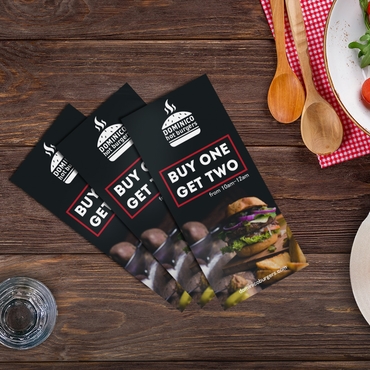
If you’ve ever printed something that looked great but didn’t bring results, it probably wasn’t the design.
It was the format.
That’s the part most businesses underestimate.
They focus on colors, fonts, images…
but skip the question that actually determines performance:
👉 How is this going to reach someone?
Because a well-designed piece in the wrong format won’t work.
And that’s exactly where rack cards and flyers get mixed up.
They look similar enough to feel interchangeable.
They’re not.
The difference isn’t what they are. It’s how people interact with them.
Let’s strip it down.
A flyer is something you push out.
A rack card is something people pull in.
That one shift—push vs pull—changes how each format performs.
With flyers, you control distribution. You decide where they go, who gets them, and when.
With rack cards, the environment does the work. They sit in a space where people browse, compare, and choose.
So instead of asking which one is better…
👉 You need to ask: Do I need attention, or discovery?
Rack cards: slow exposure, better intent
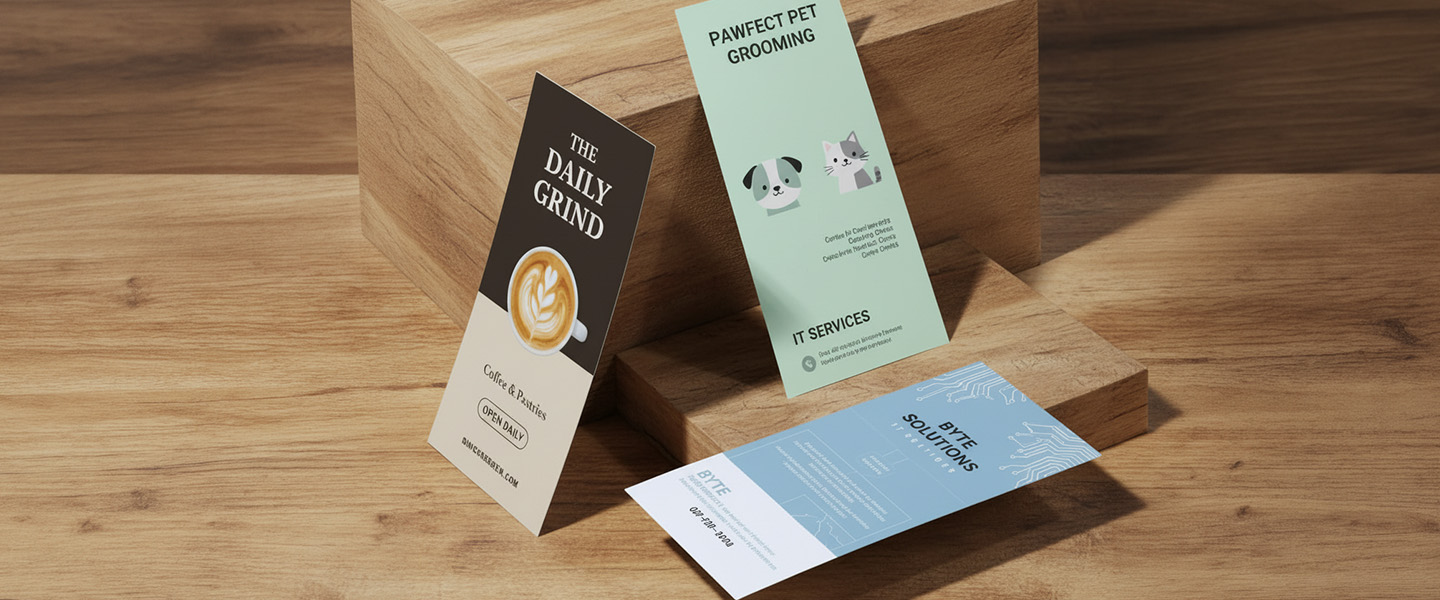
Rack cards don’t interrupt people.
They wait.
You’ll usually find them in places where people already have time and intent:
- hotel lobbies
- visitor centers
- coffee shops
- reception desks
And that matters.
Because when someone picks up a rack card, they’ve already decided to engage.
You didn’t force it.
They chose it.
That makes rack cards especially effective for:
- tourism-based businesses
- local services
- experiences (tours, activities, events)
They’re not built for urgency.
They’re built for presence.
And over time, that presence compounds.
If your business depends on being discovered, not pushed, rack cards are hard to beat.
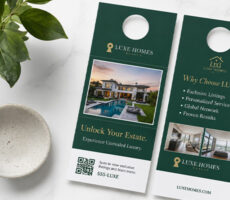
You can see how they’re typically structured and printed here: Rack Cards
Flyers: fast reach, immediate action
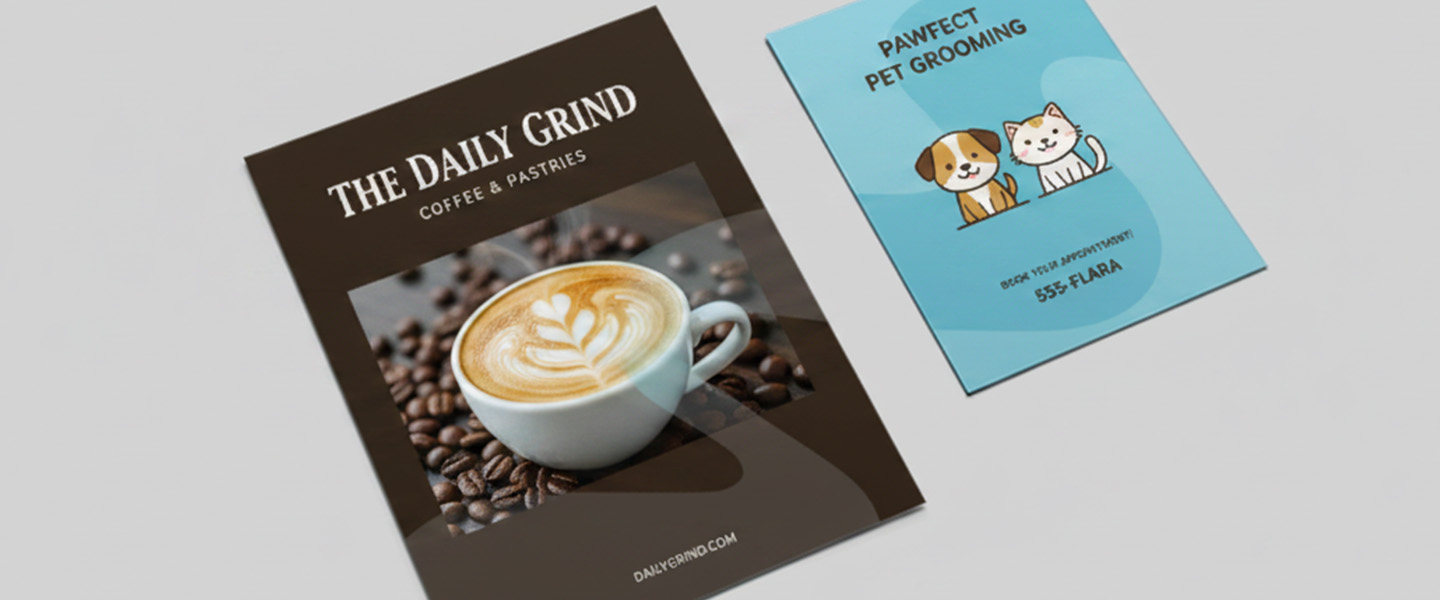
Flyers don’t wait.
They show up.
You hand them out. You place them. You control exactly where they go.
That’s why they’re better suited for:
- limited-time promotions
- local campaigns
- events
- announcements
Flyers create a moment.
Someone sees it, reads it, and either acts—or doesn’t.
There’s less time to convince, but more control over who sees it.
That’s also why flyers tend to perform better when:
- your message is simple
- your offer is clear
- your timing matters
If you need results quickly, flyers give you speed.
But that speed comes with a trade-off.
👉 They don’t last.
Why most businesses choose the wrong one
Not because they don’t understand the difference.
Because they don’t think about distribution.
They choose based on:
- what looks better
- what they’ve seen before
- what feels easier to print
Instead of asking:
👉 Where is this going to live?
A rack card in someone’s hand behaves like a bad flyer.
A flyer sitting in a rack behaves like a weak rack card.
The format only works when the context supports it.
A simple way to decide (that actually works)
Forget design for a second.
Picture the moment someone sees your print piece.
Are they:
- walking past it?
- sitting and browsing?
- being handed it directly?
That moment tells you everything.
If it’s passive → rack card
If it’s direct → flyer
That’s the decision most people skip.
Let’s talk about space (because it changes your message)
This is where people try to force one format into another.
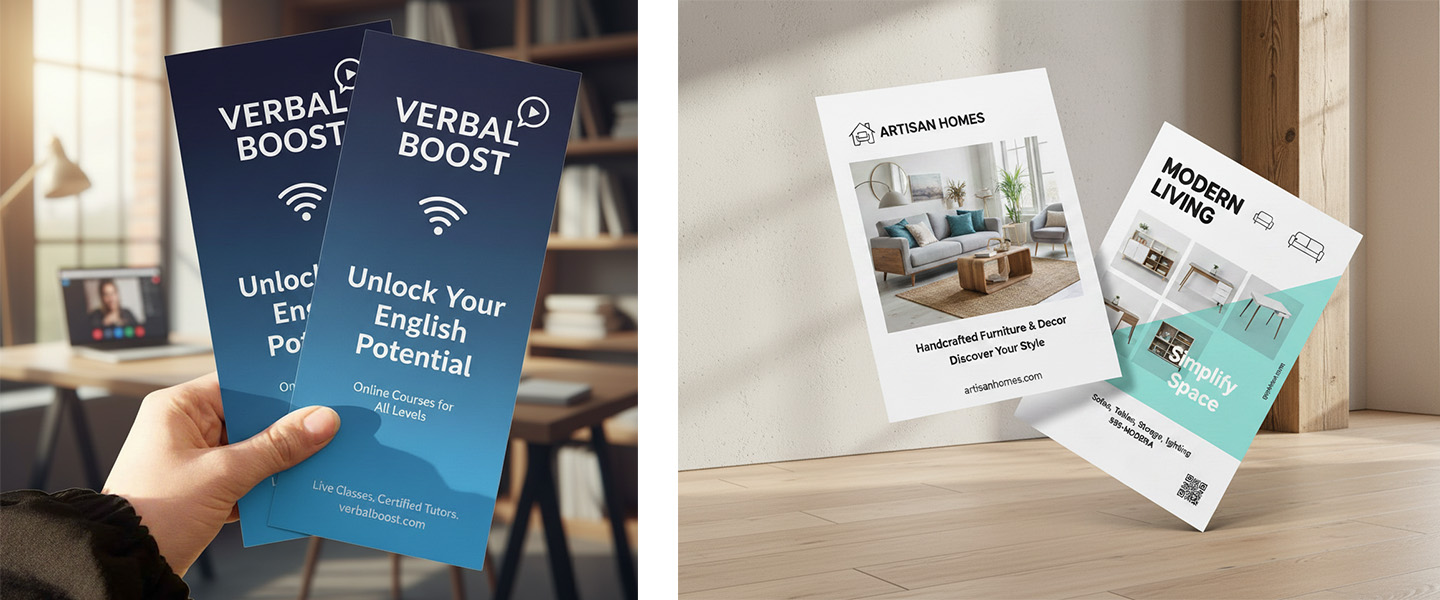
Rack cards are narrow for a reason.
They’re meant to:
- guide the eye vertically
- deliver information quickly
- compete with other cards in a tight space
Flyers give you more room.
Which sounds like an advantage—but often isn’t.
Because more space leads to:
- more text
- more sections
- more confusion
That’s why many flyers underperform.
Not because of the format, but because they try to say too much.
If you’ve ever wondered why some printed materials feel easy to read and others don’t, this breakdown of How to Design Print Materials That Actually Get Read (Not Thrown Away) explains it clearly.
Cost isn’t just about printing
At first glance, flyers often seem cheaper.
They’re flexible, easy to print, and scalable.
Rack cards can feel more specific and slightly more expensive depending on format.
But the real cost isn’t printing.
👉 It’s wasted distribution.
Printing 1,000 flyers and handing them to the wrong audience is more expensive than placing 200 rack cards in the right location.
The same applies in reverse.
A rack card sitting in the wrong place doesn’t get picked up.
So before comparing prices, compare placement.
What about using both?
This is where things get interesting.
Most businesses treat rack cards and flyers as either/or.
They’re not.
They solve different parts of the same problem.
Rack cards build presence.
Flyers create action.
Used together, they cover both:
- long-term visibility
- short-term response
For example:
- rack cards stay in hotels or stores
- flyers promote a specific offer or event
That combination works because it meets people at different moments.
When flyers outperform everything else
There are situations where flyers are simply the better choice.
If you’re running something time-sensitive, like:
- a weekend promotion
- a local event
- a limited-time offer
You don’t want people to “discover” it later.
You want them to act now.
That’s where flyers win.
If you’re unsure how they compare to other channels, this guide on When Should You Use Flyers Instead of Digital Ads? (Real Scenarios That Still Work) shows when they outperform digital.
When rack cards quietly outperform flyers
The opposite is also true.
If your goal is to:
- stay visible
- be considered over time
- get picked up when someone is ready
Flyers won’t last long enough.
Rack cards will.
They sit in the environment, working for you without constant effort.
And over time, that consistency beats one-time distribution.
Before you print anything
Most problems don’t come from design.
They come from skipping the strategy.
Before choosing a format, be clear on:
- who you’re trying to reach
- where they’ll see this
- what you want them to do next
If those three things are clear, the format becomes obvious.
Ready to choose your format?
If you already know what fits your campaign, you can explore your options here:
Both can work—if you use them the way they’re meant to be used.
Final thought
This isn’t about choosing the “better” format.
It’s about choosing the one that matches the moment your audience sees it.
Because that moment—more than design, size, or cost—is what determines whether your print actually works.