Key Takeaways
- Event posters have only a few seconds to capture attention before people move on.
- Clear messaging, strong visual hierarchy, and readability are more important than complex designs.
- Poster placement is just as important as the design itself for reaching the right audience.
- Professional printing improves credibility and helps events appear more established.
- Combining posters with other print products creates stronger local visibility and event awareness.
Introduction
Most event posters fail because they don’t capture attention quickly enough. Before people read the event name, date, or location, they’ve already decided whether the poster is worth noticing.
In busy public spaces, event posters compete with storefront signs, digital screens, advertisements, and countless other visual distractions. If the design feels crowded, confusing, or difficult to read from a distance, people are likely to keep walking.
That’s why successful event posters focus on clarity first. A strong design grabs attention immediately, communicates the main message at a glance, and encourages people to stop and learn more.
Why Event Posters Matter More Than You Think
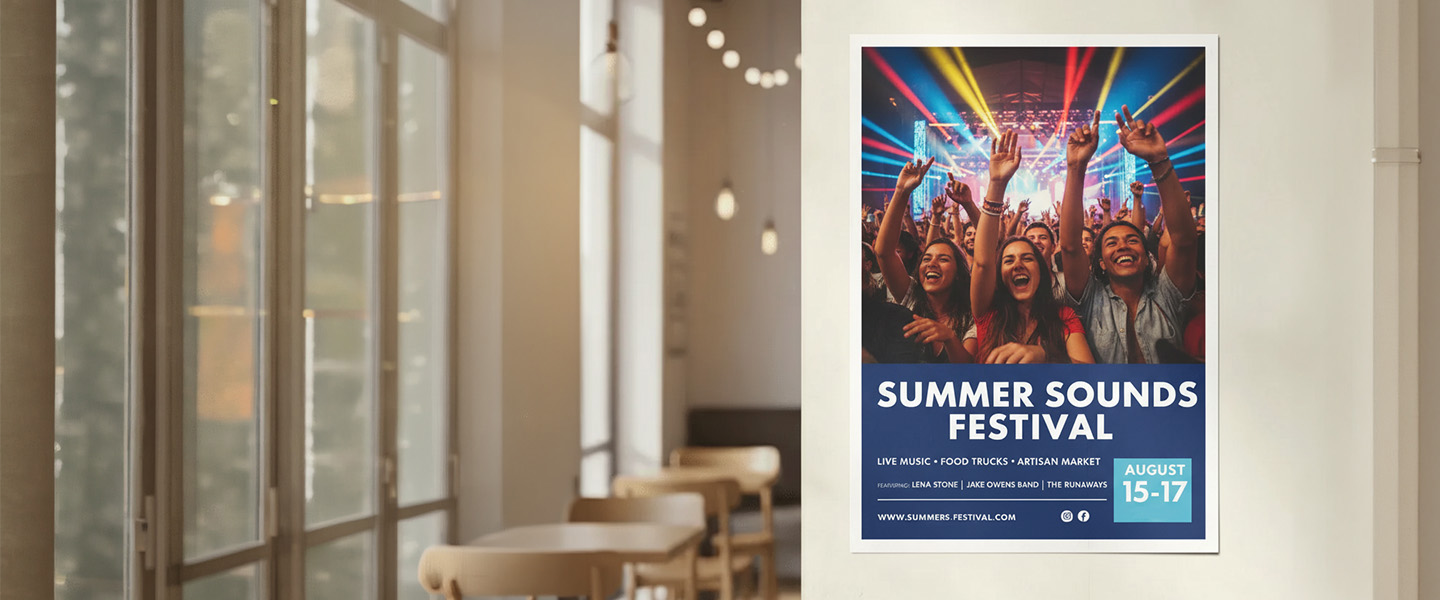
Event posters have only a few seconds to capture attention. Before people read the event details, they decide whether the poster is worth noticing based on its overall appearance.
In busy places like cafés, community boards, retail stores, event venues, and shopping districts, posters compete with dozens of other signs and advertisements. People often see them while walking, shopping, waiting, or talking, so the design needs to communicate its message almost instantly.
That first impression matters. A clear headline, strong visual hierarchy, and eye-catching design help your poster stand out from the surrounding visual competition. If people have to work to understand the message, they’re likely to move on without reading it.
The most effective event posters make split-second decisions easy by grabbing attention, creating interest, and encouraging people to stop for a closer look.
Designing Posters Around Your Marketing Goal
There isn’t one perfect poster design for every event. The most effective posters are the ones designed around a specific marketing goal and the audience they’re meant to reach.
Before creating your poster, consider these key factors:
- What type of event are you promoting? A concert, conference, fundraiser, community event, or retail promotion each requires a different visual approach.
- Who is your target audience? Your design should reflect the interests and expectations of the people you want to attract.
- Where will the poster be displayed? A storefront window, community board, café, or trade show may require different layouts and levels of detail.
- How far away will people view it? Posters seen from a distance need larger headlines, stronger contrast, and simpler designs.
- What is your primary message? Focus on the one thing people should remember—whether it’s the event, date, special offer, or call to action.
By answering these questions first, you can create a poster that’s easier to notice, understand, and remember. The following sections explore the design principles that help event posters capture attention and encourage people to take action.
Keep the Message Simple
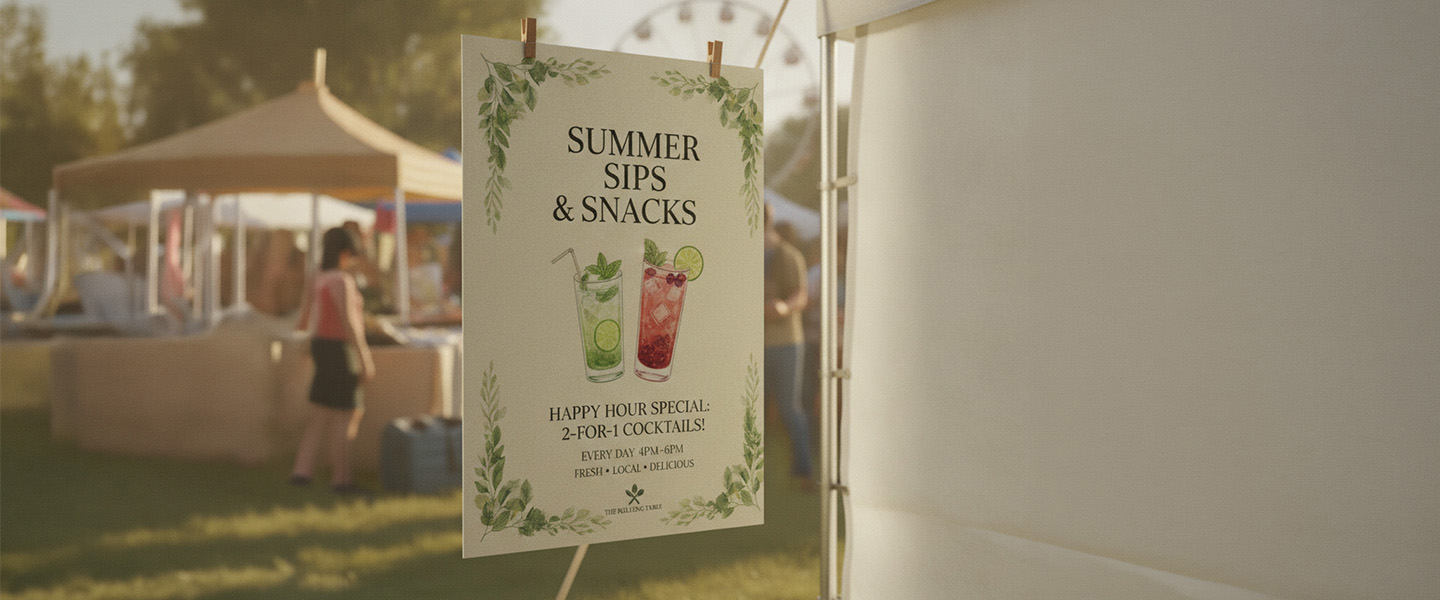
One of the biggest mistakes businesses make is trying to fit too much information onto an event poster. When every detail competes for attention, people often miss the message entirely.
A poster isn’t meant to explain every aspect of your event—it’s meant to capture attention and encourage people to learn more. Keeping the design simple makes it easier for viewers to understand the most important information in just a few seconds.
Focus on one clear message, limit the amount of text, and highlight the details that matter most. A strong call to action should make it obvious what viewers should do next, whether that’s buying tickets, registering, or attending the event.
Event Posters Work Best When They Include:
- One main headline that immediately captures attention.
- One clear message that explains the purpose of the event.
- Essential event details such as the date, time, location, and website or QR code.
- A simple call to action that tells people what to do next.
- A clean layout with enough white space to make the content easy to read.
When the message is simple and well organized, people can understand it quickly—and they’re much more likely to stop, remember it, and take action.
A clear layout is just as important as a clear message. Our guide What People Read First on a Flyer (According to Print Designers) explains how people naturally scan printed marketing materials and why visual hierarchy improves engagement.
Design for Distance
Most people see an event poster from several feet away before deciding whether to walk closer. That’s why your design needs to communicate the most important information immediately, even at a distance.
A strong poster starts with a large headline that grabs attention and clearly communicates the event. From there, viewers should be able to quickly identify the key details through a logical visual hierarchy, with the most important information standing out first.
Good contrast between text and background also improves readability, making the poster easier to scan in different lighting conditions and busy environments. As people move closer, they can then read the supporting details without feeling overwhelmed.
When designing an event poster, make sure the following information is easy to recognize from a distance:
- A large, attention-grabbing headline
- High contrast between text and background
- A clear visual hierarchy that guides the eye naturally
- Key event details such as the date, location, and call to action
- Easy-to-read typography that remains legible from several feet away
If people can’t understand the main message at a glance, they’re unlikely to stop and read the rest.
Clarity Beats Complexity
Many event organizers assume that a more creative poster will attract more attention. In reality, the most effective posters are usually the easiest to understand.
A simple design helps viewers find the most important information quickly. Using white space prevents the layout from feeling crowded, while a clear structure makes it easy to move from the headline to the event details and call to action.
Consistency also matters. Using your brand’s colors, fonts, and visual style creates a more professional appearance and helps people recognize your organization across different marketing materials.
Instead of trying to include every design element possible, focus on creating a poster that is clean, organized, and easy to navigate. When clarity comes first, people are far more likely to stop, understand your message, and remember your event.
Event Posters at a Glance
The most effective event posters aren’t necessarily the most elaborate—they’re the ones that communicate their message quickly and clearly. Here’s how successful posters compare to those that often get ignored.
| Effective Posters | Ignored Posters |
| Easy to read | Difficult to scan |
| One clear message | Too many competing elements |
| Strong visual hierarchy | Crowded layouts |
| Clear contrast | Overdesigned graphics |
| Focused branding | Generic appearance |
| Immediate readability | Important details buried |
Most people won’t consciously analyze these differences, but they influence how quickly a poster captures attention. A clean, well-organized design makes it easier for viewers to understand the message at a glance, increasing the chances they’ll stop, remember the event, and take action.
Placement Is Part of the Strategy
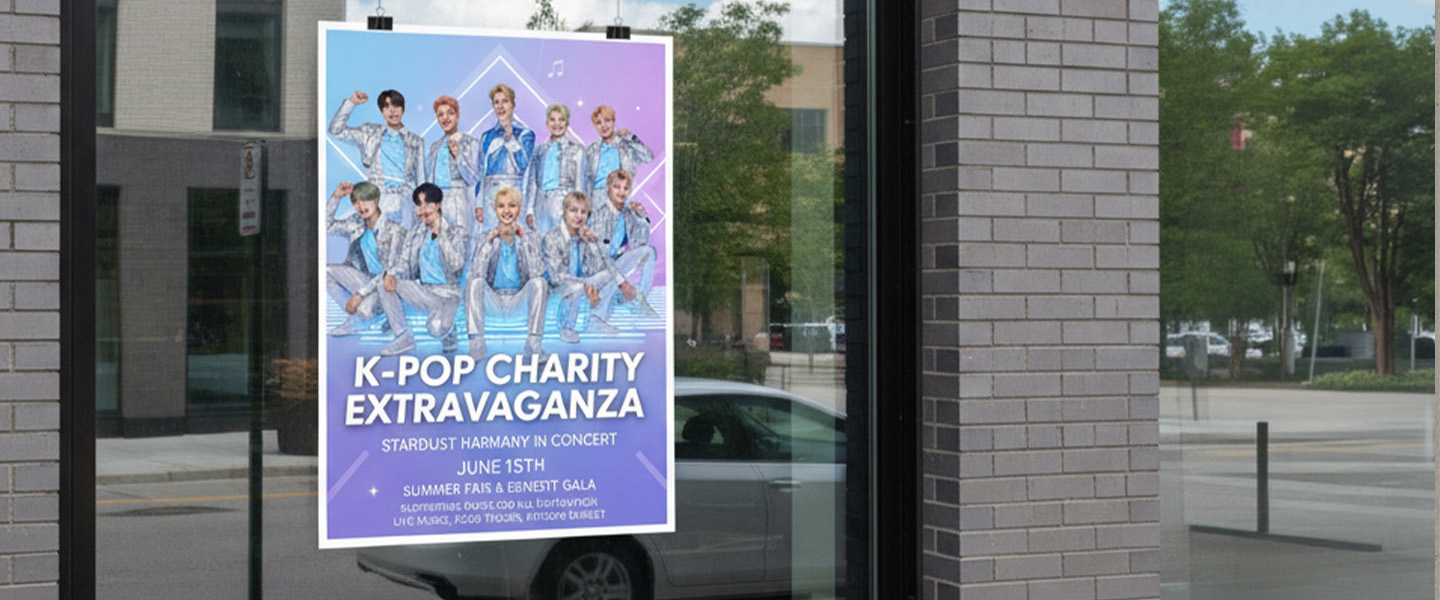
A well-designed poster is only effective if the right people see it. Choosing the right location is just as important as the design itself because it determines who will notice your message and when they’ll see it.
Think about where your target audience spends time. Depending on your event, effective locations may include:
- Storefronts with high pedestrian traffic
- Community boards at local businesses and public spaces
- Coffee shops where people often stop and browse
- Libraries that serve families, students, and local residents
- Schools for educational, sports, or community events
- Event venues where people are already interested in similar activities
Matching your poster placement to your audience increases visibility and helps your promotion reach people who are most likely to attend. For even greater impact, many businesses combine posters with flyers and rack cards, creating multiple touchpoints that reinforce awareness and keep the event top of mind.
Choosing the right poster size can also improve visibility. Read What Size Poster Actually Works Best for Storefronts, Events & Promotions? to learn which formats work best for different display locations.
Event Marketing Is Usually Emotional Before It’s Informational
This is what many posters misunderstand completely.
People decide whether an event feels interesting emotionally first.
The atmosphere matters.
The energy matters.
The visual tone matters.
A music festival poster should feel energetic before customers even read the lineup.
A networking event should feel professional before people see the location.
A local community event should feel welcoming immediately.
Good poster design communicates emotional identity before informational detail.
That emotional reaction is often what determines whether customers continue engaging at all.
Print Products That Support Event Promotion
A successful event marketing campaign rarely relies on a single print product. Different materials serve different purposes, helping you reach potential attendees at various stages of the customer journey.
For example, posters are ideal for building awareness in high-traffic locations, while flyers allow you to share event information directly with potential attendees. Rack cards provide another opportunity to reach people in places where they naturally spend time, such as cafés, hotels, visitor centers, and waiting rooms.
Using these print products together creates multiple touchpoints that reinforce your message and increase the chances that people will remember your event.
Each Print Product Has a Different Role
- Posters → Long-term visibility in storefronts, community spaces, and event venues.
- Flyers → Direct distribution at community events, businesses, and local gatherings.
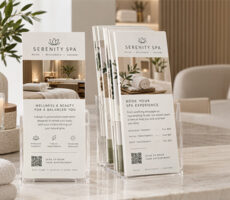
- Rack Cards → Passive discovery in locations where customers browse information at their own pace.
By combining different print materials, businesses can create broader local awareness, reach more potential attendees, and build stronger recognition before the event takes place.
Why Print Quality Influences Attendance
Print quality shapes how people perceive your event before they even read the details. A professionally printed poster with sharp text, accurate colors, and quality paper creates a stronger first impression and makes the event feel more credible.
Focus on:
- Professional appearance that reflects your event.
- Color accuracy for consistent branding.
- Sharp printing that’s easy to read.
- Quality paper that enhances durability.
- Event credibility through a polished presentation.
Well-printed posters don’t just attract attention—they help build confidence and encourage more people to attend.
Print quality shapes how customers perceive your event before they even read the details. Our article Cheap vs Premium Printing: What Customers Actually Notice explains why professional printing creates stronger first impressions.
Which Events Benefit Most From Posters?
Posters are a versatile marketing tool that works well for many types of events. They’re especially effective when you need to build local awareness and capture attention in high-traffic areas.
Concerts
Promote upcoming performances with bold visuals that attract attention and encourage ticket sales.
Festivals
Increase visibility for community festivals, food events, and seasonal celebrations by displaying posters throughout the local area.
Community Events
Reach local families and residents by promoting fundraisers, charity events, school activities, and neighborhood gatherings.
Conferences
Build awareness for business conferences, networking events, and educational seminars with professionally designed posters placed in strategic locations.
Restaurant Promotions
Advertise seasonal menus, special events, live music, and limited-time offers to increase foot traffic and attract new customers.
Retail Events
Promote grand openings, holiday sales, product launches, and in-store events with eye-catching posters that encourage shoppers to visit.
No matter the event, professionally designed posters help increase visibility, communicate key information quickly, and generate interest before the event begins.
Final Thoughts
Most event posters fail before people even read them because attention disappears before the message becomes clear.
The strongest posters succeed by simplifying the experience instead of overwhelming customers visually.
They create:
clear hierarchy,
strong emotional tone,
easy readability,
and immediate visibility in crowded environments where customers process information extremely quickly.
Because effective event marketing is not about fitting the most information onto a page.
It’s about making people care enough to stop looking away.
Explore professional Poster Printing, Flyers, and Rack Cards at Overnight Prints to create promotional materials designed for stronger visibility and real-world customer attention.
Frequently Asked Questions
Why do some event posters get ignored?
Most event posters are ignored because they have cluttered designs, unclear messaging, or are difficult to read from a distance.
What should an event poster include?
Include a clear headline, the event name, date, time, location, and a simple call to action.
Where should I place event posters?
Display posters in high-traffic locations such as storefronts, community boards, cafés, libraries, schools, and event venues.
What size poster works best for events?
The best size depends on where it will be displayed, but larger posters generally provide better visibility in public spaces.
Should I use posters and flyers together?
Yes. Posters build awareness, while flyers provide detailed information through direct distribution.
Does print quality matter for event marketing?
Absolutely. High-quality printing improves readability, reinforces credibility, and creates a more professional impression of your event.
Resources
- Eventbrite – Guides, research, and best practices for event planning, promotion, attendee engagement, and event marketing.
- American Marketing Association (AMA) – Research, articles, and insights on marketing strategy, consumer behavior, and effective promotional campaigns.
- International Sign Association (ISA) – Educational resources on signage, visual communication, wayfinding, and creating effective displays that capture attention.