Back-to-school has changed dramatically over the last 70+ years, from uniforms and book belts in the 1950s to hybrid classrooms, AI study tools, and digital-first learning in 2026.
While fashion and classroom technology evolved decade by decade, one thing stayed constant: schools, parents, and communities still rely on clear communication, organization, and printed materials to support students.
This guide breaks down how school fashion, learning tools, and classroom technology evolved from the 1950s to today and what schools, PTAs, and local businesses should prepare and print for a modern school year.
Preparing for the new school year? Exploreback-to-school printing for schools, teachers, PTAs, and local businesses, including flyers, posters, bookmarks, stickers, folders, and other classroom materials.
Back-to-School Then vs. Now: Quick Comparison
| School experience | 1950s | 2026 |
| Classroom technology | Blackboards and film-strip projectors | Interactive displays, tablets and AI-assisted tools |
| Learning materials | Printed textbooks and reused handouts | Digital platforms combined with printed materials |
| Carrying supplies | Book belts | Backpacks and laptop bags |
| Communication | Printed notices and phone calls | Apps, email, text alerts and printed reminders |
| Assignments | Handwritten homework | Digital and handwritten coursework |
| School promotion | Printed announcements | Print materials connected to QR codes and online pages |
| Personal style | Formal clothing and strict dress codes | Greater variety, with rules differing by school |
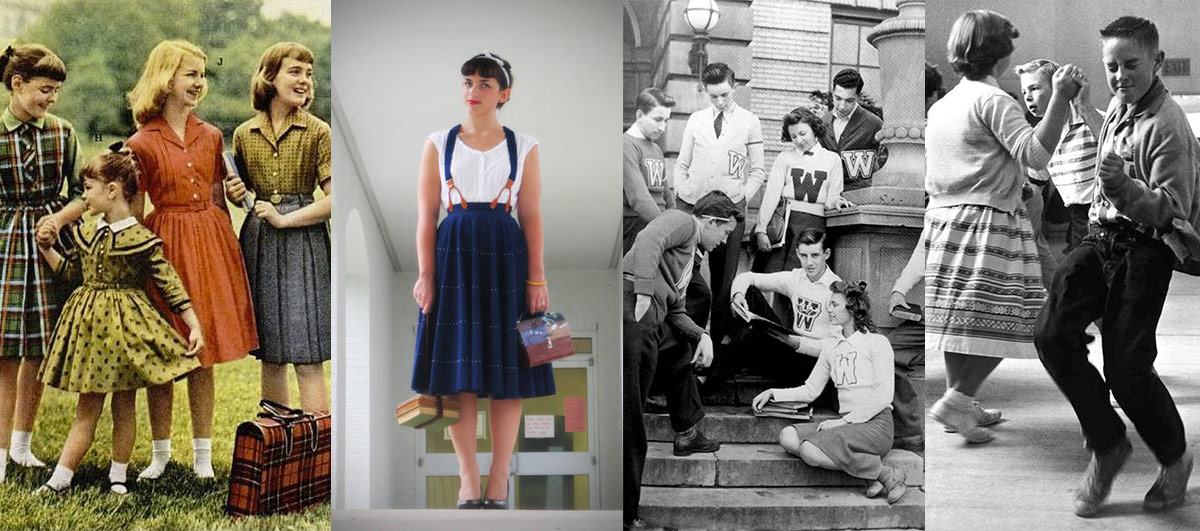
1950’s: Uniforms, Book Belts & Film Projectors
By the end of the decade, the average annual salary for a U.S. public school teacher was $4,995 during the 1959–60 school year. School calendars were not dramatically shorter than they are today: the average public-school term was 175 days in 1949–50 and 177.9 days in 1959–60. However, students attended an average of 151.7 days in 1949–50 and 157.9 days in 1959–60.
Sources: NCES historical school statistics and NCES historical teacher salaries.
American secondary education changed during the 1950s as schools placed greater attention on practical preparation, personal development, and vocational learning. The Life Adjustment Education movement influenced this approach by encouraging schools to prepare students for work, citizenship, and everyday adult life.
Later in the decade, the National Defense Education Act of 1958 provided federal support for science, mathematics, modern foreign-language, technical, and vocational education. The law supported these subject areas while leaving curriculum control with states and local school systems.
Sources: University of Southern California overview of Life Adjustment Education and the National Defense Education Act of 1958.
What changed
- The average public-school term was approximately 175–178 days
- Life Adjustment Education encouraged practical and vocational learning
- The 1958 National Defense Education Act increased support for science, mathematics, foreign languages, and technical education
- Blackboards, textbooks, printed handouts, and film-strip projectors remained common classroom tools
Why it matters
- Education emphasized structure and discipline
- Printed materials were essential, limited, and reused extensively
1960’s: Cultural Shifts, Conservative Classrooms
The 60’s saw a true revolution in style, culture and everything associated. Many young Americans ditched the button down, plaid look in favor of ‘British Invasion’ inspired fashion that included bright colors, shorter skirts, ‘hip huggers’, capri pants, big belts and head bands. Much of the then newer fads in fashion however didn’t filter into schools. Most schools continued to employ strict dress codes. Boys commonly worse dress trousers or slacks, dress shoes and buttoned down shirts. Haircuts were conservative with most schools banning the more popular young adult styles of the day like pig tails, bowl or ‘Beatle’ cuts, Mohawks or Afros.
School kids in the 60’s typically carried with them tin lunch boxes, a handy slide-rule and carried their school text books, bound together using the familiar book belts. More experimental forms of teaching made its way into schools in the 60’s with many teachers employing the use of speed-reading and grading systems not purely reliant on standardized ‘A through F’ alphabet grades. Kids were still getting warm, daily print outs from school ditto machines and teachers were still giving instructions using blackboards and film-strip projectors.
What changed
- Youth fashion exploded outside school, but dress codes remained strict
- Early experimentation with grading systems and reading techniques
- Continued reliance on printed worksheets, blackboards, and projectors
Why it matters
- Schools resisted rapid cultural change
- Print remained the primary method for instruction and communication
1970’s: Relaxed Dress Codes & Classroom Modernization
In 1954, the Supreme Court ruled in Brown v. Board of Education that state-mandated racial segregation in public schools was unconstitutional. The Court directed states to begin desegregation plans in 1955, but implementation faced significant resistance. The Civil Rights Act of 1964 strengthened federal action against school segregation, and desegregation accelerated during the late 1960s and 1970s. However, progress was uneven and did not mean that every U.S. school had become fully integrated.
Sources: National Archives: Brown v. Board of Education and National Archives: Civil Rights Act of 1964.
These social and cultural changes were accompanied by more relaxed approaches to school clothing, as many schools reduced or modified their dress codes.
Technology advanced sufficiently enough from the previous decade to make the 70’s class room experience different from previous decades. Overhead projectors were more common in the 1970’s though most school classrooms still had film-strip projectors. Gone were slide-rules, replaced by pocket calculators and even calculator watches, though those were a rarity. Book belts were now replaced by book bags and back packs and for the first time many girls came to school wearing make-up.
Grade school, middle school and high school girls started wearing mini-skirts around the mid 70’s. Tennis shoes were becoming popular with kids of varying ages and more girls were allowed to get away with wearing earrings. Longer hair for boys was more tolerated and eventually became ‘the’ hair style of the decade. Kids wearing bell bottoms could be found in every classroom as could kids wearing tight fitting t-shirts with pop culture references splashed across the front or back. Denim was more widely accepted in the decade and it was often considered trendy to wear at least one article of western wear, be it a cowboy hat, large belt buckle or cowboy boots. Many young girls wore cowl neck sweaters in a varying array of colors and texture and the 70’s wouldn’t truly have been the 70’s without elongated collars on shirts.
What changed
- School desegregation efforts expanded following Brown v. Board of Education and the Civil Rights Act of 1964
- Backpacks replaced book belts
- Overhead projectors and pocket calculators became common
Why it matters
- Schools became more flexible and expressive
- Printed schedules, assignments, and visual materials increased
1980’s: The First Classroom Tech Boom
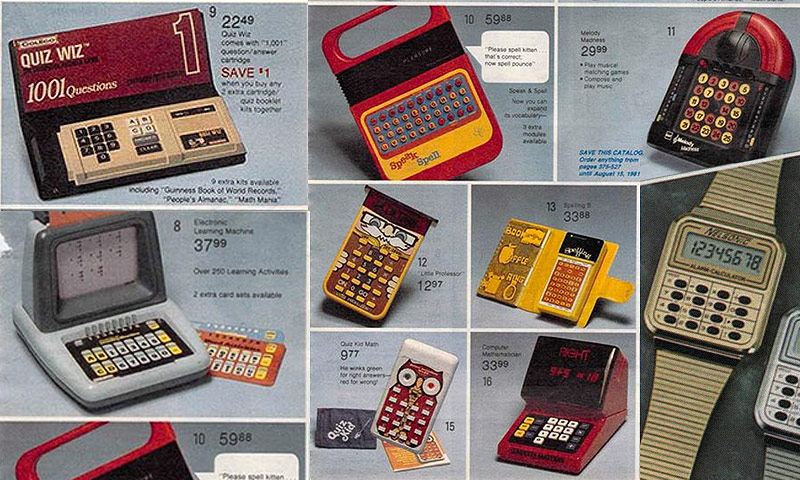
The 80’s are well known for technological advancements and infrastructure changes in schools. The 80’s is the decade when learning devices became sophisticated and small enough to make their way into classrooms. Calculators, Speak N Spells, math keyboards, listening devices using tapes all became cheap and popular. Companies started catering to children more; creating unique and popular tools and toys, specifically designed to be used in classrooms and at home by kids. Gone from classrooms were film-strip projectors and the slide-rule. Instead, just about every classroom now had a large TV (21 inch was considered large at the time) where teachers would “pop-in” VHS tapes for the class to watch. Important tests were given with score cards where kids had to pencil in their choice (usually A, B, C or D) and each card would then be read by computers and graded quickly and easily.
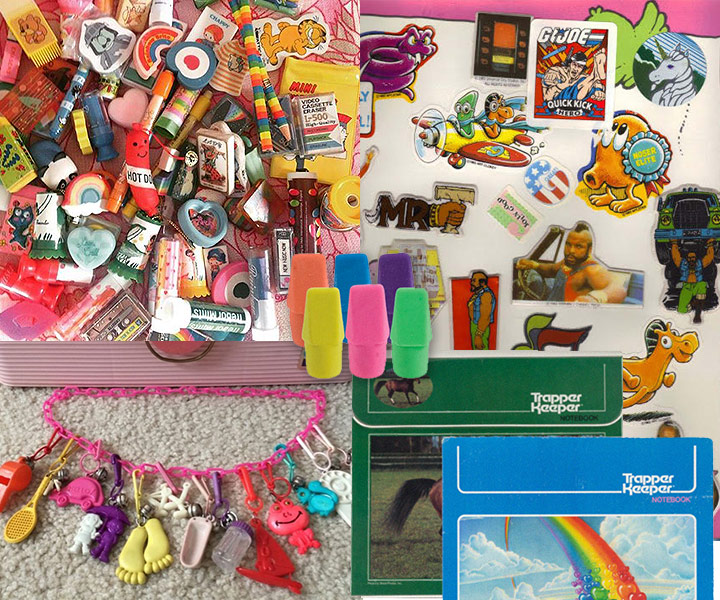
During the 80’s kids could choose from dozens of different designs of backpacks, new Trapper Keepers, colored and scented papers, scented stickers and markers, colored pens and pencils, pencil grips, eraser caps, scissors, jelly bracelets, clips, charms, watches/swatches, rulers, thumb tacks, rubber bands, pencil sharpeners and much…all available in a varied array of shapes, sizes and colors. The 80’s was about product diversity and kids were able to display their originality and diversity with their school supplies, clothes and overall style.
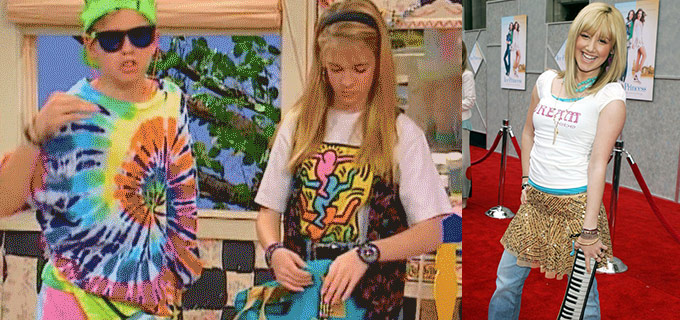
A large array of highly stylized, trendy clothing could be seen in schools as kids migrated away from the styles of the 60’s and 70’s. The 80’s fashion included customized sneakers from Reebok, Converse, Nike and L.A. Gear. Fashion for kids was filled with multi-colored clothing filled with not just pop-culture references and popular sayings but also abstract designs, highlighting bold colors, neon or animal patterns and pants with stirrups. Denim was big for both girls and boys. Children could be seen adorning ‘tie-die’ patterns while others wore anything from pastel colored pants with collared shirts and bulky sweater to ‘sweats’ featuring headbands, long sleeved shirts worn with one shoulder showing, multi-colored or neon leggings. Hair was big, bold and adventurous with both boys and girls adorning interesting colors, shapes and lengths.
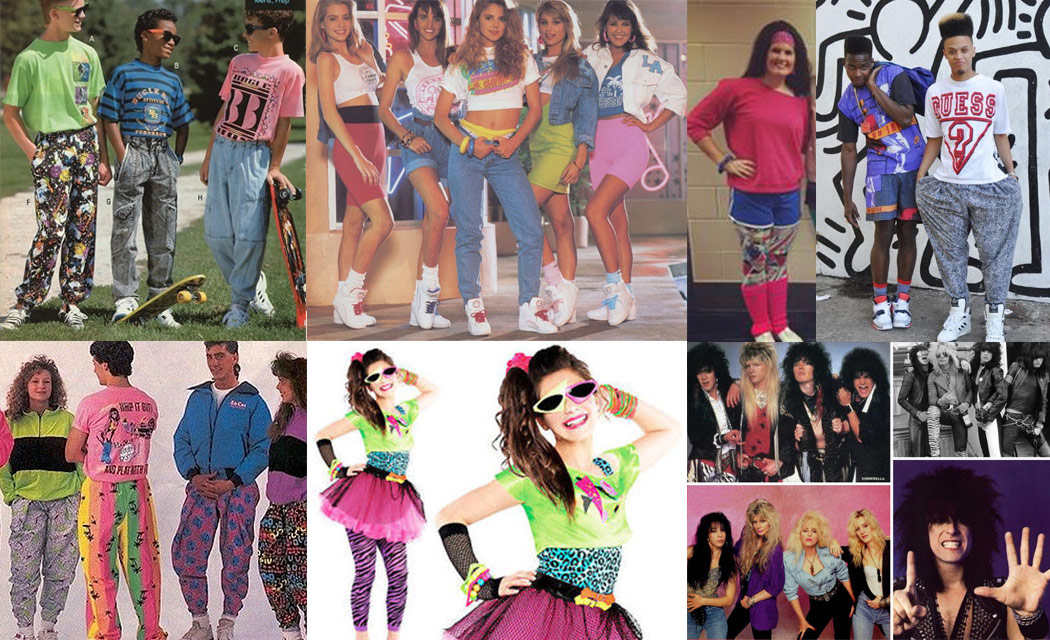
An 80’s style homage would not be complete without mentioning those designs worn by popular artists like Madonna, Michael Jackson, Cindy Lauper and bands like Poison, Guns N’ Roses, Quiet Riot, Van Halen and Motley Crue. Fashion trends from these and other popular artists could be found in virtually every classroom. The 80’s were truly a unique era of trends and fashion which offered unparalleled styling options for kids in school. The decade represented the first time in American history where individualism was truly possible; allowing kids to choose from an unprecedented array of styling choices and where styling terms like ‘accessorize’, ‘glam’, ‘new wave’, ‘fresh’ and ‘yuppie’ became popular and characteristic of the styles kids were wearing in class.
What changed
- Calculators, VHS players, scan-graded tests, and early learning devices
- Explosion of colorful school supplies and personal expression
- Television-based instruction became standard
Why it matters
- Students interacted with multiple teaching formats
- Print expanded into planners, folders, worksheets, and classroom visuals
1990’s: Computers, Internet & Transitional Learning
Much of the style available in the 80’s didn’t carry over to the 90’s. Much like the 70’s, many of the styling trends of the 80’s were fads and died out early. Grunge had made its way into pop culture and on to the radio airwaves as much of the style of older kids in the early 90’s was comprised of clothing fitting the movement. Many boys wore white or dark colored t-shirts, often with band names or obscure references on them, long flannel dress shirts that remained unbuttoned and either worn or tied around the waist, loose fitting blue jeans often with holes on or around the knees and brown or dark leather boots, typically worn by construction workers. Girls wore jean jackets, t-shirts with a long-sleeved shirt tied around their waist and low top tennis shoes. Wearing flannel shirts with tees and short denim shorts with solid colored leggings underneath was also considered stylish.
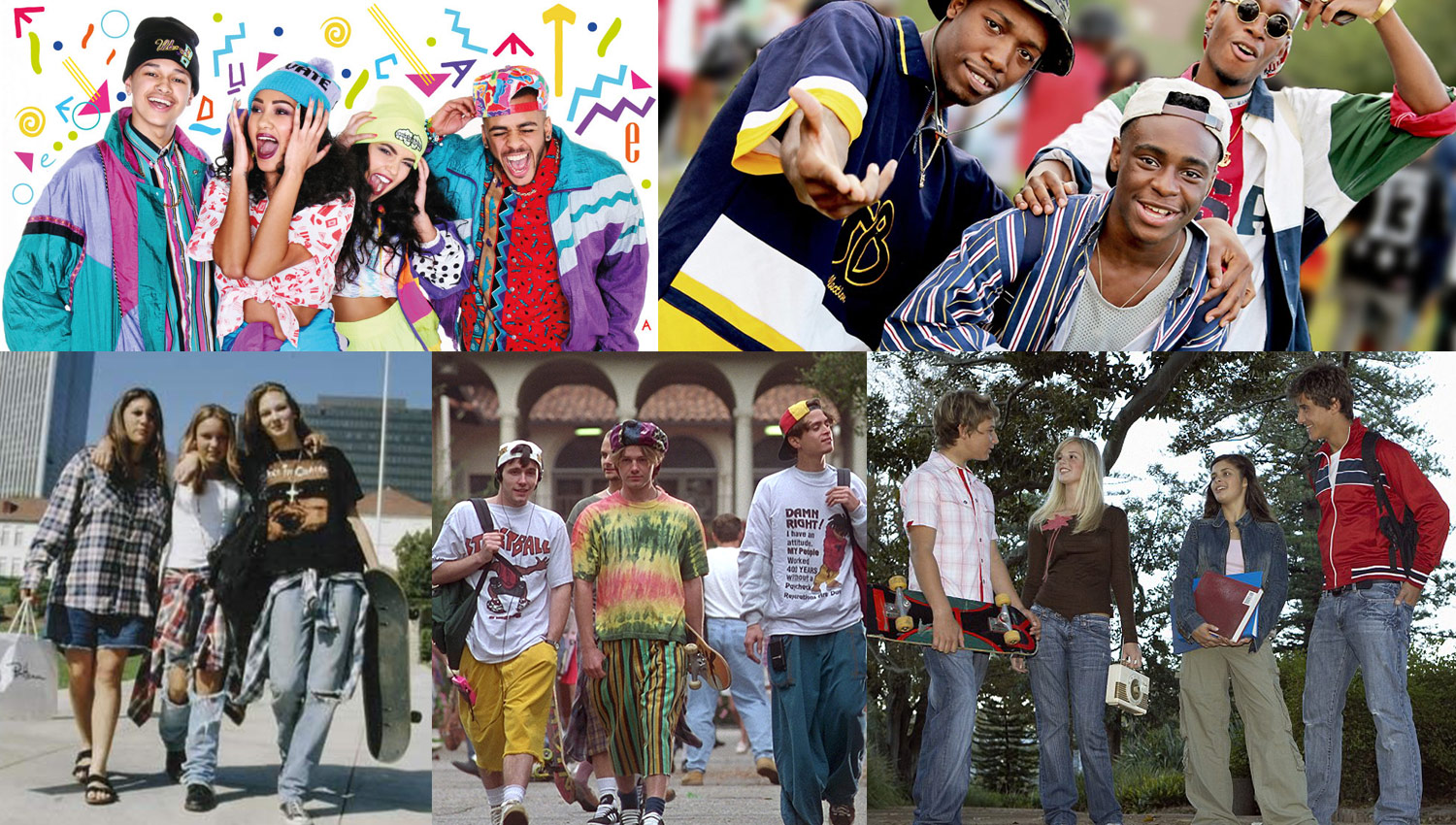
Brands like Tommy Hilfiger, SoCal Surfwear, Wet Seal, Urban Outfitters, Contempo Casuals, and Bongo Jeans were popular and colorful combos were nearly as popular as they were in the late 80’s. An average girl’s jeans came up to the navel and virtually all jeans were rolled up to some degree at the bottom.
Hip-hop had matured in the 90’s with more kids turning to hip-hop fashion for school. For a while over-sized jeans were worn backwards ala Kriss Kros style, the early 90’s young hip hop duo. Many kids wore multi-colored. Over-sized athletic jackets and pants, featuring a diverse array of designs and brightly colored caps with the bill turned upwards. Still other kids, fans of the new genre called EDM or ‘electronic dance music’ dressed in oversized, large bell-bottom jeans, and t-shirts. Younger kids would deck out in t-shirts and jean overalls, wear over-sized cargo pants that tapered at the bottom. Much of kids clothes during the 90’s was over-sized, featured multiple patterns, colors and overall comprised of numerous styles.
The classroom of the 90’s continued the trend of looking different from previous decades. With the 90’s came the internet and a very big change for many classrooms: a move away from traditional learning methods towards distributed learning via computers. Most schools now had computer labs or classrooms with modern computers. Class curriculum now included courses in computers and teachers now gave homework assignments where students had to go on the internet to look up information, instead of the traditional Encyclopedia. Jansport backpacks were popular as were day planners and dark colored makeup for girls. Graphing calculators were big (and expensive) and just about every kid had one in their back pack or desk. Cellular phones started to become more popular during the 90’s as did personal pagers and for the first time teachers had to walk around their classes demanding kids either turn over their personal electronic devices or turn them off and put away.
Jelly Roll pens were all the rage in classrooms as were highly stylized pens and pencils in general. Troll toppers, chunky shoes and hair streaking were all the rage as well. The 90’s were a high point for accessories, where boys and girls would wear rings, earrings and necklaces of all materials, sizes, shapes and designs. Teachers still overwhelmingly used the blackboard (or the newer trend of whiteboards) and kids were still primarily handing in their tests and homework reports in hand written print or cursive. VHS tapes were replaced with CDs and instead of small TVs and VHS players, teachers used overhead projectors that displayed images and video from computers onto white screens or walls. All in all the 90’s represented the last decade where students copied information and assignments down on paper, used CDs or floppy discs. The 90’s was a time where getting online was a process that involved ‘dialing in’ and a time where phones lacked any semblance of social media correspondence. They were the last decade kids actually called their classmates and friends on the phone and the last era when phone numbers were actually committed to memory. The 90’s were also the last decade where music was listened to and recorded from the radio or music stores.
What changed
- Computer labs and early internet research
- Graphing calculators and digital coursework
- Continued reliance on handwritten notes and printed tests
Why it matters
- Schools balanced digital access with traditional print
- Paper handouts, planners, and assignments remained critical
2000’s: Digital Devices Enter the Backpack
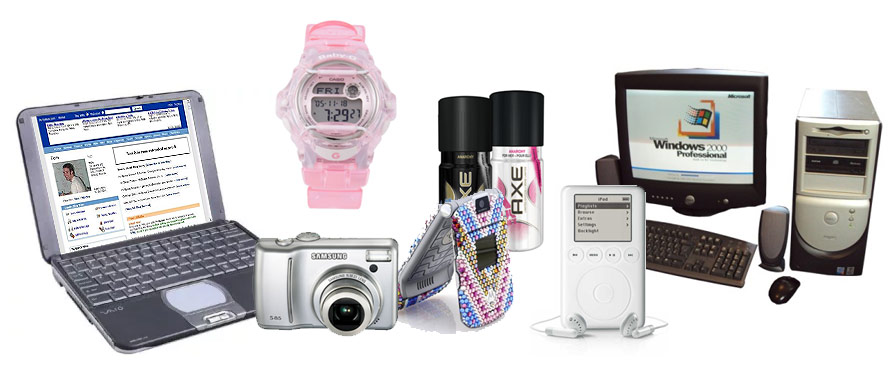
The 2000’s were the decade of boy bands, Britney Spears, Christina Aguilera, Eminem, Jay-Z and Kanye. It was a decade of messenger hats and bags and most kids in middle to high school were heading to Abercrombie & Fitch to outfit their wardrobe for the new school year. The 2000’s were the decade teachers had to deal with constant distracting sounds from kids’ phones and kids stopped passing written notes to classmates and started sending IMs, photos and even videos. Teachers traded confiscating tape players and pocket radios to confiscating Apple iPods. Kids still used textbooks to study and folders, binders and appointment keepers for taking notes but the 00’s brought with it backpacks that now included (at the time) state of the art 13″ and 15″ inch laptops. During the 2000’s computer labs could be found in virtually every school across the US and many schools were dedicating funds to outfit libraries, labs, study halls and class rooms with Dell and HP personal computers for students to use.
The average preteen and teen on their way to school carried graffiti themed backpacks or designer bags (if they were girls) filled with push-a-point pencils and reading material adorned in book ‘sox’. Razr phones were the preferred communication device of the day with many adorned with rhinestones and sequins, a process affectionately referred to as “bedazzling”. Younger children were coming to school with their lunch pails filled with old favorites like Lunchables, Jello-O and boxes of Hi-C but the 2000’s were unique because most schools now had for sell in cafeterias fast food, the very same high-caloric, high-fat menu items typically for sell at McDonald’s, Taco Bell and Pizza Hut. Vending machines throughout the halls offered Coke and Pepsi products for sell and the average school kid’s weight was up significantly versus previous decades.
School kids during the 2000’s seemed to be more fashion conscious and more aware of what was trending and in-style compared to previous decades. Many kids were adorned in high-end, designer clothes & accessories with luxury fashion brands like Victoria Secrets, Gucci, Fendi, Armani, FUBU, and Versace logos seemingly everywhere. Girls looking to be ‘trendy’ at the time wore Juicy Couture tracksuits or accessorized with low-rise, boot cut jeans, gaucho pants with belt scarves and embroidered peasant tops, Shrugs, camisoles, crop tops, stretchy shirts or cardigans, adorned with tattoo choker necklaces, Baby-G watches and body glitter. Guys picked from an array of styles popular at the time including tees with graffiti or airbrushed designs, Hollister polos with the collar turned up, Abercrombie & Fitch athletic shirts, Ed Hardy shirts and turtlenecks up top and skinny jeans. Popular also were Diesel distressed jeans, over-sized cargo shorts or nylon gym pants and flip flops, Heelys or brand name sneakers on the feet.
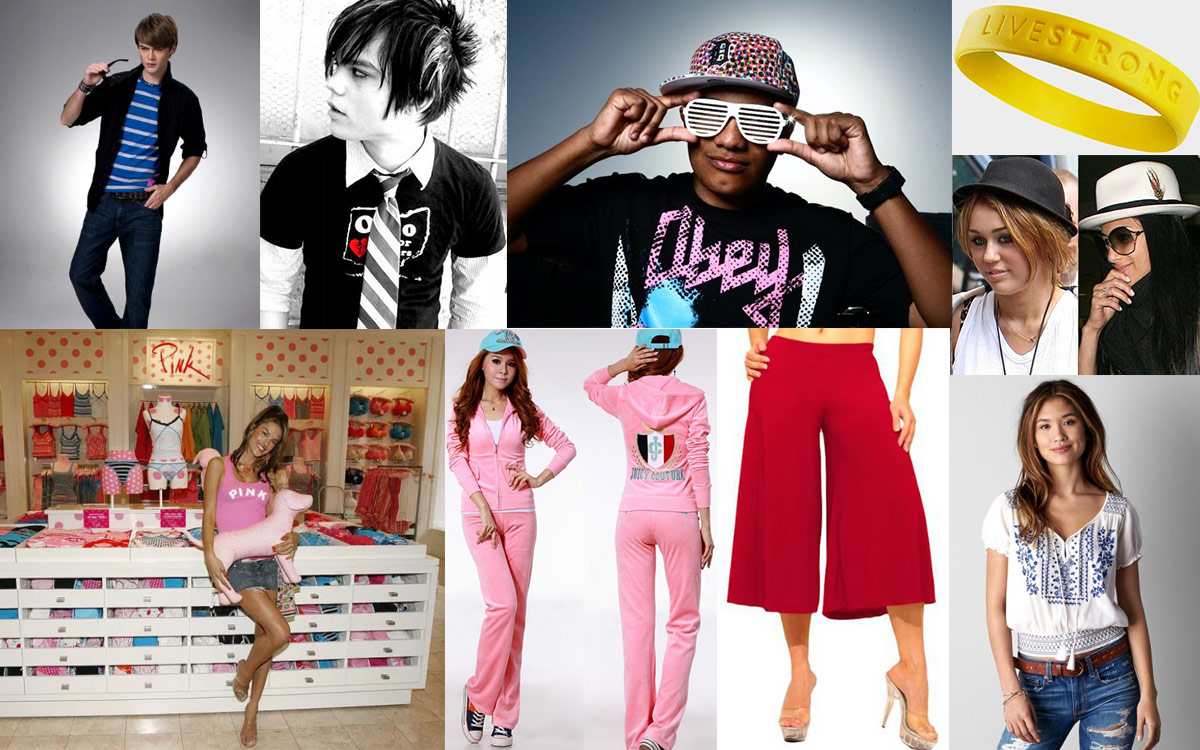
While the average kid didn’t accessorize quite as completely as kids of the 80’s or 90’s, many girls did wear items like MAC Lipglass, bandanas, tattoo chokers, body glitter, fake tans and fedoras that partially covered multi-highlighted hair. Boys trends included spiky hair with blonde highlights or frosted tips or ‘Bieber’ haircuts, Livestrong bracelets, Axe Body Spray, Shutter shades, or caps with flat bills worn just off the top of the head. Emo was also a big trend of the 2000’s and included knit caps, flannel, distressed, skinny jeans, spiked accessories and old school Converse sneakers. Both sexes wore dark eye makeup and grew their hair out so it covered their ears and eyes.
The 2000’s were also the beginning of the ‘selfie’. Digital cameras were becoming extremely advanced and sophisticated but also incredibly cheap and it was likely that more kids in any classroom had a digital camera with them than there were kids without. The last decade saw the birth and rise of the ‘duck face’ and ‘peace sign’. Personal interaction was replaced with kids taking pictures of themselves, their meals, friends and family and using instant messenger services like AIM to send photo creations to other classmates.
Back-to-School Preparation in 2026
Although classrooms are more digital than they were in previous decades, schools still need clear, visible materials for orientation, schedules, events, parent communication, and student activities.
What Schools, Teachers and PTAs May Need
- Posters for orientations, events and wayfinding
- Flyers for schedules, announcements and fundraisers
- Presentation folders for open houses and welcome kits
- Booklets for handbooks and program information
- Stickers and bookmarks for clubs, rewards and reading programs
- Notecards for teacher welcomes and family communication
Schools, teachers, PTAs, and nearby businesses can find these materials through the Overnight Prints back-to-school collection.
Teachers, tutors, school administrators, and education professionals can also customize education and teacher business card templates with their name, role, school, and contact information.
Back-to-School Preparation Checklist
Before the school year begins:
- Confirm registration details, schedules and supply lists.
- Review the school’s dress code and technology policies.
- Update emergency and authorized-pickup contacts.
- Prepare orientation maps, signs and welcome materials.
- Print event announcements and activity schedules.
- Check that QR codes and online links work correctly.
- Give families both digital and printed ways to access essential information.
What Has Stayed the Same?
Classrooms have changed from blackboards and book belts to digital portals and AI-assisted tools, but students still need structure, information, and a sense of connection. The strongest back-to-school communication combines convenient digital tools with printed materials people can see, carry, and reference when needed.
Explore back-to-school printing materials for schools, teachers, and PTAs to prepare for the 2026 school year.
Related Articles
BACK TO SCHOOL IDEAS
BACK TO SCHOOL: 10 MAJOR LIFE HACKS FOR DIY CLASSROOM DÉCOR
FAQ
When do schools usually print back-to-school materials?
Most start 3–6 weeks before the first day. If you’re late, prioritize Flyers for fast announcements and Posters for visibility.
What are the most cost-effective prints for school events?
Flyers for handouts, Rack Cards for info takeaways, and Stickers for engagement.
How can small businesses tie into back-to-school?
Offer welcome discounts on Postcards, hang window Posters, and include Bookmarks as freebies for families.
What’s a simple print bundle for PTAs or clubs?
One Poster + 100 Flyers + 250 Stickers covers promotion, handouts, and rewards.
Do I need folders?
For orientations and open houses, Presentation Folders keep schedules, maps, and contacts tidy.
How has school changed since the 1950s?
Schools have shifted from blackboards, printed textbooks, and film-strip projectors to computers, tablets, digital learning platforms, and AI-assisted tools. Dress codes, classroom culture, and communication methods have also changed.
What school supplies were used in the 1950s?
Students commonly used printed textbooks, notebooks, pencils, lunch boxes, and book belts. Classrooms relied heavily on blackboards, paper handouts, and film-strip projectors.
Do schools still use printed materials in 2026?
Yes. Schools still use posters, flyers, folders, handbooks, schedules, worksheets, and other printed materials, often alongside digital portals and QR codes.