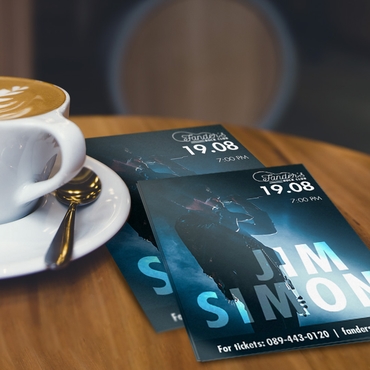
The most cost-effective print products for Q1 are those that maximize visibility, repeat exposure, and flexibility, without requiring large upfront budgets. For small businesses, affordable print marketing in Q1 is less about premium finishes and more about strategic placement, clarity, and timing.
Q1 is a reset period for most small businesses.
Many small businesses approach Q1 differently than peak seasons, focusing on practical formats and smarter spend rather than volume. This shift is explored in more detail in The Complete Small Business Guide to Printing Services, which breaks down how different print formats support different business goals throughout the year.
Budgets are tighter after the holidays. Customers are more price-conscious. And marketing decisions are made carefully, with an eye toward value rather than experimentation.
That’s why Q1 is when many businesses ask the same question:
Which print products actually make sense when budgets are limited?
The answer isn’t “the cheapest option.” It’s the most cost-effective one, the print products that deliver visibility, longevity, and real-world impact without requiring a large investment.
This guide walks through the most cost-effective print products for Q1 marketing campaigns, and explains why they work when planning matters most.
Why Cost-Effective Print Matters More in Q1 Than Any Other Quarter
Q1 marketing is fundamentally different from holiday or peak-season campaigns.
In Q1:
- Promotions are practical, not celebratory
- Customers are more selective
- Businesses focus on sustaining momentum, not creating buzz
This leads many SMBs to wonder:
Is print marketing still worth it in Q1?
Yes, when it’s chosen intentionally. Affordable print marketing works best in Q1 because it supports consistent, local visibility without relying on ongoing ad spend.
Print pieces placed in January often continue working through February and March, making them especially valuable early in the year.
Cost-Effective Print Is About Longevity, Not Just Price
One common mistake is equating “low cost” with “cheap.”
Low-cost print products can be ineffective if they:
- Get thrown away immediately
- Require constant reprinting
- Don’t match how customers interact with the business
Cost-effective print products, on the other hand, are affordable and useful. They’re pieces that stay visible, get reused, or travel with the customer.
This balance between speed, price, and usefulness becomes especially important early in the year, when timing still matters but budgets are limited. Many businesses face this exact tradeoff when planning January campaigns, as discussed in Fast Printing vs Cheap Printing: What Matters More for January Sales?
This distinction matters when planning Q1 campaigns with limited room for waste.
Flyers: The Q1 Workhorse for Affordable Print Marketing

Flyers remain one of the most cost-effective print products for Q1 because they’re flexible and easy to deploy.
In Q1, flyers are often used for:
- January promotions
- New-year offers
- Local announcements
- In-store awareness
What makes flyers cost-effective isn’t just their low unit cost—it’s their adaptability. A single flyer design can be used across multiple placements, from counters to windows to handouts.
A common planning question is:
Are flyers still effective when customers are budget-conscious?
Yes, especially when the message is clear and practical. Q1 flyers perform best when they focus on one benefit or offer, not multiple promotions.
For businesses weighing flyers against other low-cost formats, it’s helpful to understand how placement and format affect attention. A deeper comparison can be found in Flyers vs Posters vs Rack Cards: Which Format Gets More Local Attention?
Product reference: Flyer
Postcards: Affordable Reach With Higher Perceived Value

Postcards often cost slightly more per piece than flyers, but they deliver a different kind of value.
In Q1, postcards are cost-effective because:
- They feel more intentional
- They’re often kept longer
- They work well for reminders and follow-ups
Postcards are especially useful for businesses that rely on repeat visits or appointments, where recall matters more than immediate action.
This leads to a frequent question:
Are postcards worth the extra cost in Q1?
In many cases, yes. A postcard that stays visible for weeks often outperforms a cheaper piece that’s discarded immediately.
Product reference: Postcard
Stickers: Small, Low-Cost, High Visibility
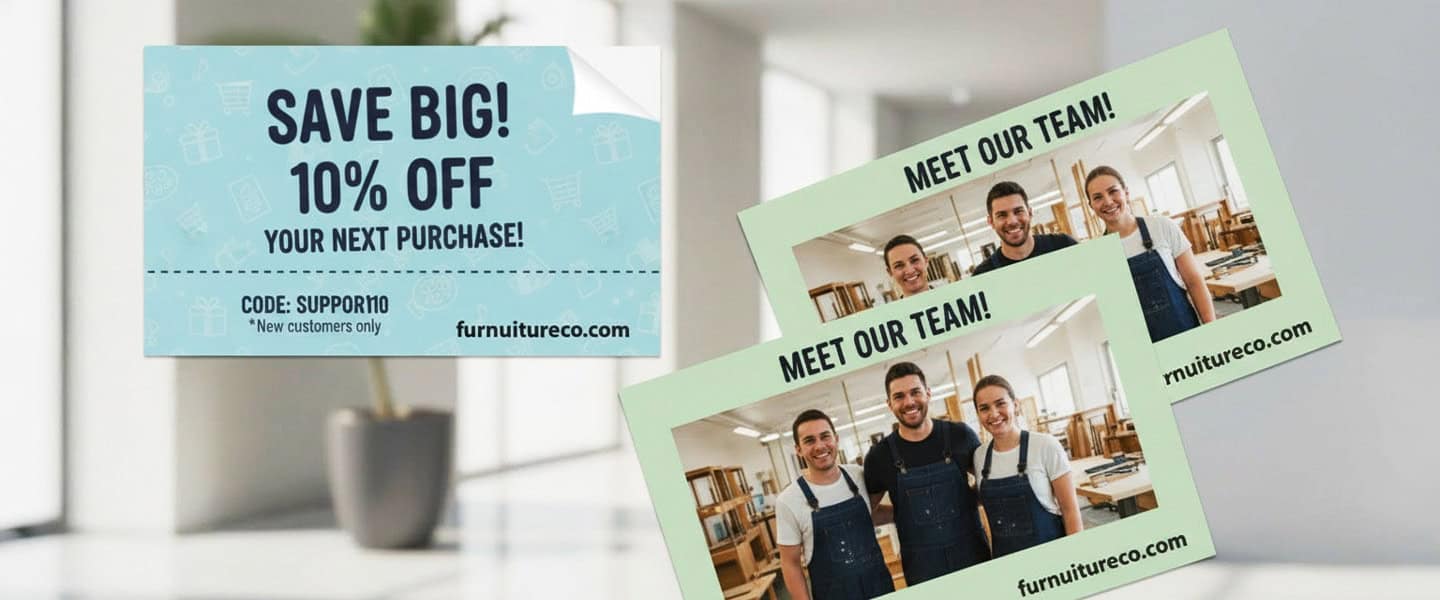
Stickers are often overlooked in Q1 planning—but they’re one of the most cost-effective print products available.
Their strength lies in how they’re used. Stickers don’t ask to be read immediately. They travel. They get placed. They resurface over time.
In Q1, stickers work well for:
- Brand reminders
- Packaging inserts
- Event handouts
- Loyalty or thank-you moments
A common concern is:
Do stickers really count as marketing?
Yes, because they extend visibility far beyond the moment of distribution, often at a very low cost per impression.
Stickers may seem simple, but size, material, and finish all affect how long they last and where they’re used. Businesses planning to include stickers in Q1 campaigns often benefit from understanding these differences ahead of time :Sticker Printing 101: Sizes, Materials & Creative Uses for 2026
Product reference: Sticker
Bookmarks: The Quiet Q1 Performer
Bookmarks are one of the most underestimated low-cost print products.
They’re inexpensive, lightweight, and designed to stay in use. That makes them particularly effective in Q1, when businesses want ongoing visibility without recurring costs.
Bookmarks work especially well for:
- Service-based businesses
- Educational organizations
- Community campaigns
- Local events
Because bookmarks are functional, they’re less likely to be thrown away. This makes them a strong option for Q1 campaigns focused on longevity rather than immediate conversion.
Product reference: Bookmark
Why These Products Perform Well Together in Q1
Another important planning consideration is how print products work together.
Q1 campaigns rarely rely on one piece alone. Instead, cost-effective strategies often combine:
- Flyers for immediate awareness
- Postcards for recall
- Stickers or bookmarks for long-term visibility
This layered approach spreads impact over time without increasing complexity or cost significantly.
It also reduces reliance on constant reprinting, which is critical when budgets are tight.
How to Choose the Right Print Product for Your Q1 Campaign
Rather than asking “what’s cheapest,” Q1 planning is more effective when businesses ask:
- How long should this message last?
- Where will this be seen?
- How often do I want repeat exposure?
Print products that align with those answers tend to deliver the best ROI—even if they aren’t the lowest-cost option upfront.
Planning Print Quantities for Q1 Without Overcommitting
Another Q1-specific concern is quantity.
Overprinting in January can lock up budget unnecessarily. Underprinting can limit reach.
The most cost-effective approach is to:
- Print enough to cover the campaign window
- Choose products that remain usable beyond January
- Avoid hyper-specific messaging that expires quickly
This flexibility is one reason flyers, postcards, stickers, and bookmarks are so popular in Q1, they can adapt to changing needs.
Affordable Print Marketing Is About Strategic Simplicity
Q1 is not the time for overly complex print campaigns.
The most successful Q1 strategies are simple:
- Clear message
- Familiar formats
- Consistent placement
Cost-effective print products support that simplicity. They don’t require elaborate explanations or premium finishes to work.
Why Q1 Print Planning Pays Off All Year
One overlooked benefit of Q1 print marketing is momentum.
Print pieces introduced early in the year often:
- Establish brand presence
- Reinforce consistency
- Support later campaigns
That makes Q1 print decisions foundational, not temporary.
Affordable print marketing in Q1 isn’t just about saving money—it’s about setting the tone for the year ahead.
Final Takeaway
The most cost-effective print products for Q1 marketing campaigns aren’t defined by price alone.
They’re defined by:
- Longevity
- Visibility
- Flexibility
- Relevance
Flyers, postcards, stickers, and bookmarks continue to work in Q1 because they meet businesses where they are: focused, practical, and budget-aware.
When chosen intentionally, low-cost print products don’t feel cheap, they feel smart.
Many of the formats that perform well in Q1 also align with broader design and usability trends shaping print in the coming year: Print Trends for 2026: Designs, Colors & Finishes