Choosing between a booklet, a brochure, or a flyer isn’t a design decision.
It’s a business maturity decision.
Most print mistakes don’t happen because the format is wrong, they happen because the format doesn’t match where the business is right now. Early-stage businesses often overprint. Growing businesses under-explain. Established brands sometimes oversimplify.
Understanding the difference between booklet vs brochure vs flyer isn’t about knowing what each product is. It’s about knowing when each one makes sense.
This guide looks at how businesses naturally choose between these three formats as they grow, and why the “best” option changes over time.
Print formats reflect how much you need to say
At the simplest level, the three formats differ in depth:
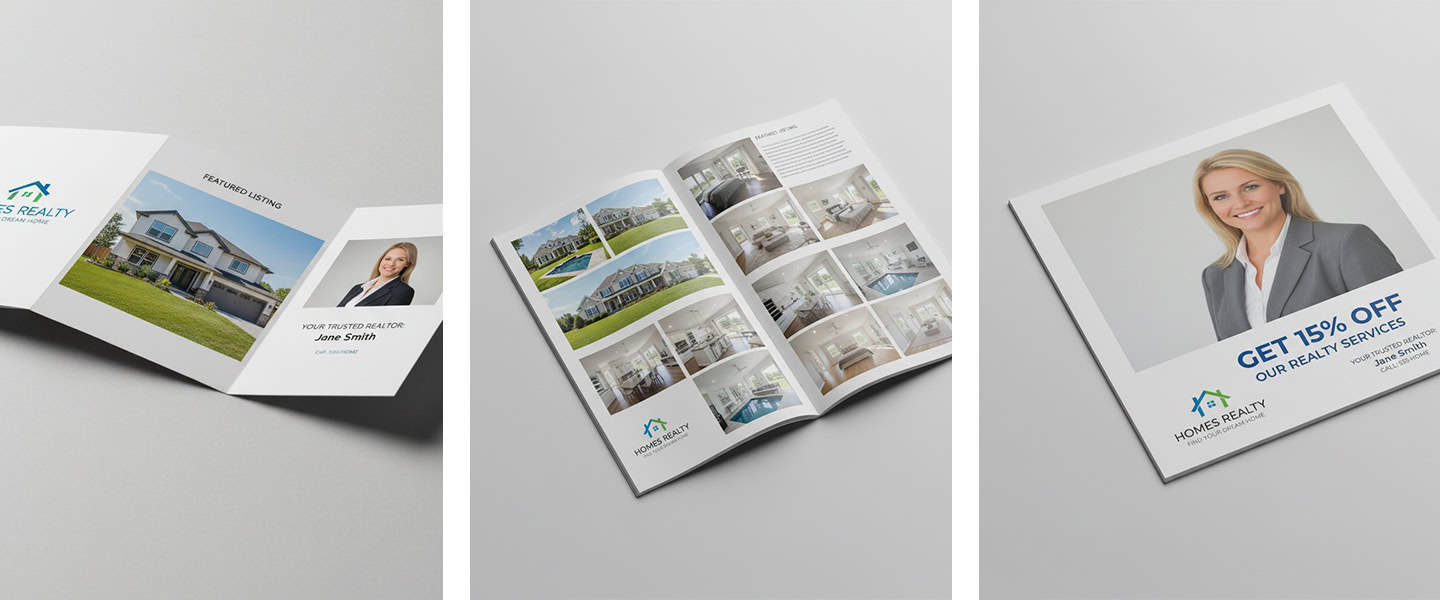
- Flyers are about visibility
- Brochures are about clarity
- Booklets are about commitment
Each one answers a different customer question.
If you print the wrong format, you’re often answering a question the customer hasn’t asked yet, or worse, overwhelming them before they’re ready.
The Complete Small Business Guide to Printing Services (With Clear Examples)
Early-stage businesses: choosing speed over explanation
When a business is new, the primary challenge is being noticed.
Customers don’t yet recognize the name. They’re not looking for detail, they’re deciding whether to pay attention at all. At this stage, print works best when it’s simple, fast, and highly visible.
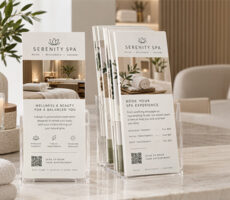
That’s where flyers come in.
Why flyers fit early-stage businesses
Flyers work because they:
- Deliver one clear message
- Are easy to distribute
- Don’t require much explanation
- Support short attention spans
Flyers are commonly used for:
- Grand openings
- Local promotions
- Events and pop-ups
- Basic service announcements
At this stage, a booklet would be too much, and a brochure might feel unnecessary. A flyer matches the reality: you just need people to notice you exist.
Growing businesses: moving from attention to understanding
Once a business gains traction, the challenge changes.
Customers now recognize the name, but they need help understanding:
- What you offer
- How options compare
- Why you’re different
This is where brochures naturally enter the picture.
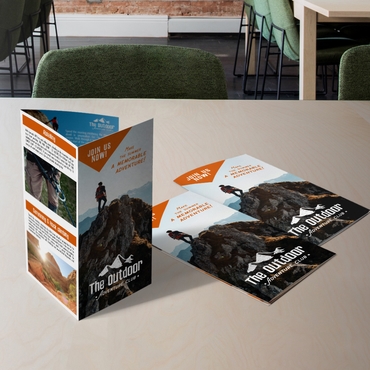
Brochures allow businesses to slow the conversation down just enough to explain value without demanding a full commitment from the reader.
Why brochures fit growing businesses
Brochures work because they:
- Organize information clearly
- Guide the reader through options
- Balance detail and brevity
- Feel intentional, not overwhelming
They’re commonly used for:
- Service overviews
- Product comparisons
- Sales conversations
- In-store or in-office displays
Brochures are especially effective when a business offers choices, packages, tiers, or multiple services and needs to help customers decide.
This aligns with what we’ve explored in How to Design Effective Marketing Brochures: clarity builds confidence.
Established businesses: when depth becomes an advantage
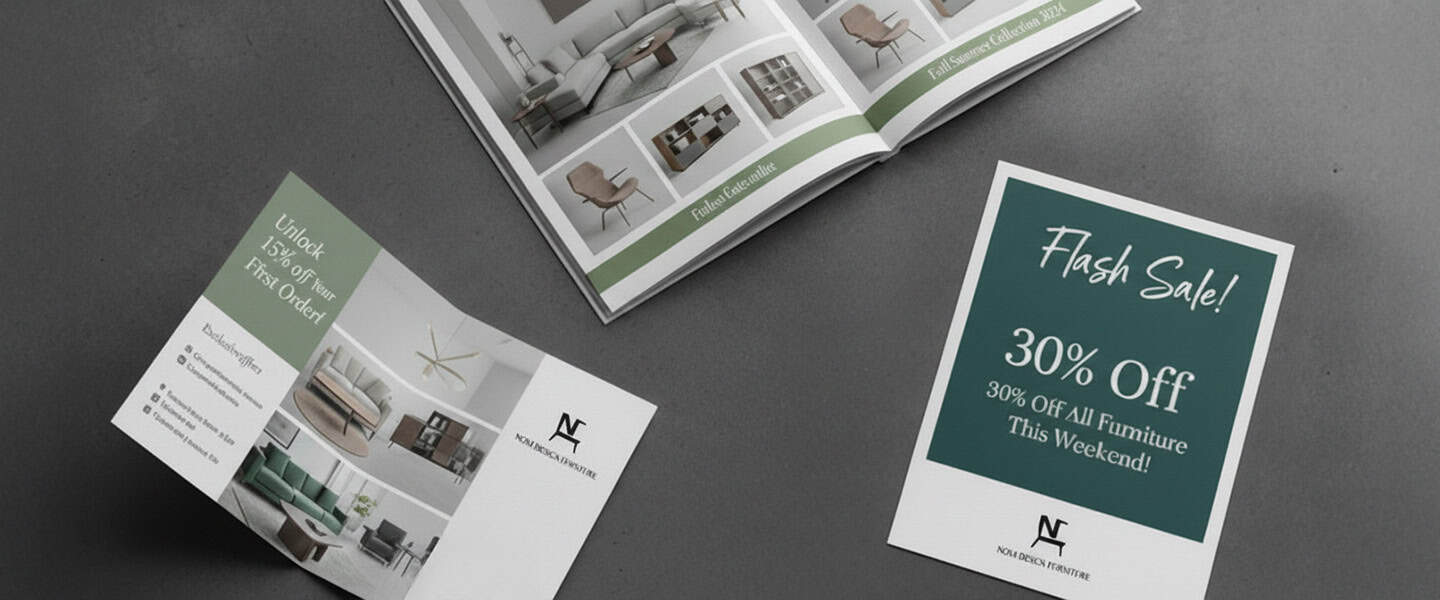
As businesses mature, customers expect more.
They’re no longer asking, “What do you do?”
They’re asking, “Can I trust you?”
This is where booklets make sense.
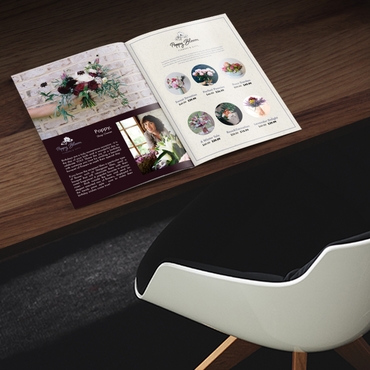
Booklets aren’t about grabbing attention. They’re about reinforcing credibility, explaining processes, and supporting longer decision cycles.
Why booklets fit established businesses
Booklets work because they:
- Allow space for storytelling
- Explain complex offerings
- Signal professionalism and stability
- Support considered decisions
They’re often used for:
- Company overviews
- Product catalogs
- Detailed service explanations
- Presentations, pitches, and onboarding
Booklets tell customers: this business is established enough to invest in clarity.
As we’ve discussed in Why Booklets Are the Underrated Powerhouse of Print Marketing, depth can be a competitive advantage when used intentionally.
It’s not about size, it’s about intent
Many businesses assume the choice comes down to page count or budget. In reality, the decision is about intent.
Ask what the print piece is meant to do:
- Start a conversation?
- Support a conversation?
- Close or reinforce a decision?
Flyers start conversations.
Brochures support them.
Booklets deepen them.
When businesses mismatch format and intent, print feels ineffective, not because print doesn’t work, but because it’s doing the wrong job.
Why some businesses use all three (and why that’s okay)
Mature marketing strategies rarely rely on one format.
It’s common for businesses to use:
- Flyers for outreach and awareness
- Brochures for sales and explanation
- Booklets for trust-building and long-term reference
This isn’t redundancy, it’s alignment.
Each format meets customers at a different moment, without forcing them to absorb more than they’re ready for.
This layered approach mirrors what we’ve explored in The Complete Small Business Guide to Printing Services: print works best when it supports the full customer journey.
What happens when businesses choose the wrong format
When the format doesn’t match the stage, problems show up quickly:
Flyers used where explanation is needed → confusion
Brochures used where attention is limited → ignored
Booklets used too early → overwhelm
These aren’t design issues. They’re timing issues.
Choosing correctly often means choosing less, not more.
Making the choice without overthinking it
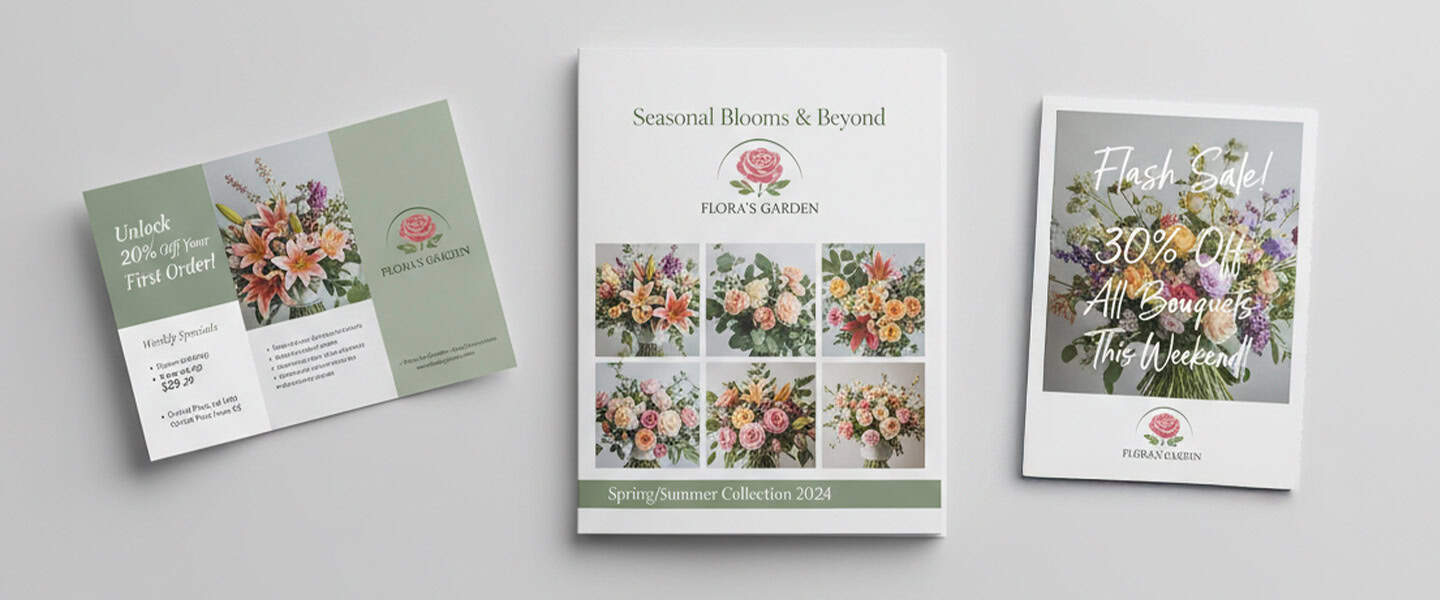
If you’re deciding between a booklet, brochure, or flyer, focus on one question:
How much does my customer need to know before they act?
Very little → flyer
Some structure → brochure
Full understanding → booklet
That’s usually enough to guide the decision.
Final takeaway: format follows growth
There’s no universally “better” option in the booklet vs brochure vs flyer debate.
The right choice depends on where your business is and what your customers need at that moment.
Print works best when it grows with the business, not when it tries to skip stages.
When the format matches the stage, print doesn’t feel like marketing.
It feels like support.
FAQ
What is the main difference between a booklet, a brochure, and a flyer?
The main difference is how much information each format is designed to carry. Flyers are best for short, attention-grabbing messages, brochures help explain offerings clearly, and booklets support deeper storytelling or complex information.
When should a business use a flyer instead of a brochure or booklet?
A business should use a flyer when the goal is visibility or quick awareness, such as for events, promotions, or announcements where customers don’t need much detail before acting.
Are brochures better than flyers for selling services?
Brochures are often better for selling services because they allow space to explain benefits, compare options, and guide customers through a decision, while still remaining concise and easy to scan.
Why do established businesses often choose booklets?
Established businesses use booklets when customers expect depth, credibility, and clarity. Booklets allow space to explain processes, showcase experience, and support longer decision-making cycles.
Can a business use flyers, brochures, and booklets at the same time?
Yes. Many businesses use all three formats together, with flyers for outreach, brochures for sales conversations, and booklets for presentations or detailed explanations. Each format supports a different stage of the customer journey.
| Feature | Flyers | Brochures | Booklets |
| Primary role | Visibility & awareness | Explanation & clarity | Depth & credibility |
| Best business stage | Early-stage / promotions | Growing businesses | Established businesses |
| Information depth | Minimal | Moderate | High |
| Customer intent | “What is this?” | “Is this right for me?” | “Can I trust this?” |
| Typical use cases | Events, promos, announcements | Services, options, sales | Catalogs, presentations |
| Decision support | Low | Medium | High |
| Shelf life | Short-term | Medium-term | Long-term |
| Production mindset | Fast & simple | Structured & guided | Intentional & detailed |