Poster printing isn’t expensive. Printing without a plan is.
Most businesses don’t go over budget because posters are costly.
They go over budget because they:
- choose the wrong format
- print more than they need
- or rush decisions that should have been planned
Poster printing itself is predictable.
What’s not predictable is how those decisions affect your final cost—and whether the posters actually work once they’re printed.
If you understand what drives the price, you can control it without sacrificing results.
What poster printing typically costs in 2026

Poster pricing isn’t fixed, but it follows clear patterns.
Most orders fall into three general categories:
- Smaller formats (around 11″ x 17″) are the most affordable and widely used
- Mid-size posters (18″ x 24″) balance cost and visibility
- Larger formats (24″ x 36″ and above) increase both impact and price
The jump in cost usually comes from size and quantity, not complexity.
Printing one large poster is relatively expensive.
Printing many reduces the cost per unit.
That’s why the same design can cost very different amounts depending on how it’s ordered.
The factors that actually change the price
Poster printing costs are driven by a small set of variables.
Understanding them is where most savings happen.
Size: where cost increases quickly
Larger posters require more material, more ink, and often different equipment.
That’s why moving up in size has a noticeable impact on price.
But size should never be chosen in isolation.
A larger poster only makes sense if it improves visibility in your environment.
If the poster is viewed up close, a smaller format can perform just as well—at a lower cost.
Quantity: where efficiency kicks in
Printing in bulk reduces the cost per piece.
But only if the quantity matches how the posters will be used.
Ordering extra units just to lower the price per poster often leads to waste.
A better approach is to define your placement first, then print accordingly.
If you’re planning a broader campaign, this guide on Bulk Mailing for Small Businesses: Costs, Timelines & When It Makes Sense helps explain how distribution planning affects overall print efficiency.
Paper and finish: where quality becomes visible
Paper choice changes both cost and perception.
Standard paper is more affordable, but tends to feel temporary.
Heavier stock or upgraded finishes increase cost slightly, but they:
- improve durability
- enhance visual impact
- and make the poster feel more intentional
For posters displayed in high-traffic areas, this difference matters.
Turnaround time: speed vs cost
Urgency is one of the most overlooked cost drivers.
Faster production times often mean:
- higher printing costs
- limited options
- less flexibility
If your campaign allows for planning, you can avoid paying for speed.
If not, faster turnaround becomes part of the investment.
Online vs local printing: how pricing compares

The gap between online and local printing has widened in recent years.
Online printing typically offers:
- clearer pricing structures
- better rates for larger quantities
- more control over size, paper, and turnaround
Local print shops still provide value when:
- you need immediate adjustments
- you’re printing a small batch
- or you want to review samples in person
But for most marketing campaigns, especially those involving multiple posters or repeated orders, online printing tends to be more cost-efficient.
You can review available formats and pricing options here: Posters
Where most of the budget is lost
Overspending rarely comes from the price itself.
It comes from decisions made without a clear objective.
Common issues include:
- choosing a size that doesn’t match placement
- printing more units than needed
- rushing production unnecessarily
- focusing on cost instead of effectiveness
The result is often a poster that doesn’t perform—regardless of how much was spent.
If you’re trying to prioritize where to invest your print budget, this article on The Most Cost-Effective Print Products for Q1 Marketing Campaigns breaks down how different print formats compare in terms of value.
When a poster is actually worth the cost
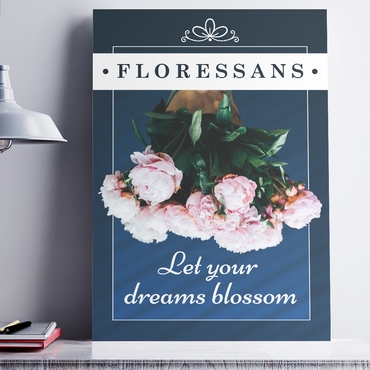
Posters are most effective when they become part of the environment.
That usually means:
- storefront windows
- event venues
- waiting areas
- high-traffic public spaces
In these situations, visibility does most of the work.
A well-placed poster doesn’t need to be expensive to perform.
It just needs to be seen.
The role of design in cost efficiency

Even though this is a pricing discussion, design plays a direct role in cost efficiency.
A clear, readable poster reduces the need for:
- larger sizes
- additional prints
- repeated campaigns
If your message is easy to understand from a distance, you get more value from every unit printed.
If it’s not, increasing size or quantity won’t fix the problem.
For a deeper breakdown of what makes print materials effective, this guide on How to Design Print Materials That Actually Get Read (Not Thrown Away) covers the fundamentals that actually impact performance.
Before you print
Before placing an order, it helps to be clear on three things:
- where the poster will be placed
- how many locations you’re covering
- what action you want people to take
Once those are defined, the rest of the decisions—size, quantity, and format—become much easier.
Ready to print your posters?
If you already know what you need, you can explore available options.
You’ll be able to choose your size, paper, and turnaround based on your campaign, not guesswork.
Final takeaway
Poster printing costs are predictable.
What isn’t predictable is how effective the poster will be.
And that’s what matters more.
Because the real cost isn’t the price per poster.
It’s whether the poster does what it’s supposed to do once it’s printed.