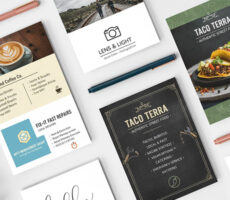
Postcard advertising doesn’t have to mean sending the same “10% off” coupon to everyone in your neighborhood.
A local restaurant can announce a new menu. A real estate agent can introduce themselves to homeowners in a specific area. A salon can reconnect with clients who haven’t booked recently. A home service company can promote seasonal maintenance before demand peaks.
The format stays the same. The campaign changes.
That’s what makes postcards useful for local marketing: they’re small enough to keep the message focused, but they still give businesses room for a strong visual, an offer, essential information, and a clear next step.
If you’re wondering what to actually put on your next postcard campaign, here are 12 ideas you can adapt to your business.
Why Use Postcards for Local Advertising?
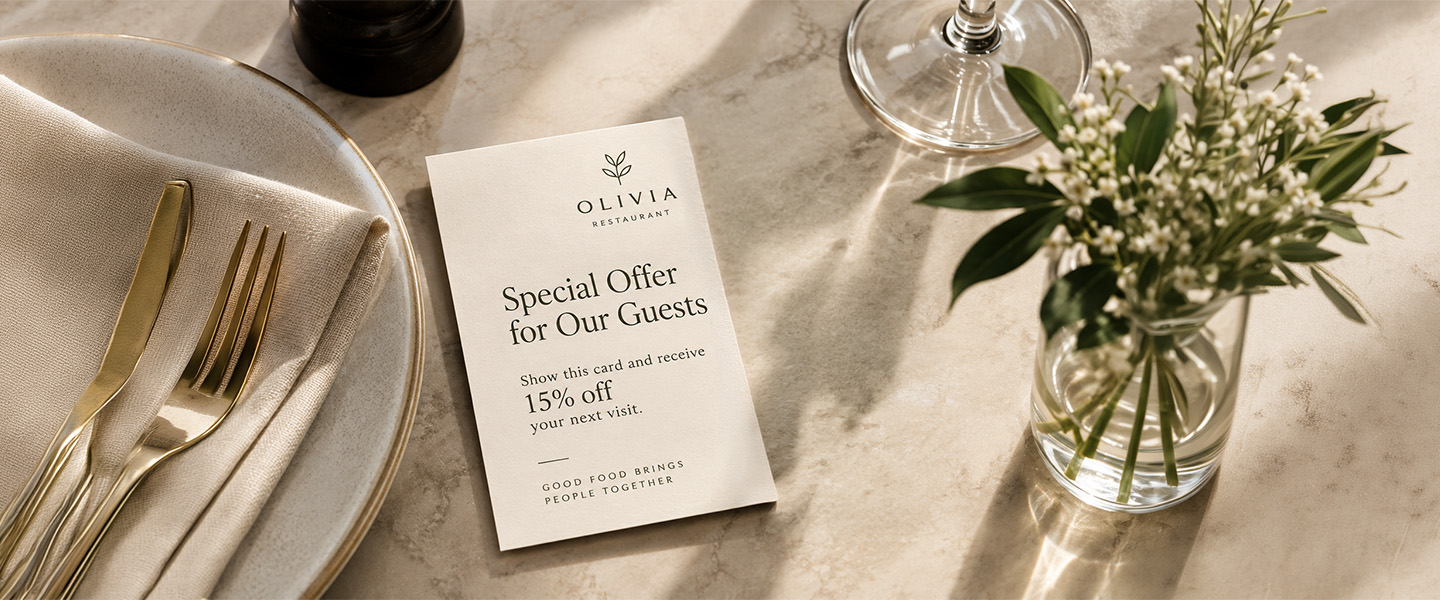
Postcards work particularly well when your target audience is concentrated in a specific geographic area.
Unlike an online ad competing with dozens of other messages on a screen, a postcard gives your business a physical presence in someone’s mailbox.
The U.S. Postal Service offers direct-mail tools such as Every Door Direct Mail (EDDM), which allows businesses to select mailing routes based on factors such as location and demographic characteristics without needing individual recipient addresses. USPS Every Door Direct Mail
That can make direct mail particularly relevant for businesses serving defined local areas, including:
- Restaurants
- Salons
- Real estate professionals
- Dental practices
- Gyms
- Contractors
- Landscapers
- Cleaning services
- Auto repair shops
- Pet services
- Local retailers
- Home service businesses
The campaign still needs a reason for someone to pay attention, though.
“Here’s our business” isn’t usually enough.
A stronger postcard answers:
Why should this person care right now?
Here are 12 ways to do it.
1. Introduce Your Business to the Neighborhood
If you’ve recently opened, moved, expanded, or simply want more people nearby to know you exist, create a neighborhood introduction campaign.
Instead of trying to explain everything your business does, introduce the most important reason someone should remember you.
For example, a new bakery could use:
Front:
Your New Neighborhood Bakery Is Open
Fresh bread, pastries and coffee baked daily.
[Photo of signature products]
Back:
We’re now open on Main Street.
Address
Opening hours
QR code to menu
CTA: Stop by this week.
This type of postcard can work for:
- New businesses
- New locations
- Businesses under new ownership
- Recently relocated businesses
- Companies expanding into a new service area
If the goal is local awareness rather than an immediate discount, strong photography and a memorable value proposition become especially important.
2. Create a New Customer Offer
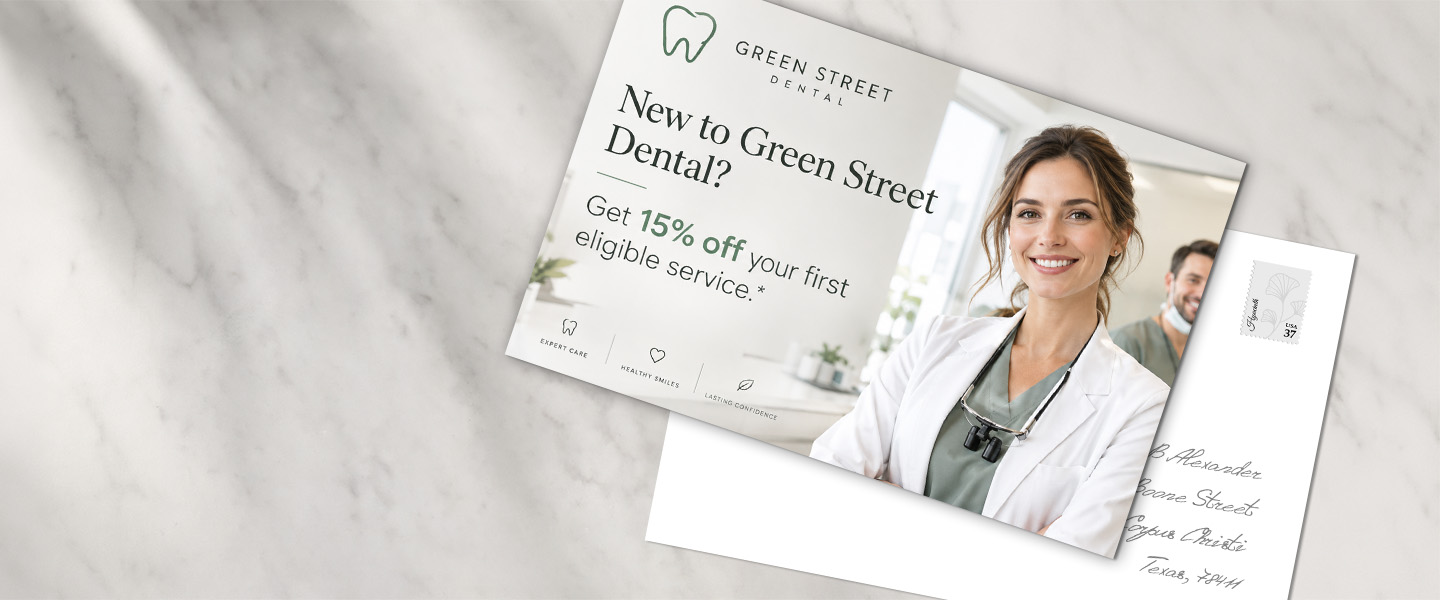
A first-purchase offer gives someone a concrete reason to try a business they haven’t used before.
For example:
New to Green Street Dental?
Get $X off your first eligible service.*
or:
Your First Coffee Is on Us When You Buy Breakfast.
The offer doesn’t always need to be a percentage discount.
Consider:
- Free consultation
- Complimentary add-on
- Buy-one-get-one offer
- Free estimate
- New customer package
- First-visit special
- Free trial
The important part is making the conditions easy to understand.
Avoid burying the actual offer inside a paragraph.
The recipient should be able to answer three questions quickly:
What do I get?
What do I need to do?
When does it expire?
Include any necessary terms clearly.
3. Bring Back Customers Who Haven’t Visited Recently
Not every postcard campaign needs to find new customers.
Sometimes the best audience is people who already know you.
A salon could send:
It’s Been a While
Ready for your next appointment?
Book by October 15 and receive [offer].
A restaurant could try:
We Saved You a Seat
Come see what’s new on our fall menu.
A pet groomer might use:
Time for Another Spa Day?
Book Bella’s next grooming appointment.
This type of campaign works best when you have an existing customer mailing list and a meaningful reason to reconnect.
Personalization can make the message even stronger when your mailing process supports it.
4. Promote a Seasonal Service
Timing matters for local businesses.
Some services become much more relevant during specific parts of the year.
A landscaping company might promote fall cleanup.
An HVAC company could promote seasonal maintenance.
A tax professional could advertise before filing season.
A photographer might promote holiday family sessions.
Instead of advertising the entire company, build the postcard around the service people are most likely to need next.
For example:
Get Your Home Ready for Fall
Schedule your seasonal HVAC tune-up before temperatures drop.
[Phone]
[QR code]
Book an appointment →
Seasonal campaigns work particularly well when they’re sent early enough for customers to act before the need becomes urgent.
5. Announce a Grand Opening
A grand opening gives you a natural reason to contact the neighborhood.
Your postcard should make the essential details impossible to miss:
- Business name
- What the business does
- Opening date
- Location
- Event hours
- Grand-opening offer
- Call to action
For example:
We’re Opening in Downtown Austin
Join us Saturday, October 10
10 AM–4 PM
Food • Music • Opening-Day Specials
123 Main Street
The front can focus on excitement and visual impact, while the back provides practical event details.
If you’re also promoting the opening around the neighborhood, coordinating your postcards with custom stickers for packaging, giveaways, or event materials can help carry the same campaign branding into the physical location.
6. Promote a Local Event
Postcards can advertise more than sales.
Use them to promote:
- Workshops
- Open houses
- Tastings
- Classes
- Fundraisers
- Community events
- Product launches
- Holiday events
- Networking events
- Customer appreciation events
An event postcard should prioritize the information someone needs to decide whether to attend.
For example:
FREE HOME-BUYING WORKSHOP
October 22 • 6:30 PM
Learn about:
✓ Mortgage basics
✓ Down payments
✓ First-time buyer programs
✓ Making an offer
Scan to reserve your seat.
A QR code can be especially useful here because it lets someone move directly from the printed postcard to registration.
7. Launch a Referral Campaign
Your current customers may know exactly who else needs your service.
Give them a reason to spread the word.
For example:
Know Someone Who Needs a Reliable Plumber?
Refer a friend and you’ll both receive [reward].
Or:
Good Hair Days Are Better With Friends
Refer someone new and receive $20 toward your next visit.
Referral postcards can be mailed to existing customers or included with orders and receipts.
Keep the mechanics simple.
If a customer needs to read six steps to understand how the referral works, simplify it.
8. Advertise a Limited-Time Promotion
Urgency can give recipients a reason to act instead of putting the postcard aside.
For example:
Fall Tire Special
Save $50 when you purchase four qualifying tires.
Offer ends October 31.
Or:
3 Days Only
20% off all fall décor.
Friday–Sunday.
The expiration date should be easy to find.
You can also use a campaign-specific promotional code such as:
FALL25
This gives customers a simple way to redeem the offer and can help the business identify responses connected to the campaign.
9. Promote a New Product or Service
Existing customers don’t automatically know when you add something new.
Tell them.
A restaurant could announce a seasonal menu.
A salon might introduce a new treatment.
A fitness studio could promote a new class.
A contractor might add a new service.
For example:
Now Offering Kitchen Cabinet Refinishing
Transform your kitchen without replacing every cabinet.
Before/after image
Scan to see recent projects.
Rather than listing every service the company provides, dedicate the postcard to the new offering.
That keeps the campaign focused.
10. Use Postcards for Real Estate Farming

Real estate is a natural fit for geographically targeted postcard campaigns because agents often want visibility within particular neighborhoods.
Campaign ideas include:
- Just listed
- Just sold
- Recent neighborhood sales
- Market updates
- Home valuation offers
- Open houses
- Agent introductions
- Buyer demand
- Seasonal homeowner tips
For example:
Another Home Just Sold in Oakwood
3 bedrooms • 2 bathrooms
Sold in 12 days*
Thinking about selling?
Scan for a home value estimate.
*Only make performance claims you can substantiate.
The strongest real estate postcards don’t just say “I’m a real estate agent.”
They give homeowners information connected to their neighborhood.
You can also see our guide to real estate postcard marketing for more campaign-specific ideas.
11. Send a Customer Thank-You Campaign
Not every marketing message needs to ask for an immediate sale.
A simple thank-you can help keep the relationship warm.
For example:
Thanks for Shopping Local
Every order, visit and recommendation means a lot to our team.
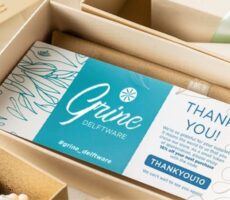
We appreciate having you as a customer.
[Business name]
[Website]
You could also include a small return offer:
Here’s $10 toward your next purchase as our thank-you.
But the offer doesn’t need to dominate the message.
This campaign can work particularly well:
- After a busy season
- Around a business anniversary
- At year-end
- After a major event
- For loyal customers
The goal is retention rather than immediate acquisition.
12. Create a Neighborhood-Specific Campaign
One of the biggest advantages of local advertising is that your message can become more local, not less.
Instead of sending:
Professional Lawn Care Services
try:
Lawn Care for Oakwood Homeowners
Or instead of:
Looking to Sell Your Home?
try:
What’s Your North Park Home Worth in Today’s Market?
A gym opening a second location might say:
Hey, Riverside—We’re Coming to Your Neighborhood.
The product hasn’t changed.
The relevance has.
Neighborhood-specific campaigns can work especially well for:
- Real estate
- Home services
- Restaurants
- Gyms
- Medical practices
- Local retail
- Cleaning companies
- Landscaping
- Childcare
- Pet services
Just make sure your geographic claims and service areas are accurate.
Bonus: Use Postcards to Connect Print and Digital Marketing
A postcard doesn’t have to do all the work itself.
Think of it as the first step.
A postcard can drive someone to:
- Landing page
- Appointment calendar
- Online menu
- Product page
- Event registration
- Online store
- Review page
- Social media profile
- Portfolio
- Home valuation tool
This is where QR codes can be useful.
Instead of trying to fit ten service descriptions onto the postcard, provide the most compelling information and direct interested recipients somewhere they can learn more.
For example:
See Our Before & After Gallery
[QR code]
is much cleaner than trying to fit six project photos and descriptions onto one postcard.
How to Choose the Right Postcard Campaign
Before designing anything, answer these four questions.
1. Who Is Receiving It?
“Everyone nearby” isn’t always the best answer.
Your audience might be:
- Existing customers
- New homeowners
- Households within a service radius
- Previous customers
- Residents of one neighborhood
- Prospective sellers
- Local businesses
The audience determines the message.
2. What Do You Want Them to Do?
Choose one primary action.
For example:
Visit the store.
Book an appointment.
Request a quote.
Scan the QR code.
Attend the event.
Use the offer.
Call the business.
Trying to get someone to call, follow you on Instagram, visit your website, download an app, join your newsletter, and redeem a coupon at the same time creates unnecessary competition.
3. Why Should They Act?
Give them a reason.
That might be:
- Relevant service
- Useful information
- Limited-time offer
- Local convenience
- New product
- Event
- Seasonal need
- Customer benefit
Your postcard should answer:
What’s in this for me?
4. Why Now?
Not every campaign needs urgency, but timing can make the message more relevant.
For example:
Before winter arrives
This weekend
Now open
Offer ends October 31
Before your next trip
This tax season
A reason to act now can prevent the postcard from becoming something the recipient intends to look at “later.”
What Should a Postcard Advertisement Include?
Most local-business postcards don’t need a lot of information.
A simple structure is:
Front
Headline
One strong visual
Main benefit or offer
Back
Short supporting explanation
Call to action
Contact information
Website or QR code
Expiration date/terms when applicable
Mailing/address area as required
The exact mailing layout and requirements depend on how the postcards will be mailed, so check current USPS requirements before finalizing the design. USPS postcard mailing standards
How to Write a Postcard Headline
Your headline should communicate the reason to care—not simply the name of the business.
Instead of:
Smith Landscaping
try:
Take Fall Cleanup Off Your Weekend List
Instead of:
Downtown Dental
try:
Looking for a New Dentist Close to Home?
Instead of:
Jennifer Adams Real Estate
try:
Thinking About Selling Your Oakwood Home?
The business name still belongs on the postcard.
It just doesn’t always need to be the first or largest message.
Should You Put an Offer on a Postcard?
Not necessarily.
Offers can help motivate action, but a postcard can also succeed by delivering timely, useful, or relevant information.
Campaigns that may work without discounts include:
- New location announcements
- Events
- New services
- Real estate updates
- Seasonal reminders
- Educational campaigns
- Customer appreciation
- Brand awareness
Don’t create a discount just because you’re using direct mail.
The offer should make business sense.
How to Track a Postcard Advertising Campaign
If you’re investing in postcard advertising, give yourself a way to understand what happened afterward.
Possible tracking methods include:
Unique Promotional Codes
Use a code that appears only on the postcard.
For example:
MAIL20
Dedicated Landing Pages
Send recipients to a page created specifically for the campaign.
QR Codes
Use a trackable URL behind the QR code when appropriate.
Unique Phone Numbers
Some businesses use campaign-specific call tracking.
Redemption Tracking
If the postcard contains a physical coupon, track how many are redeemed.
Ask Customers
For smaller local businesses, even asking:
“How did you hear about us?”
can provide useful context.
Don’t rely exclusively on immediate purchases, either.
A campaign may also generate:
- Website visits
- Calls
- Appointment requests
- Store visits
- Quote requests
- Event registrations
Decide what success looks like before sending the campaign.
Postcard Advertising vs. Flyers
Both can work for local marketing, but distribution is different.
A postcard is particularly useful when you want the piece delivered through the mail to a defined audience or customer list.
A flyer can be better suited to handouts, counters, community boards, events, or other forms of physical distribution.
If you’re deciding which format fits a campaign, our guide to postcards vs. flyers explores the differences in more detail.
When Should You Send Advertising Postcards?
Work backward from the action you want someone to take.
If you’re promoting an event, the postcard needs to arrive early enough for recipients to plan.
If you’re advertising a seasonal service, you may want to reach customers before demand peaks.
If you’re running a limited-time offer, make sure the recipient has a reasonable amount of time to redeem it after the piece arrives.
And remember that printing and mailing both require time.
USPS delivery standards vary based on the mail class, origin, destination, and other factors, so check current mailing information when planning time-sensitive campaigns. USPS service standards information
Frequently Asked Questions About Postcard Advertising
Is postcard advertising effective for local businesses?
Postcards can be a useful local advertising format when the campaign has a defined audience, relevant message, clear call to action, and appropriate distribution strategy. Their effectiveness depends on factors such as the offer, creative, mailing list or geographic targeting, timing, and business category.
What should I advertise on a postcard?
Good postcard campaign ideas include new customer offers, seasonal services, events, grand openings, new products, referrals, customer win-backs, real estate updates, limited-time promotions, and neighborhood-specific campaigns.
Choose one primary message rather than trying to advertise everything your business offers.
What should I put on a business postcard?
Include a clear headline, relevant visual, short explanation or offer, call to action, business information, and—when useful—a QR code or website.
If you’re mailing the postcard, make sure the layout also complies with the applicable mailing requirements.
How often should a business send postcards?
There’s no universal frequency. It depends on the audience, campaign, budget, customer buying cycle, and relevance of the message.
A home service business might build campaigns around seasonal needs, while a real estate agent may communicate with a target neighborhood more consistently.
Focus on having a reason to contact people rather than sending postcards simply to maintain a schedule.
Do postcards need a discount to work?
No. A postcard can promote an event, announce a new location, introduce a service, share useful local information, or remind previous customers about the business without offering a discount.
Can postcards include QR codes?
Yes. A QR code can connect recipients to a landing page, menu, booking system, online store, registration page, portfolio, or other digital destination. Always test the QR code at its intended printed size before ordering.
What size postcard is best for advertising?
The best size depends on the amount of information, design, mailing method, and current postal requirements. A larger postcard gives you more design space, but bigger doesn’t automatically mean better. Start with the message and distribution method, then choose a format that supports them.
How can I measure postcard advertising results?
Use campaign-specific promotional codes, trackable QR-code URLs, dedicated landing pages, call tracking, coupon redemptions, appointment requests, or customer surveys. Establish the campaign’s primary goal before mailing so you know what to measure.
Turn One Postcard Into One Clear Campaign
The strongest postcard isn’t necessarily the one with the biggest discount or most elaborate design.
It’s the one that gives the right person one relevant reason to take one clear action.
Instead of asking:
“What should we put on our postcard?”
start with:
“Who are we trying to reach, and what do we want them to do?”
Then build the postcard around that answer.
A restaurant might invite nearby residents to a grand opening. A salon might reconnect with past clients. A contractor might promote a seasonal service. A real estate agent might share a neighborhood market update.
Same format. Completely different campaigns.
When you’re ready to create yours, explore custom postcard printing from Overnight Prints and build the design around the campaign you want customers to remember.