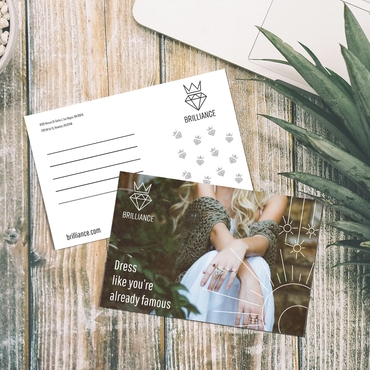
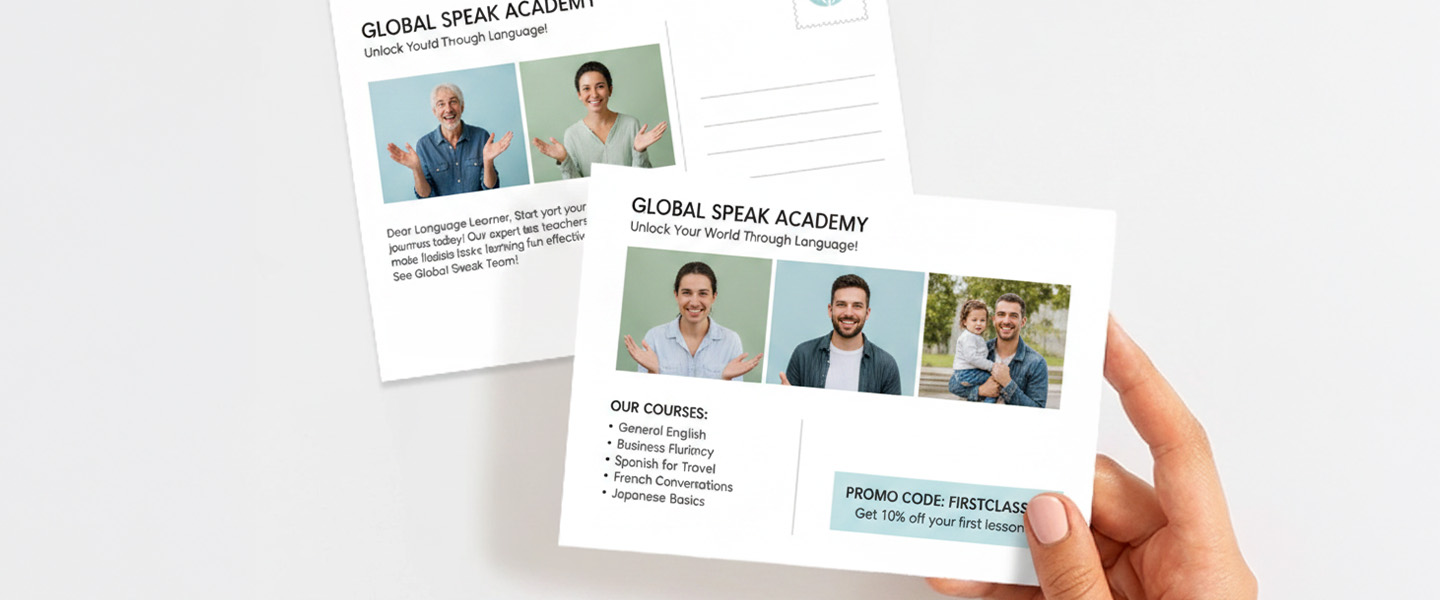
Postcard marketing still works in 2026, but not in the way most businesses use it.
The postcards that drive results today are simple, targeted, and built around one clear action. If your message is too broad, too cluttered, or sent without a clear plan, it gets ignored.
When done right, postcards remain one of the most effective tools for local visibility and response.
Postcards have been around for decades and yet, most businesses still don’t know how to use them properly.
Some send thousands and get nothing back. Others send a few hundred and generate real leads. The difference isn’t the format, it’s how the postcard is used.
So instead of asking, “Do postcards still work?”
The better question is: What actually makes a postcard work today?
That’s what this guide breaks down, so you can avoid wasting budget and start using postcards as a real growth tool, not just another marketing experiment.
What’s Changed (And Why It Still Works)
People receive fewer physical promotions than they used to.
Which means something interesting happens:
When a postcard shows up, and it’s relevant, it stands out. It’s not competing with a feed, a scroll, or ten other ads at the same time.
It’s just there. That’s the advantage, but it only works if the message feels intentional.
Do Postcards Still Work in 2026?
Yes, but the way businesses use postcards has changed.
The postcards generating results today are rarely mass-market campaigns sent without targeting. Instead, successful businesses use postcards to reach specific neighborhoods, promote a single offer, or stay visible with local customers.
Postcards continue to perform well because physical mail faces less competition than digital channels. Many consumers receive hundreds of emails each week but only a handful of marketing mail pieces.
For local businesses, this creates an opportunity to stand out and stay top of mind.
Industries that often see strong results from postcard marketing include:
- Home services
- Real estate
- Healthcare practices
- Restaurants
- Local retail stores
The key isn’t simply sending postcards. The key is sending the right message to the right audience at the right time.
What Actually Works Now
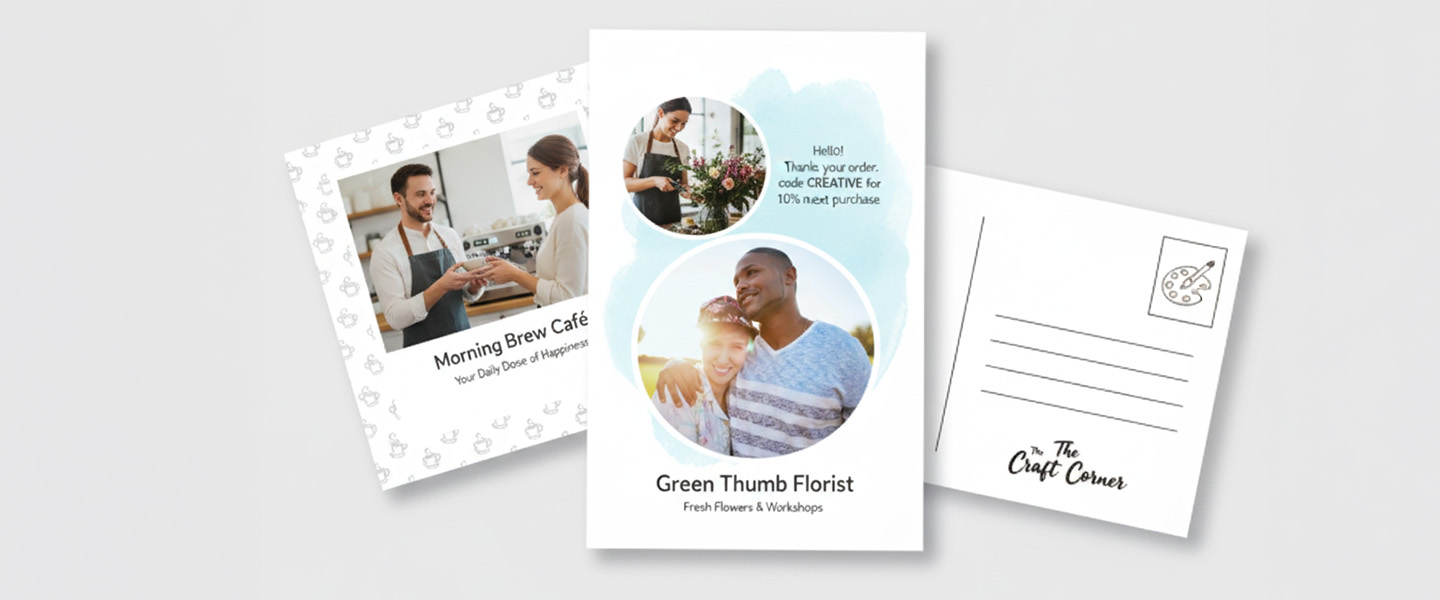
There’s a pattern behind the postcards that perform well. They don’t try to do everything.
They focus on one thing,and make it obvious.
A Clear Reason to Act
The best postcards don’t just “introduce” a business.
They give people a reason to respond:
- A limited-time offer
- A specific service
- A clear benefit
A simple Postcards with one strong message will always outperform something trying to say five things at once.
Local Relevance (Not Generic Messaging)
This is where most campaigns fall apart.
If your postcard could be sent to anyone, it won’t feel relevant to anyone.
What works better:
- Referencing the neighborhood
- Speaking to a specific need
- Showing something familiar
That’s how you turn a piece of paper into something that feels personal.
Postcard Marketing Examples That Consistently Generate Responses
Different businesses use postcards differently, but the most successful campaigns usually follow the same principle: one audience, one offer, one action.
Examples include:
Restaurant Promotion
Offer:
“Free appetizer with your next visit.”
Audience:
Homes within 3 miles of the restaurant.
Real Estate Campaign
Offer:
“Find out what your home is worth.”
Audience:
Specific neighborhoods.
HVAC Service Reminder
Offer:
“Schedule your seasonal maintenance inspection.”
Audience:
Existing customers and nearby homeowners.
Dental Practice
Offer:
“New patient cleaning and exam.”
Audience:
Families within the practice service area.
The simpler the offer, the easier it is for recipients to take action.
Consistency Over One-Time Campaigns
One postcard rarely changes anything,but a series does.
The businesses that see results don’t send once and stop. They show up multiple times, so people start recognizing them.
This is especially important for local services, where trust builds over time.
If you’re thinking about building that kind of strategy, this guide on Direct Mail Marketing for Spring Campaigns: A Small Business Playbook can help you structure it.
A Simple Postcard Marketing Strategy
Many businesses fail because they treat postcard marketing as a one-time event.
A better approach is:
Month 1
Introduce your business.
Month 2
Share a customer success story or testimonial.
Month 3
Promote a special offer.
This sequence builds familiarity and trust over time.
Instead of relying on a single postcard to generate results, you create multiple opportunities for potential customers to remember your business.
What Doesn’t Work Anymore
This is just as important. Because a lot of postcard marketing advice is outdated.
Trying to Say Too Much
Long paragraphs, multiple offers, too many visuals.
It feels like more value, but it creates confusion.
If someone has to think too much, they won’t act.
“Brand Awareness” Without a Hook
A postcard that just says:
“Here’s who we are”
…rarely works.
People need a reason to care right now.
Poor Timing
Even a good message can fail if it arrives at the wrong moment.
For example:
- Promoting something after the need has passed
- Sending too early without relevance
Timing isn’t everything—but it’s a big part of it.
Where Postcards Still Win (Clearly)
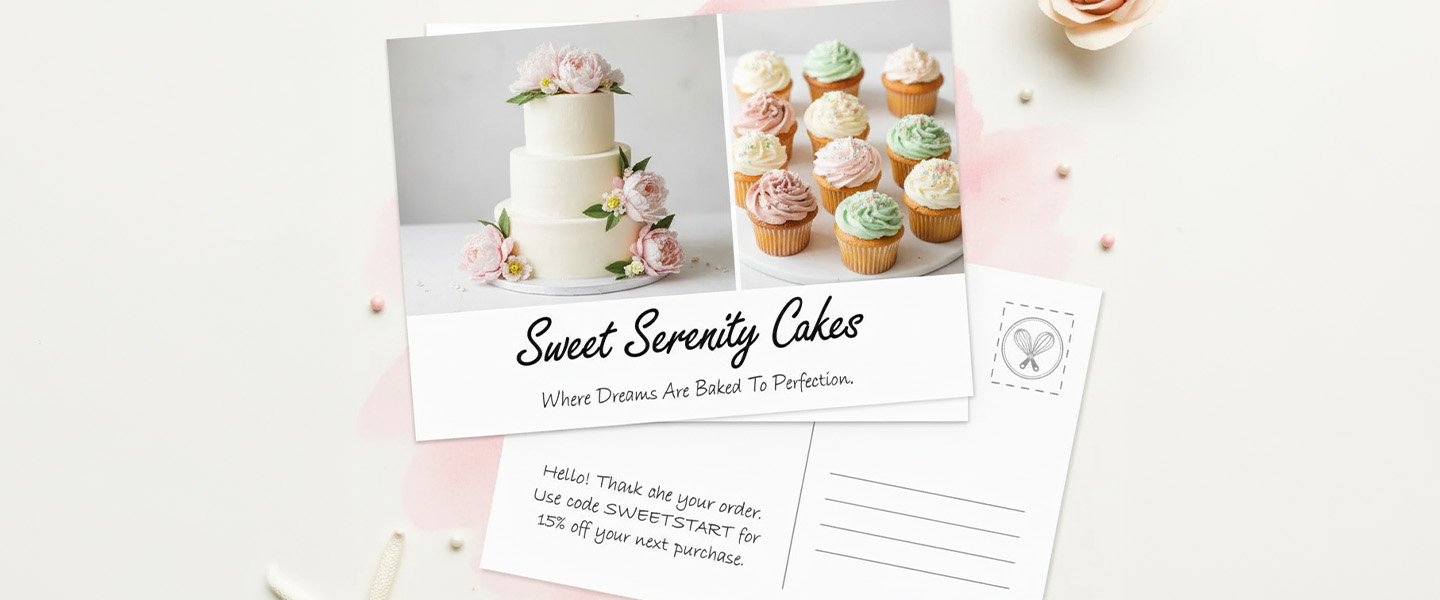
There are situations where postcards consistently outperform other channels.
- Local promotions tied to a specific area
- Service-based businesses (home services, real estate, etc.)
- Events or offers with a clear deadline
In these cases, postcards don’t just support your marketing, they can drive it.
How to Think About Your Next Campaign
Instead of asking:
“What should I include?”
Ask:
“What do I want someone to do when they see this?”
That one question changes everything.
Because it forces clarity.
And clarity is what makes postcards work.
What Does Postcard Marketing Cost?
The total cost of a postcard campaign depends on four primary factors:
- Quantity ordered
- Postcard size
- Paper stock and finish
- Mailing and distribution costs
Businesses often focus only on printing costs, but targeting and distribution usually have a greater impact on campaign performance.
A well-targeted campaign sent to 500 qualified prospects often outperforms a generic campaign sent to 5,000 households.
Instead of asking how cheaply you can print postcards, ask how accurately you can reach the people most likely to respond.
Every Door Direct Mail (EDDM): What It Costs and When It Makes Sense
Which Businesses Benefit Most From Postcards?
Postcards tend to work best when businesses serve a defined geographic area.
Industries that often benefit include:
- Realtors
- Dentists
- HVAC companies
- Landscapers
- Roofing companies
- Restaurants
- Fitness centers
- Local retail stores
If your customers live, work, or shop within a specific area, postcard marketing can be an effective way to stay visible and generate local awareness.
Final Thought
Postcard marketing hasn’t become less effective.
It’s just become less forgiving.
The businesses that see results are the ones that:
- Keep it simple
- Stay relevant
- Show up consistently
Everything else is noise.
Postcards vs Flyers for Local January Promotions: Which One Delivers Better ROI?
Frequently Asked Questions
Are postcards still effective for marketing in 2026?
Yes. Postcards remain effective because they provide physical visibility and face less competition than email or social media advertising. Success depends on targeting, relevance, and a clear call to action.
How many postcards should I send?
There is no universal number, but consistency generally performs better than a one-time mailing. Many local businesses see stronger results when sending multiple campaigns throughout the year.
What should a marketing postcard include?
A strong postcard typically includes:
- One main message
- A clear offer
- Contact information
- A simple call to action
Avoid overcrowding the design with multiple promotions or long blocks of text.
Which businesses benefit most from postcard marketing?
Service businesses, real estate agents, dentists, restaurants, and other local companies often see the strongest results because postcards can target specific neighborhoods.
Are postcards better than flyers?
It depends on the goal. Postcards are often better for direct mail campaigns and local targeting, while flyers may work better for in-person distribution and event promotion.
Ready to Launch Your Campaign?
Explore your options here: Postcards