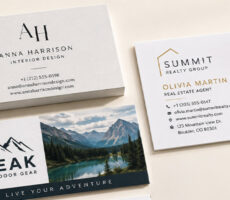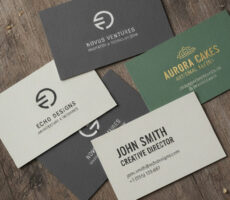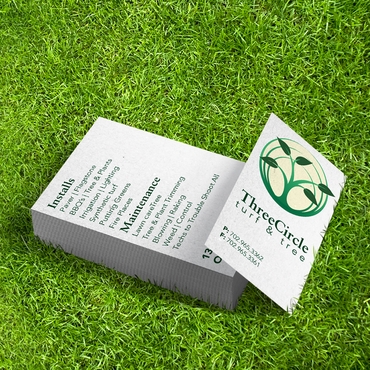
Standard business cards are usually the best budget option for businesses that hand out cards frequently. Premium cards cost more but can offer better durability and presentation, while thick cards make the most sense when you distribute fewer cards and want each one to make a stronger impression.
So which gives you the best value? It depends on how many cards you need, how you’ll use them, and how much you’re willing to spend.
Here’s how the main affordable business card options compare.
Affordable Business Cards Compared
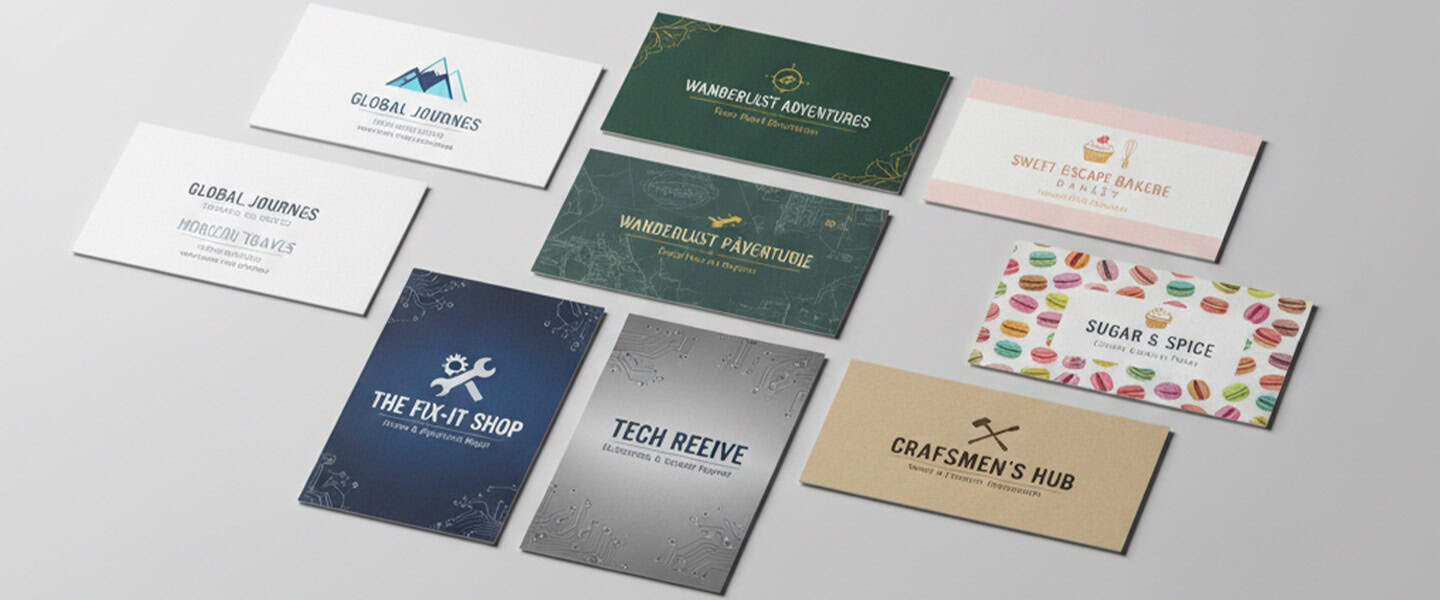
The best affordable business card depends on how often you hand out cards and how much you value durability, presentation, and differentiation. Standard cards offer the lowest-cost option for frequent use, while premium and thick cards can provide more value when each introduction matters.
| Card Type | Cost Level | Durability | Best For | Overall Value |
| Standard Business Cards | $ | Medium | Everyday use and bulk orders | ★★★★★ |
| Premium Business Cards | $$ | High | Client meetings and professional networking | ★★★★☆ |
| Euro Business Cards | $–$$ | Medium–High | Standing out without a major price increase | ★★★★☆ |
| Thick/Fat Business Cards | $$$ | Very High | Selective, high-value introductions | ★★★★☆ |
Quick Answer
Best budget option: Standard business cards — the most practical choice when you need larger quantities or hand out cards frequently.
Best price-to-quality balance: Premium business cards — a stronger choice when you want better durability and a more polished presentation without moving to the thickest card stock.
Best affordable way to stand out: Euro business cards — the slightly different dimensions create distinction without relying on expensive finishes or upgrades.
Best for durability: Thick/Fat business cards — ideal when you distribute fewer cards and want something substantial that is less likely to bend or wear quickly.
What Affects the Cost of Business Cards?
There isn’t one standard price for business cards. The final cost can vary depending on the type of card you choose, how many you order, the paper stock, finishes, printing options, and shipping.
Instead of comparing business cards by a single price, it’s more useful to look at the factors that have the biggest impact on your total cost.
Quantity
Order quantity can have a significant impact on the cost per card. If you distribute business cards frequently, ordering a larger quantity may provide better overall value than repeatedly placing smaller orders.
Card Type and Paper Stock
Standard business cards are typically the most budget-friendly choice, while premium and extra-thick stocks generally cost more. The best option depends on whether you prioritize volume, durability, or presentation.
Finishes and Upgrades
Special finishes and upgraded materials can increase the total cost of an order. Consider whether an upgrade adds meaningful value to your design rather than choosing it simply to make the card feel more expensive.
Shipping and Turnaround Time
When comparing business card options, look beyond the printing price. Shipping method and how quickly you need your cards can also affect the final order total.
Cost Per Card vs. Overall Value
The lowest-priced option isn’t always the best value. A business that distributes hundreds of cards may get more value from an affordable standard card, while a business that hands out fewer cards during important client meetings may benefit from investing in a more durable or premium option.
The goal is to choose the card that fits how your business actually uses it—not simply the option with the lowest upfront price.
Best Affordable Business Cards by Need
The best affordable business card isn’t necessarily the same for every business. A card that works well for everyday distribution may not be the best choice for an important client meeting.
If you’re deciding between standard, premium, Euro, and thick business cards, start with how you plan to use them.
Best Overall Budget Business Cards: Standard
Standard business cards are the best overall budget option for most everyday needs.
They offer a practical balance of affordability, versatility, and professional presentation. They’re especially useful for businesses that hand out cards regularly and don’t need additional thickness or specialty features to make an impression.
Best for: everyday networking, small businesses, frequent distribution, and general-purpose use.
Best Affordable Business Cards for Networking: Premium
Premium business cards are a strong choice when you hand out fewer cards during more meaningful introductions.
The upgraded feel can help create a more polished presentation at networking events, meetings, and other situations where the person receiving your card may become an important contact.
Best for: networking events, client meetings, consultants, sales professionals, and relationship-focused businesses.
Best Cheap Business Cards for Bulk Orders: Standard
Standard business cards generally provide the best value when you need cards in larger quantities.
If cards are handed out at events, displayed at a counter, included with orders, or distributed regularly by employees, keeping the cost per card manageable becomes more important than paying for upgrades on every card.
Best for: bulk orders, events, retail counters, package inserts, and high-volume distribution.
Best Affordable Business Cards That Look Premium: Premium
Premium business cards offer an upgraded presentation without requiring the thickest card option.
They’re worth considering when appearance and durability matter but you still want to balance those benefits against your overall printing budget.
If premium stock isn’t necessary for every interaction, another option is to order standard cards for everyday use and reserve premium cards for important introductions.
Best for: businesses that want a polished appearance while still considering overall value.
Best Affordable Business Cards for Standing Out: Euro
Euro business cards are a good option when you want your card to feel different without relying entirely on premium materials or decorative upgrades.
Their slightly different dimensions create a subtle visual distinction while keeping the familiar function of a traditional business card.
Best for: designers, photographers, agencies, creative professionals, and brands looking for subtle differentiation.
Best Business Cards for Durability: Thick
Thick business cards are the strongest option when durability and a substantial feel matter more than high-volume distribution.
Because they have a higher upfront cost, they tend to make more sense when cards are handed out selectively rather than in large quantities.
Best for: high-value introductions, important meetings, real estate professionals, consultants, and businesses that distribute fewer cards.
Quick Recommendation
If keeping costs as low as possible is your priority, start with standard business cards. If presentation matters more, consider premium cards. Choose Euro cards when you want an affordable way to look different, and thick cards when durability and a substantial feel are the priority.
The best value comes from matching the card to how often you’ll distribute it and the type of impression you want it to make.
Standard Business Cards: Best Value for High-Volume Use

Standard business cards are often the most affordable entry point and still the right choice for many businesses looking for reliable budget business cards they can distribute frequently.
They’re ideal when cards are handed out frequently or placed in public locations. When designed well, they look clean and professional without requiring special finishes.
A common question SMBs ask is:
Are standard business cards too basic to make an impression?
Not necessarily. Most “cheap-looking” cards fail because of overcrowded layouts or poor typography, not because of the card style itself.
Card size and layout choices also play a role in how professional a standard card feels. Many issues attributed to “cheap cards” are actually design or size mismatches: standard vs euro business card sizes.
Product link: Business Cards
Premium Business Cards: Value Through Perception
Premium business cards are not about volume—they’re about context.
They’re often used when the card represents the business in higher-stakes situations: client meetings, proposals, or introductions where credibility matters.
From a value perspective, premium cards make sense when:
- Fewer cards are handed out
- Each interaction carries weight
- First impressions directly affect trust
For budget-conscious SMBs, the key is controlled usage, not avoidance.
Product link: Business Cards
Euro Business Cards: Affordable Differentiation Without Luxury Pricing
Euro business cards offer a subtle size difference that makes them stand out—without requiring premium materials.
They’re often chosen by businesses that want differentiation but still need affordability. Because the change is structural rather than decorative, Euro cards remain cost-effective while being more memorable.
A frequent concern is:
Will Euro business cards still feel practical?
Yes. They fit most wallets and card holders and are often remembered precisely because they’re slightly unexpected.
Subtle differentiation tends to outperform decorative gimmicks. Format changes often draw more attention than finishes when budgets are limited: Flyers vs Posters vs Rack Cards: Which Format Gets More Local Attention?
Product link: European Business Cards
Fat (Thick) Business Cards: Fewer Cards, Longer Lifespan

Thick business cards deliver value through durability.
They resist bending, feel substantial, and are less likely to be discarded. For businesses that give out cards selectively, thick cards often reduce long-term reprint frequency.
This reframes the common question: Are thick business cards affordable for small businesses?
They can be, especially when printing fewer cards and using them strategically.
Product link: Fat Business Cards
How to Make Affordable Business Cards Look Premium
Affordable business cards don’t have to look cheap. In fact, a simple, well-designed standard card can often look more professional than an expensive card with a cluttered design.
If you’re working with a smaller budget, focus first on the design choices people notice most.
Keep the Design Simple
Avoid trying to fill every available space. A clean layout with enough whitespace makes important information easier to find and can give even a basic business card a more polished appearance.
Prioritize your name, business, contact information, and logo rather than adding unnecessary text or graphics.
Use Clear, Consistent Typography
Too many fonts can quickly make a business card feel cluttered. Stick to one or two complementary typefaces and create a clear hierarchy between your name, job title, and contact information.
Most importantly, make sure everything is easy to read at the card’s actual printed size.
Use a High-Resolution Logo
A blurry or pixelated logo can make even premium cardstock look unprofessional. Use a high-resolution version of your logo and make sure other images or graphics are prepared properly for print.
Keep Your Color Palette Focused
More color doesn’t necessarily make a card look more expensive. A limited palette based on your brand colors can create a cleaner, more intentional design.
Strong contrast between the background and text also improves readability.
Choose Finishes Strategically
Matte, glossy, and other finishes can change the appearance of colors, photography, and text. Instead of automatically choosing an upgrade, consider which finish works best with your actual design.
A simple card with the right finish can make a stronger impression than one with several unnecessary upgrades.
Spend More Where It Matters
You don’t necessarily have to choose between budget and premium business cards for every interaction.
Standard cards can work well for everyday networking, events, package inserts, and high-volume distribution, while premium or thick cards can be reserved for important client meetings or high-value introductions.
This approach can help you control printing costs while still making a stronger impression when it matters most.
Choosing a Business Card Based on Your Industry
Different industries benefit from different business card styles.
Real Estate Agents
Premium or thick cards help communicate professionalism and trust.
Contractors & Home Services
Standard cards are often the best option because they are distributed frequently.
Consultants & Financial Advisors
Premium cards provide a polished presentation during client meetings.
Retail & E-Commerce
Standard cards work well as package inserts and promotional handouts.
Creative Professionals
Euro business cards can help designers, photographers, and agencies stand out without significantly increasing costs.
The best card isn’t necessarily the most expensive—it’s the one that matches how your business interacts with customers.
Should You Mix Business Card Styles?
Many businesses get the best value by mixing styles.
For example:
- Standard cards for everyday use
- Premium or thick cards for important meetings
This approach keeps costs predictable while maximizing impact where it matters.
Frequently Asked Questions About Affordable Business Cards
What is the average cost of business cards in 2026?
Costs vary based on quantity, paper stock, and finish. Standard business cards remain the most affordable option, while premium and thick cards cost more but often provide additional durability.
Are cheap business cards worth it?
Affordable business cards can be an excellent value when they use quality design and appropriate materials. Problems usually come from poor layouts rather than low pricing.
How many business cards should a small business order?
Many small businesses start with 250 to 500 cards. Businesses that attend events frequently may benefit from larger quantities.
Are thick business cards better?
Thick cards offer greater durability and a stronger first impression, making them popular for consultants, real estate agents, and professionals who distribute cards selectively.
What’s the difference between standard and premium business cards?
Premium cards typically use heavier stock, specialty finishes, or upgraded materials. Standard cards focus on affordability and high-volume distribution.
Which business card style offers the best value?
For most businesses, standard cards provide the highest cost efficiency. Premium and thick cards offer better value when impressions matter more than volume.