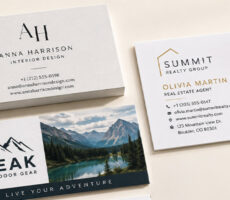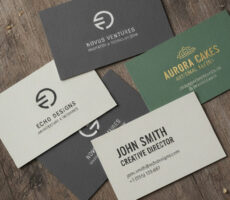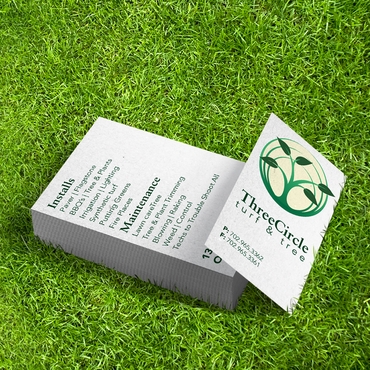
The standard US business card size is 3.5 × 2 inches, or 88.9 × 50.8 mm. This is the most common format in the United States and Canada.
European business cards typically measure 85 × 55 mm, while square business cards commonly measure 2.5 × 2.5 inches at Overnight Prints. The right format depends on where the cards will be used, how much information the design contains, and whether wallet compatibility or visual impact matters more.
Key Takeaways
- Choosing the right business card size influences first impressions, brand perception, and how memorable your business becomes.
- Standard US, European, and square business cards each offer unique advantages depending on your industry, audience, and branding goals.
- Practicality matters—business cards that fit easily into wallets and card holders are more likely to be kept.
- Premium finishes, thicker paper stocks, and thoughtful layouts enhance the impact of any business card, regardless of its size.
- The best business card size is the one that aligns with your brand identity while creating a professional and lasting impression.
Introduction
Most people think business cards are all the same size.
They’re not.
And the size you choose changes more than people realize.
A business card is often your first physical impression.
Before someone visits your website.
Before they email you.
Before they remember your name.
The size, shape, and layout of your card instantly affect how your brand feels.
Some cards feel:
- traditional
- premium
- modern
- creative
- luxurious
- bold
Others disappear into the background immediately.
That’s why choosing the right business card size matters more than most businesses think.
In this guide, we’ll break down:
- the most popular business card sizes
- US vs European dimensions
- square card formats
- when each works best
- how to choose the right format for your brand
US Business Card Size: Quick Answer
The standard US business card size is 3.5 × 2 inches (88.9 × 50.8 mm). For professional printing, the design file needs to account for bleed and a safe area.
- Finished size: 3.5 × 2 inches
- Millimeters: 88.9 × 50.8 mm
- Centimeters: 8.89 × 5.08 cm
- Full-bleed file: 3.625 × 2.125 inches
- Full-bleed size at 300 PPI: 1088 × 638 pixels
- Safe area: 3.375 × 1.875 inches
- Orientation: Horizontal or vertical
For a quick comparison, see how standard US dimensions compare with European, square and mini business card sizes below.
Business Card Size Comparison Chart
Business card dimensions vary by format and region. Use this chart to compare common business card sizes in inches, millimeters and centimeters.
| Business Card Format | Inches | Millimeters | Centimeters |
| Standard US | 3.5 × 2 in | 88.9 × 50.8 mm | 8.89 × 5.08 cm |
| European | 3.346 × 2.165 in | 85 × 55 mm | 8.5 × 5.5 cm |
| Square | 2.5 × 2.5 in | 63.5 × 63.5 mm | 6.35 × 6.35 cm |
| Mini | 2.75 × 1 in | 69.85 × 25.4 mm | 6.985 × 2.54 cm |
Business Card Print File Sizes With Bleed
For printing, your design file needs to be slightly larger than the finished card so artwork can extend through the trim area.
| Business Card Format | Finished Size | Full-Bleed File Size |
| Standard US | 3.5 × 2 in | 3.625 × 2.125 in |
| European | 3.346 × 2.165 in | 3.47 × 2.29 in |
| Square | 2.5 × 2.5 in | 2.625 × 2.625 in |
| Mini | 2.75 × 1 in | 2.9 × 1.26 in |
For a standard US business card, the finished 3.5 × 2-inch size equals 1050 × 600 pixels at 300 PPI. With Overnight Prints’ required bleed, the full design file is 3.625 × 2.125 inches, or approximately 1088 × 638 pixels at 300 PPI.
Standard US Business Card Size: 3.5 × 2 Inches
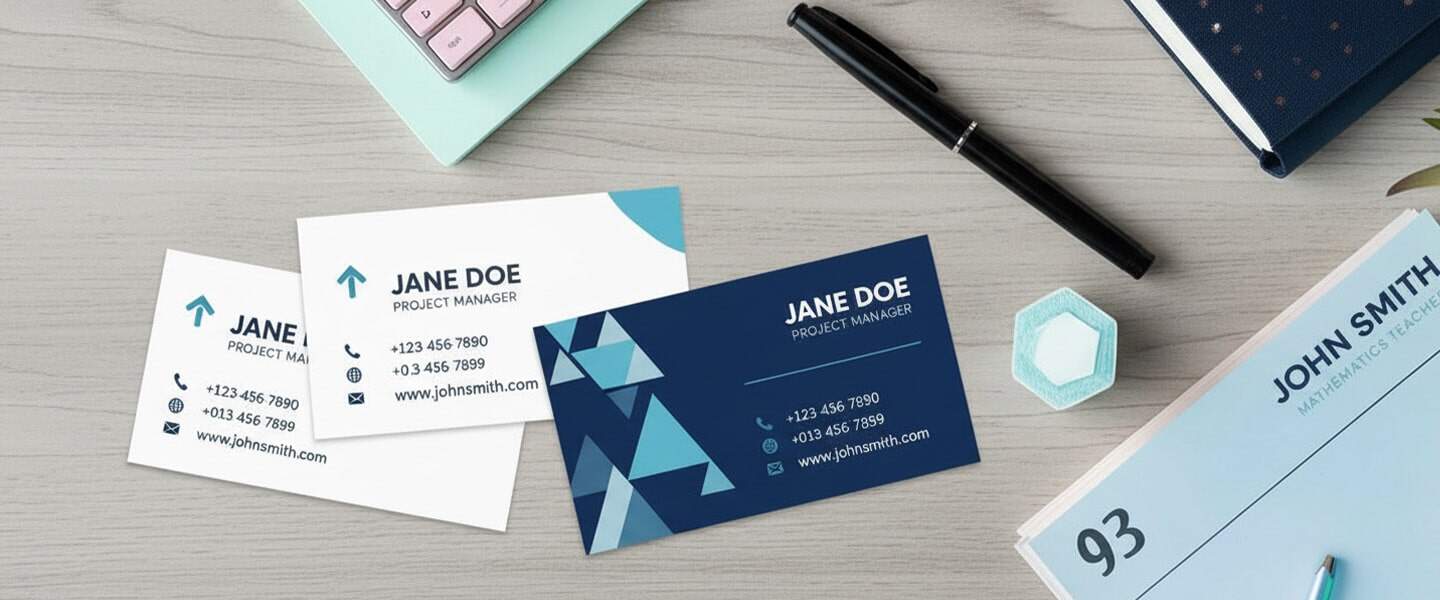
The most common business card size in the United States is:
3.5” × 2” (88.9 × 50.8 mm)
This is considered the industry standard because it fits easily into:
- wallets
- pockets
- card holders
- badge sleeves
- organizers
Most businesses default to this format because it feels familiar and professional. If you’re comparing dimensions before choosing a format, our business card size guide covers additional sizing considerations.
That familiarity matters.
People instantly recognize it as a business card, which makes it easy to store and keep.
Businesses commonly use standard-sized Business Cards because they work well across almost every industry.
Why choose the standard US size?
The 3.5 × 2-inch format fits most business card holders and provides enough room for a name, job title, company information, contact details and a QR code. It is usually the safest choice for everyday networking, corporate teams, real estate professionals and service businesses.
A vertical business card uses the same dimensions—the orientation changes, but the finished size does not.
European Business Card Size: 85 × 55 mm
The standard European business card size is 85 × 55 mm (8.5 × 5.5 cm), or approximately 3.346 × 2.165 inches. Compared with a standard US card, it is slightly narrower and taller.
This proportion works well for international businesses and designs that benefit from additional vertical space. If most of your cards will be distributed in Europe or the UK, this familiar regional format is a practical choice.
Businesses looking for a slightly more refined or modern look often choose European Business Cards.
At first glance, the difference feels subtle.
But visually, Euro cards often appear:
- cleaner
- more spacious
- more premium
Why Business Card Sizes Differ Around the World
Business card dimensions aren’t standardized globally.
Most North American businesses use the US standard size of 3.5″ × 2″, while many European countries use the slightly different 85 × 55 mm format.
The European size was designed to align more closely with common wallet and ID card dimensions used throughout Europe.
If you regularly work with international clients, choosing a format familiar to your audience can make your cards feel more professional and easier to store.
Why Businesses Choose Euro Business Cards
They Feel More Modern
The proportions create a slightly more elegant look compared to traditional US cards.
They Stand Out Without Feeling “Too Different”
Euro cards still feel professional and practical while giving your branding a more elevated appearance.
They Work Especially Well for Luxury Branding
Designers, photographers, architects, boutiques, and premium service businesses often prefer this format because it pairs beautifully with:
- minimalist typography
- premium finishes
- soft-touch coatings
- spacious layouts
Square Business Cards
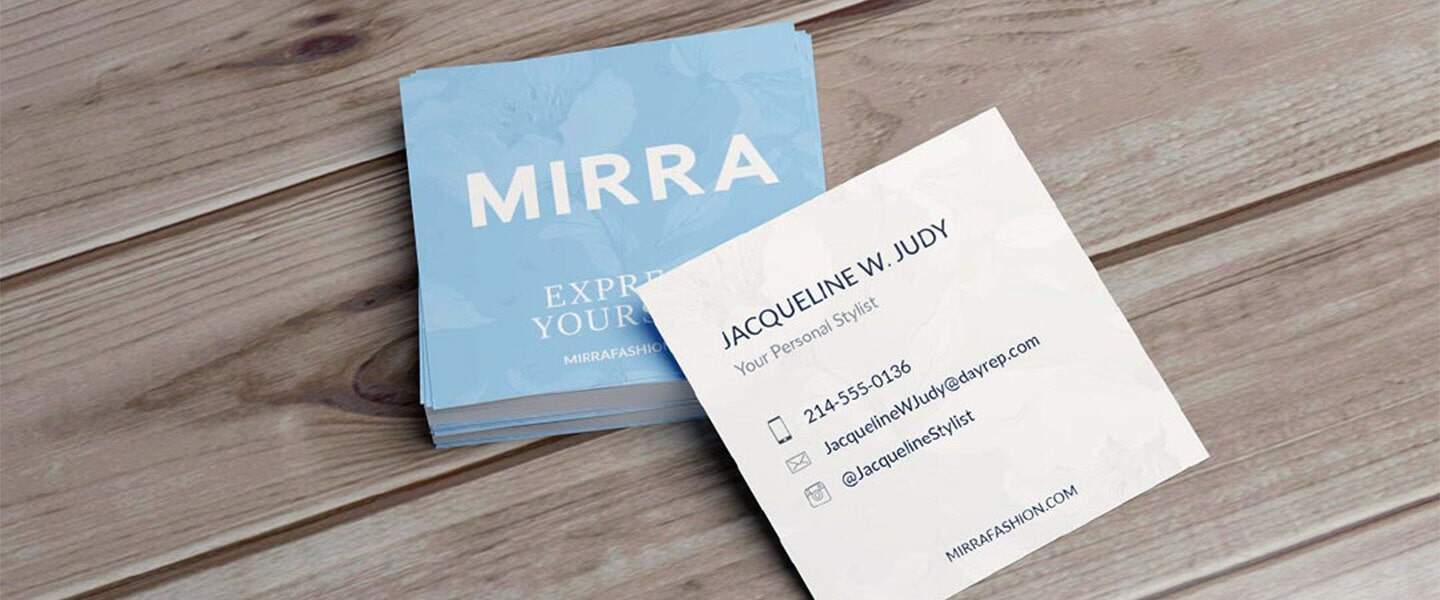
Square business card sizes vary between printers. At Overnight Prints, square business cards measure 2.5 × 2.5 inches, or 63.5 × 63.5 mm.
This format provides more design space than a 2 × 2-inch square and works especially well for centered logos, photography, product-focused designs and creative brands.
Businesses often use premium square-style Business Cards when they want stronger brand recall.
Square vs Rectangular Business Cards: Which Is Better?
Neither format is automatically better.
The right choice depends on your brand and audience.
Rectangular Cards Work Best For:
- corporate businesses
- real estate professionals
- financial services
- healthcare providers
- consultants
Square Cards Work Best For:
- designers
- photographers
- beauty brands
- cafés
- creative agencies
If your goal is professionalism, rectangular cards are usually safer.
If your goal is memorability, square cards often create a stronger first impression.
Why Square Business Cards Get Attention
They Look Different Instantly
Most networking situations involve dozens of identical rectangular cards.
A square card naturally catches attention faster.
They Work Well for Creative Brands
Creative professionals often use square formats to reinforce originality and personality.
They Pair Well With Bold Branding
Square layouts work especially well for:
- centered logos
- geometric branding
- minimalist aesthetics
- photography-heavy designs
They Feel More Social-Media Friendly
Many modern brands choose square cards because they visually align with Instagram-style branding and modern packaging aesthetics.
Industries that commonly use square cards include:
- cafés
- beauty brands
- wellness businesses
- creators
- stylists
- boutiques
- Etsy shops
Other Business Card Formats and Stocks
Some businesses want something even more distinctive.
That’s where specialty card styles come in.
Popular options include:
- rounded corners
- extra-thick cards
- layered cards
- oversized cards
- textured finishes
These formats are designed to create stronger physical impact during networking.
Thickness also changes how a card feels in hand, so compare common business card paper thickness options before choosing your stock.
Examples include:
These styles are often used when businesses want their card to feel more:
- premium
- memorable
- tactile
- high-end
How to Choose the Right Business Card Size
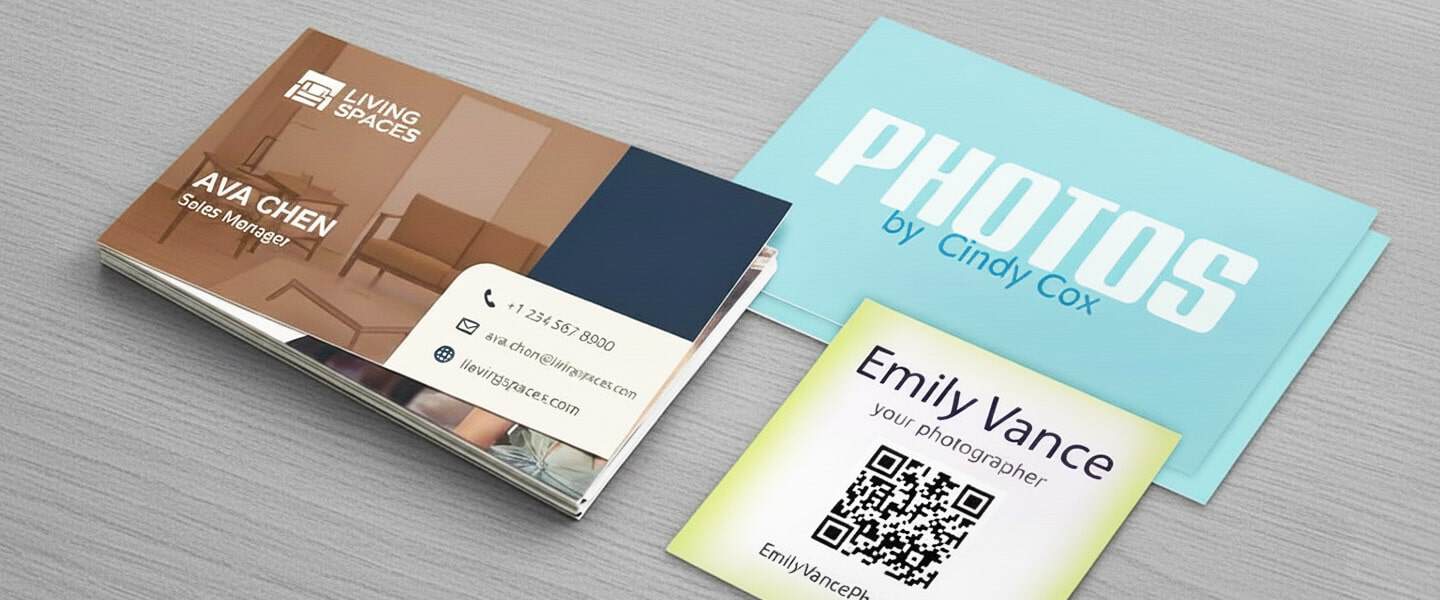
| Choose this size | When it works best |
|---|---|
| Standard US | US and Canadian audiences, everyday networking and wallet compatibility |
| European | European or UK audiences and international business |
| Square | Creative brands, visual impact and centered designs |
| Mini | Minimal information, discount codes or memorable handouts |
The Size You Choose Affects the Design
Different dimensions require different layout strategies. Size is only one part of the layout. Deciding what to put on a business card can help you determine how much space your design actually needs.
That’s one of the biggest mistakes businesses overlook.
A design that works perfectly on a standard card may feel crowded on a square card or too empty on a Euro card.
What Size Should a Business Card File Be?
When designing a business card, the final size isn’t the only measurement that matters.
Professional printers typically require:
- Finished size: 3.5 × 2 inches
- Full-bleed file: 3.625 × 2.125 inches
- Full-bleed pixels at 300 PPI: 1088 × 638 pixels
- Safe area: 3.375 × 1.875 inches
These are Overnight Prints’ current specifications. The site uses a 1/16-inch cutting margin around the card, as explained in its printing and cutting guidelines.
Design Tips for Euro Cards
Euro cards perform best with:
- minimalist layouts
- elegant spacing
- horizontal orientation
- refined typography
Less usually works better here.
Design Tips for Square Cards
Square cards work best when the design feels intentional.
Strong approaches include:
- centered logos
- bold color palettes
- minimal text
- geometric layouts
- strong visual symmetry
Trying to fit too much information into a square layout usually hurts the design.
Are Unique Business Card Sizes Worth It?
Sometimes yes.
Sometimes no.
A unique format helps when:
- branding matters heavily
- memorability is important
- visual identity is central to your business
Size isn’t the only way to create a memorable card. These ideas for how to make your business cards stand out cover additional design and branding approaches.
But for industries focused on:
- trust
- professionalism
- practicality
traditional formats often work better.
The best business card isn’t always the most unusual one.
It’s the one people actually remember — and keep.
Frequently Asked Questions
What is the standard business card size in the US?
The standard US business card size is 3.5 × 2 inches, or 88.9 × 50.8 mm.
What is the standard business card size in centimeters?
A standard US business card measures approximately 8.89 × 5.08 cm.
What size should a business card file be with bleed?
For Overnight Prints, a standard business card file should measure 3.625 × 2.125 inches, or 1088 × 638 pixels at 300 PPI.
What is the standard European business card size?
European business cards typically measure 85 × 55 mm, or approximately 3.346 × 2.165 inches.
What is the standard square business card size?
Square sizes vary by printer. Overnight Prints offers square business cards at 2.5 × 2.5 inches.
Is a business card the same size as a credit card?
No. A standard US business card is 3.5 × 2 inches, while a typical credit card is approximately 3.375 × 2.125 inches.
Are vertical business cards a different size?
Usually not. A vertical business card commonly uses the same 3.5 × 2-inch dimensions, rotated to portrait orientation.
Final Takeaway
Business cards may be small.
But the size you choose shapes how people experience your brand before a single conversation even starts.
Some sizes feel classic.
Some feel modern.
Some feel bold and creative.
The key is choosing the format that matches the impression you want people to remember.
Because the best business card is not just the one that looks good.
It’s the one people actually keep.
Resources
- International Organization for Standardization (ISO) – Information on international paper and document size standards, including formats commonly used around the world.
- AIGA (American Institute of Graphic Arts) – Resources and best practices on branding, typography, and effective print design.
- Printing United Alliance – Educational resources on commercial printing, paper stocks, print finishes, and production best practices.