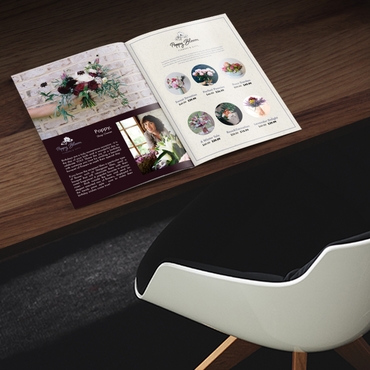
Most booklets don’t fail because they’re missing pages. They fail because they don’t guide the reader.
A booklet isn’t just a longer flyer.
It’s not a brochure with more space.
It’s a sequence.
And if that sequence doesn’t make sense—if the reader doesn’t know where to look, what matters, or what to do next—it won’t work, no matter how well it’s designed.
That’s why the question isn’t: “What pages should I add?”
It’s: “What does someone need to see first, second, and last to actually take action?”
Think of your booklet like a conversation, not a document
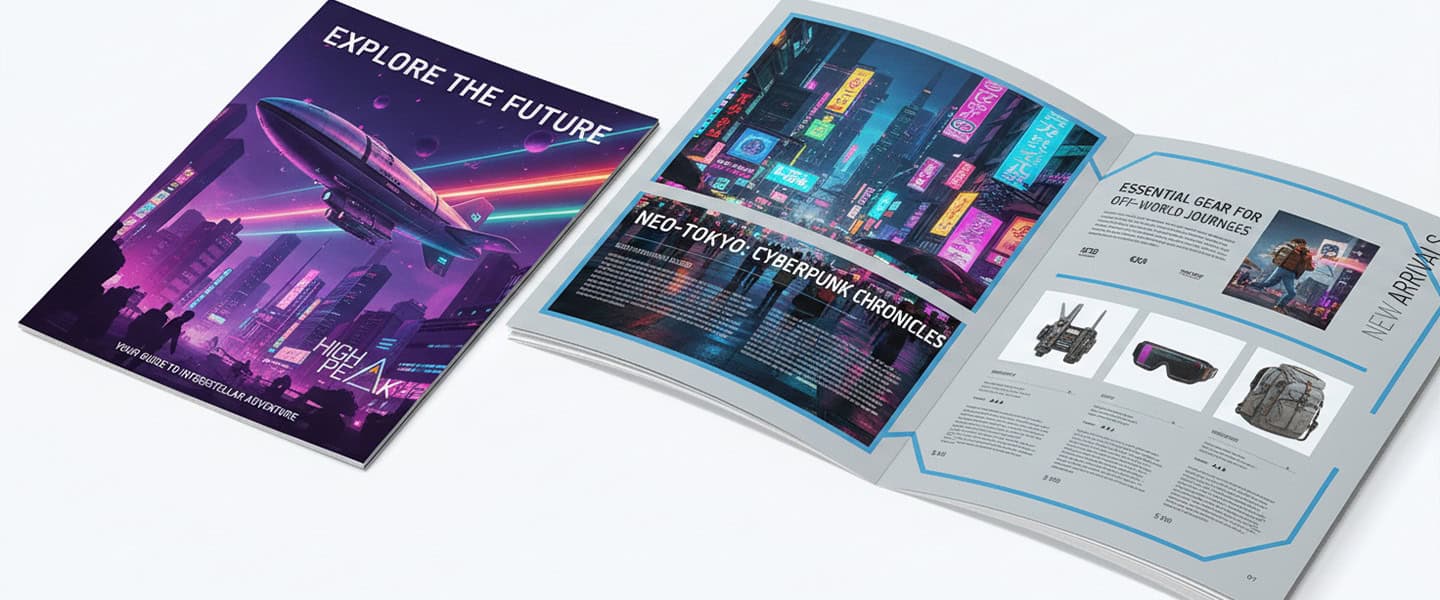
Before we break down pages, shift how you think about it.
A good booklet feels like:
- a guided explanation
- a structured pitch
- a story that leads somewhere
A weak booklet feels like:
- scattered information
- disconnected sections
- too much detail with no direction
The difference is flow.
If each page answers the next logical question, the booklet works.
If it doesn’t, people stop reading.
Let’s walk through a booklet the way a reader experiences it
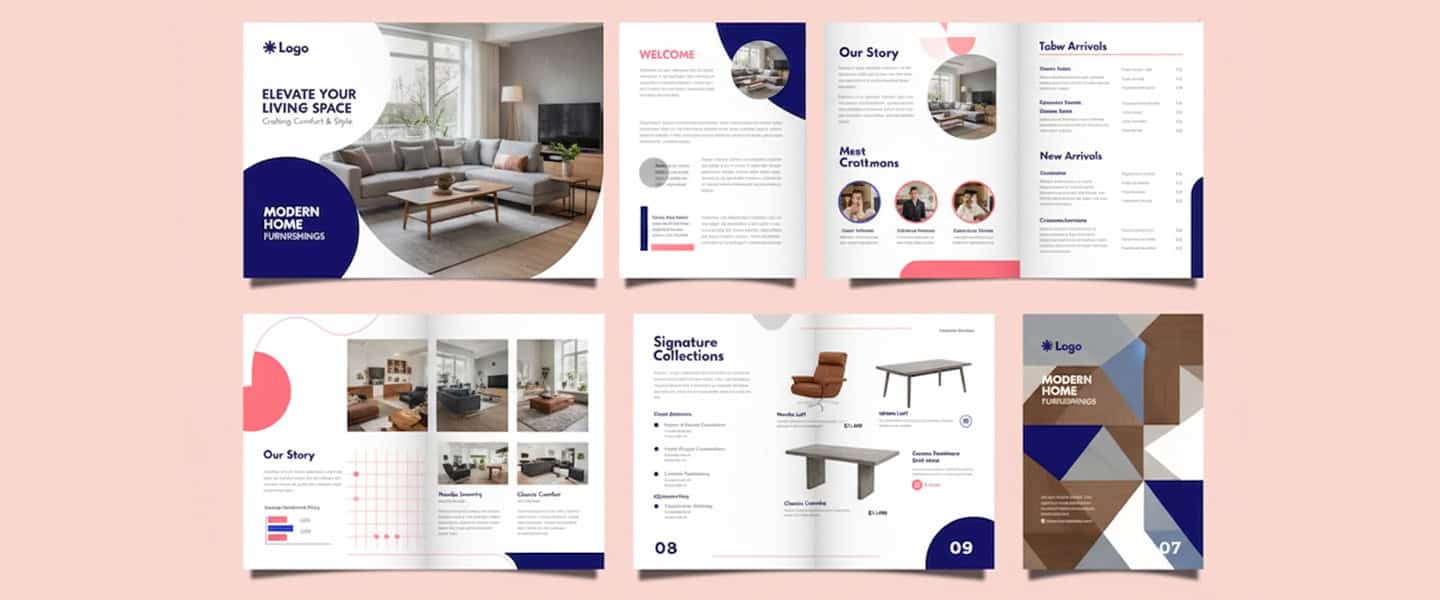
Instead of listing sections, let’s go page by page—exactly how someone would go through it.
The cover: why should I care about this?
The cover doesn’t explain everything.
It earns attention.
When someone picks up your booklet, they decide in seconds whether it’s worth opening.
That decision comes from:
- a clear headline
- a simple visual
- a sense of relevance
If the cover feels generic, the rest won’t be seen.
The first inside page: what is this about?
Once they open it, the reader needs orientation.
Not details.
Not features.
Just clarity.
This page should answer:
- what you do
- who it’s for
- why it matters
Think of it as removing confusion.
If the reader doesn’t understand what they’re looking at, they won’t continue.
The next pages: why should I trust this?
This is where most booklets lose people.
They jump into details too early.
Instead, you need to build confidence.
That can come from:
- examples
- results
- simple explanations of how things work
You’re not trying to impress.
You’re trying to make the reader feel: “This makes sense. I get it.”
If you want to see how clarity in structure affects print performance, this guide on
breaks down what keeps people engaged.
If you want to see how clarity in structure affects print performance, this guide on how to design print materials that actually get read breaks down what keeps people engaged.
The middle section: what exactly do you offer?
Now the reader is ready for details.
This is where you explain:
- your services
- your products
- your process
But structure matters more than content.
Instead of long explanations, use:
- short sections
- clear headings
- simple breakdowns
If everything is presented at once, it becomes overwhelming.
If it’s organized, it becomes easy to follow.
If you’re unsure whether a booklet is the right format for this level of detail, this comparison of booklets, brochures, or flyers can help you decide.
The turning point: why should I choose you?
At some point, the reader asks: “Why you and not someone else?”
This is where you differentiate.
Not with slogans.
With clarity.
You can do that through:
- positioning
- unique approach
- proof or credibility
This section doesn’t need to be long.
It needs to be clear.
The final pages: what should I do next?
This is where many booklets quietly fail.
They end without direction.
A strong booklet always leads somewhere.
Your final pages should make the next step obvious:
- call
- visit
- book
- scan
One clear action. Not multiple. Not vague.
Just one.
The back cover: reinforce, don’t repeat
The back cover isn’t just a placeholder.
It’s a reminder.
This is where you reinforce:
- your brand
- your contact information
- your call to action
It should feel like a closing line—not leftover space.
What most businesses include that they shouldn’t
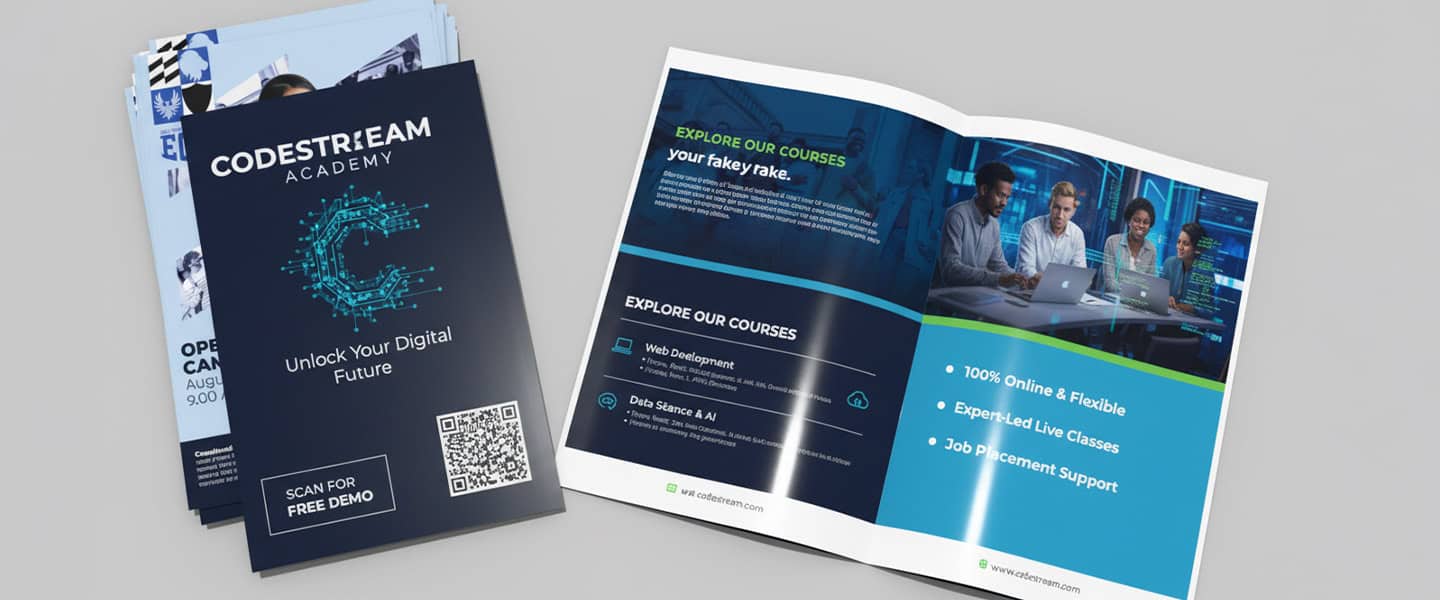
Now that you know what matters, here’s what usually gets in the way:
- too much text on every page
- repeating the same message in different ways
- adding sections just because there’s space
- trying to make the booklet do everything
More pages don’t make a booklet better.
Better structure does.
How to know if your booklet actually works
Before printing, ask yourself:
- can someone understand this in a few minutes?
- does each page lead naturally to the next?
- is the final action clear?
If the answer is no, the issue isn’t printing.
It’s structure.
Where booklets fit in your overall marketing
Booklets work best when:
- you need to explain something in depth
- your offer isn’t simple
- your audience needs more context
They don’t replace:
- flyers (for quick promotion)
- postcards (for direct response)
They complement them.
If you’re planning your materials, this guide on what small businesses should print first helps prioritize what actually matters.
Ready to create your booklet?
Once your structure is clear, you can explore different formats, page counts, and customization options here: Booklets
This is where your content turns into something people can hold—and actually read.
Final takeaway
A booklet isn’t about how many pages you include.
It’s about how well those pages work together.
Because the best booklets don’t just share information.
They guide someone from interest to action, one page at a time.