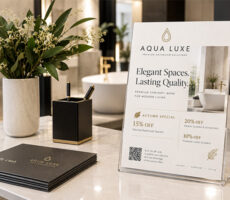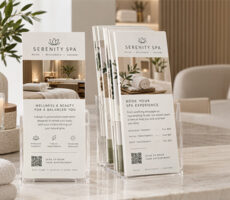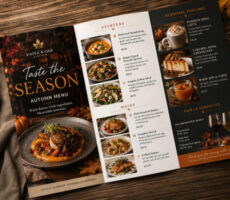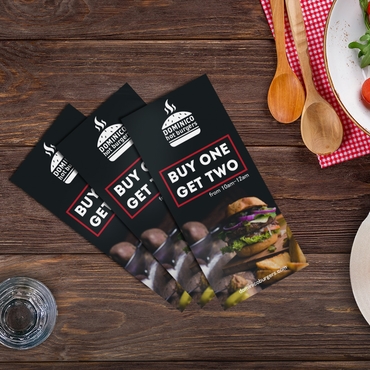
Picture a visitor standing in a hotel lobby in a city they have never explored.
In front of them is a display filled with rack cards promoting tours, restaurants, museums, attractions, and local experiences.
They probably will not read every card.
They will notice a photograph, headline, destination, or offer that matches what they want to do next.
That is the challenge of rack card design: attracting attention before the card is picked up, then providing enough useful information to turn that interest into action.
The strongest rack cards do not try to explain an entire business. They focus on one experience, benefit, service, event, or reason to visit.
This guide provides practical rack card examples for tourism businesses, restaurants, attractions, service providers, and other local companies. Each idea includes a sample headline, content direction, call to action, and potential distribution location.
The Five-Second Rack Card Test
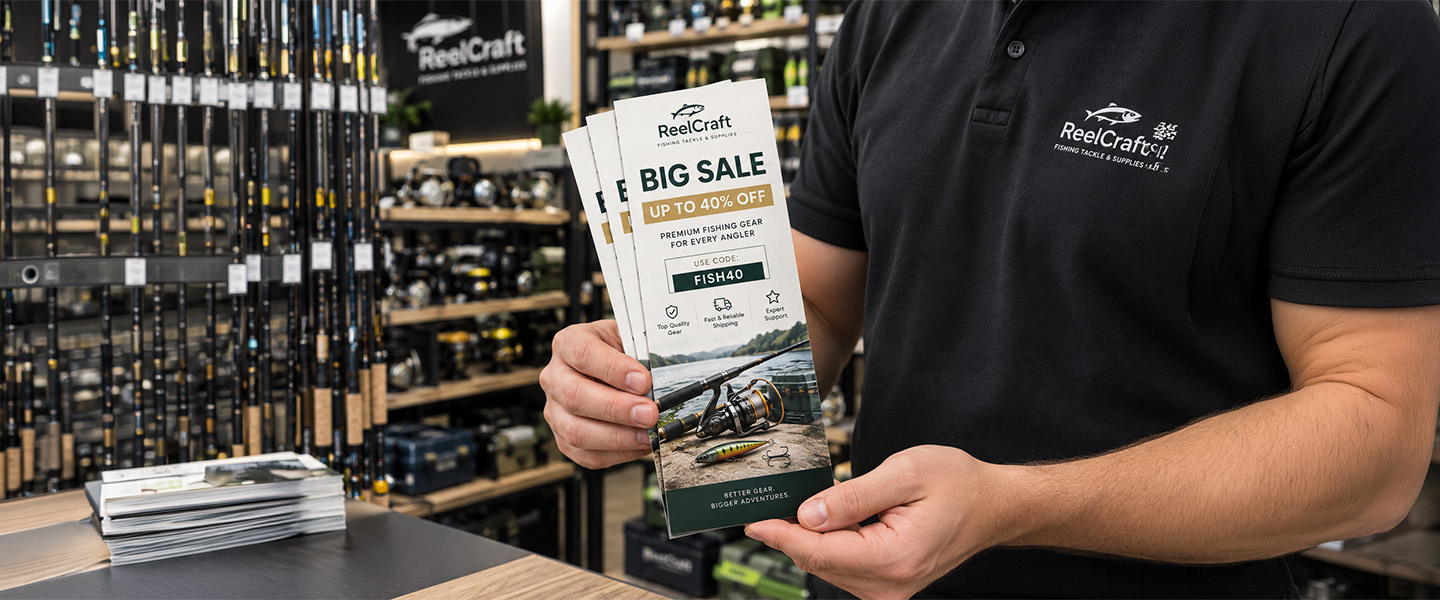
Before exploring the examples, imagine that someone sees only the top portion of your rack card for five seconds.
Can they tell:
- What is being promoted?
- Why it might interest them?
- Where the experience or business is located?
- What type of action they can take?
- Who is offering it?
They do not need every detail immediately. They do need a reason to pick up the card.
A simple rack card structure could look like this:
| Card Area | Main Job |
| Top | Attract attention with a headline, image, or destination |
| Middle | Explain the main experience, benefit, or offer |
| Bottom | Identify the business and introduce the next step |
| Back | Provide details, proof, location, QR code, and call to action |
The lower portion of a rack card may sit inside a display holder, depending on how it is distributed. Avoid placing the only important headline or recognizable image at the very bottom.
Rack Card Idea Selector
Not sure what type of card to create? Start with the action you want from the reader.
| Desired Action | Rack Card Concept |
| Book an experience | Tour or attraction card |
| Visit a location | Destination or restaurant card |
| Attend an event | Event-focused card |
| Try a signature product | Product-feature card |
| Request an estimate | Local service card |
| Schedule an appointment | Salon, spa, fitness, or healthcare card |
| Scan for more information | Educational or itinerary card |
| Use a promotion | Offer-focused card |
| Remember the business | Brand-awareness card |
| Share the card with someone | Referral or group-experience card |
Now let’s turn those concepts into specific rack card examples.
Rack Card Examples for Tourism and Attractions
Tourism rack cards often compete with many other options in hotels, visitor centers, airports, rest stops, transportation hubs, and attraction lobbies.
Specificity can help a card stand out.
“Discover adventure” could describe almost anything. “Kayak Through Sea Caves at Sunset” creates a much clearer picture.
1. Guided Walking Tour Rack Card
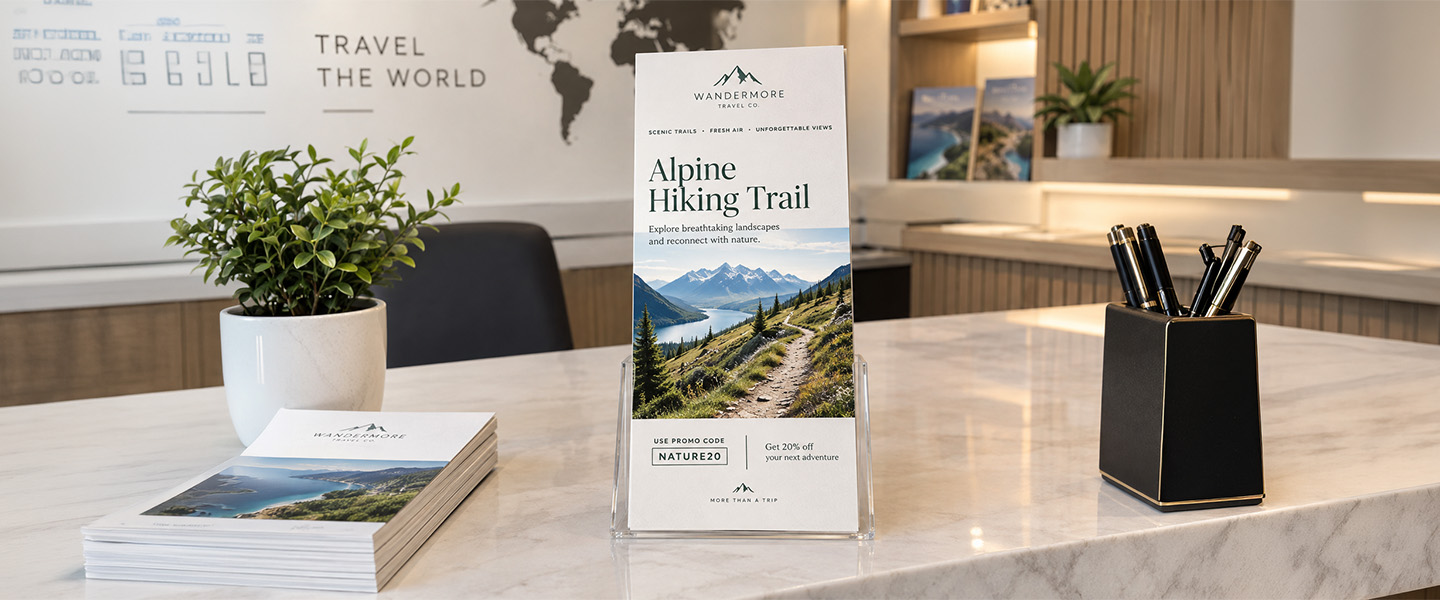
A walking tour card should give visitors a quick reason to choose the experience over exploring alone.
Front
Headline:
See the Stories Hidden Behind Old Town’s Doors
Use a strong photograph of a recognizable street, building, guide, or historical feature.
Add a short supporting line:
A 90-minute guided walk through the city’s history, architecture, and local legends.
Back
Include:
- Tour duration
- Starting location
- Available days or times
- Languages offered
- Accessibility information when relevant
- Price or booking information
- QR code
- Contact details
Call to action:
Scan to View Today’s Tours
Where to Display It
- Hotels
- Hostels
- Visitor centers
- Museums
- Local cafés
- Transportation centers
- Vacation rental welcome areas
The headline gives the visitor something they would not receive from walking through the neighborhood without a guide: access to the stories behind the location.
2. Outdoor Adventure Rack Card
An outdoor experience should show the activity in action.
A scenic view alone may communicate the destination, but a photograph of someone kayaking, climbing, rafting, hiking, or ziplining helps explain the actual experience.
Front
Headline:
Your Lake Adventure Starts Here
Supporting copy:
Kayak, paddleboard, and canoe rentals available daily.
Use an image showing the equipment being used in the real location.
Back
Organize the information around common customer questions:
What can I rent?
Kayaks • Paddleboards • Canoes
Where do I go?
123 Lakeside Drive
What should I bring?
Water, sunscreen, and a valid ID
How do I reserve?
[QR code]
Call to action:
Reserve Your Equipment
If conditions, ability requirements, age restrictions, waivers, or weather policies apply, direct readers to the appropriate page for current details.
3. Museum Rack Card
A museum card does not need to summarize every exhibition.
Lead with the story, object, artist, or question most likely to make someone curious.
Front
Headline:
What Was Life Here 500 Years Ago?
Use one compelling artifact, recreated scene, artwork, or exhibition image.
Underneath:
Explore the people, objects, and stories that shaped our region.
Back
Feature three reasons to visit:
- Permanent collection
- Current temporary exhibition
- Family or interactive experience
Then include:
- Address
- Opening hours
- Admission information
- Accessibility details
- Parking or transportation information
- QR code to tickets or current exhibitions
Call to action:
Plan Your Visit
A focused card gives people a reason to become curious. The website can provide the complete collection and visitor information.
4. Family Attraction Rack Card
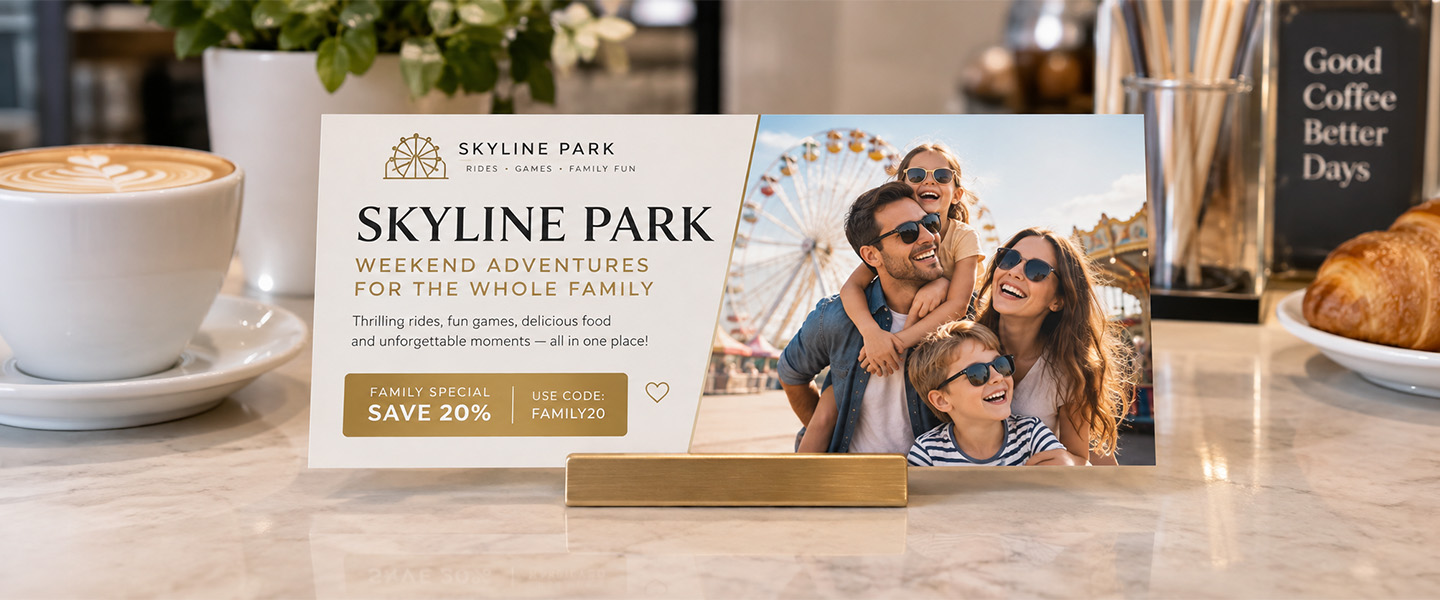
Families usually need practical details before choosing an activity.
A card for a zoo, farm, aquarium, children’s museum, amusement center, or family attraction should communicate who the experience is for and what families can expect.
Front
Headline:
Give Them Something to Talk About All Vacation
Use an energetic image of children or families participating in the experience, with appropriate permissions.
Add a simple descriptor:
Animals, hands-on activities, and outdoor family fun.
Back
Include:
- Recommended age range, when applicable
- Approximate visit length
- Main activities
- Food availability
- Indoor or outdoor information
- Admission details
- Hours
- Location
- Ticket QR code
Call to action:
Get Your Tickets
Avoid vague phrases such as “fun for everyone” without explaining what visitors will actually do.
5. Scenic Drive or Local Itinerary Rack Card
Not every tourism rack card needs to sell a ticket.
Hotels, tourism offices, chambers of commerce, and destination organizations can create useful cards that help visitors explore the area.
Front
Headline:
Six Stops. One Unforgettable Afternoon.
Use a scenic image or a simple illustrated route.
Back
Create a short itinerary:
- Riverside Overlook
Best for morning views - Market Square
Local shops and lunch options - Heritage Museum
Regional history and exhibitions - Pine Ridge Trail
Short scenic walk - Old Mill District
Art galleries and cafés - Sunset Point
End the day with a view
Add a QR code linking to an interactive map or full itinerary.
Call to action:
Scan to Open the Route
A useful itinerary may be kept throughout the trip and shared with other visitors.
Businesses included in the route could also distribute the card, creating a local cross-promotion opportunity.
6. Seasonal Tour Rack Card
Seasonal experiences need a clear date range and reason to book before the opportunity passes.
This format can work for:
- Fall foliage tours
- Holiday light tours
- Whale-watching seasons
- Spring garden tours
- Food festivals
- Harvest activities
- Summer boat tours
- Winter excursions
Front
Headline:
See the Coast During Whale-Watching Season
Supporting copy:
Guided boat tours available March through May.
Use a strong seasonal photograph that accurately represents the experience.
Back
Include:
- Operating dates
- Tour length
- Departure location
- What may be seen or experienced
- What to bring
- Weather policy
- Booking QR code
- Contact information
Call to action:
Check Available Departures
Avoid guaranteeing wildlife sightings, weather conditions, or specific results unless the business can substantiate that promise and clearly explain the applicable conditions.
For more ideas about connecting printed materials with the visitor experience, see our guide to essential print marketing for the tourism industry.
Rack Card Examples for Restaurants and Food Businesses
Restaurant rack cards should sell the experience, not reproduce the entire menu in tiny text.
A traveler or nearby customer may want to know:
- What type of food is served?
- What makes the restaurant different?
- How far away is it?
- When is it open?
- Is it appropriate for my group or occasion?
- Do I need a reservation?
Build the card around the answers most likely to influence the decision.
7. Destination Restaurant Rack Card
This approach works for a restaurant with a strong location, history, atmosphere, chef, or signature experience.
Front
Headline:
Dinner With a View of the Harbor
Use a photograph that shows both the dining experience and the setting.
Add:
Fresh coastal dishes served daily, just five minutes from downtown.
Back
Feature a short selection of reasons to visit:
- Waterfront seating
- Local seafood
- Sunset reservations
- Vegetarian options
- Family-friendly dining
Then include:
- Address
- Hours
- Reservation details
- Parking information
- QR code to menu or reservations
Call to action:
Reserve Your Table
“Waterfront dining” is more specific than “a dining experience you will never forget.” Show the actual reason someone should choose the restaurant.
8. Signature Dish Rack Card
If a restaurant is known for one product, let that item lead the design.
This could be:
- Burger
- Pizza
- Pastry
- Barbecue platter
- Regional specialty
- Cocktail
- Dessert
- Breakfast dish
- Chef’s tasting menu
Front
Use a large, high-quality photograph of the signature item.
Headline:
Meet the Sandwich That Started It All
Underneath:
Slow-roasted pork, house pickles, and our original pepper sauce.
Back
Include:
- Short restaurant description
- Location
- Hours
- Dine-in, takeout, or delivery options
- QR code to the menu
- Social handle
Call to action:
See the Full Menu
The image should match what customers can reasonably expect to receive. Avoid using unrelated stock photography that does not represent the actual product.
9. Hotel Guest Restaurant Rack Card
Restaurants near hotels can create cards specifically for visitors who may not know the area.
Front
Headline:
Staying Nearby? Dinner Is Three Minutes Away.
Use a welcoming food or interior image.
Back
Answer the practical questions a traveler may have:
- Distance from the hotel district
- Type of cuisine
- Hours
- Walk-in or reservation information
- Takeout availability
- Dietary options
- Address
- Map QR code
Call to action:
Get Directions
This card is not trying to introduce the restaurant to everyone. It is speaking to someone who is nearby, hungry, and deciding where to go next.
10. Happy Hour or Limited-Time Offer Rack Card
An offer can help someone choose one restaurant over another, but the terms need to be easy to understand.
Front
Headline:
Make It a Patio Afternoon
Supporting copy:
Happy hour Monday–Thursday, 3–6 PM.
Use an image that reflects the atmosphere and available products.
Back
Include:
- Featured offer
- Applicable days and hours
- Location
- Important terms
- QR code to current menu
- Expiration date when relevant
Call to action:
View the Happy Hour Menu
Do not hide exclusions in unreadably small text. If the full terms do not fit comfortably, provide the essential conditions and direct customers to a page with more information.
11. Catering and Private Events Rack Card
Restaurants can also use rack cards to promote an additional service rather than daily dining.
Front
Headline:
Bring Our Kitchen to Your Next Event
Supporting copy:
Catering for office lunches, celebrations, and private gatherings.
Back
Feature:
- Types of events served
- Available service styles
- Approximate group sizes, when useful
- Delivery or service area
- How far ahead to inquire
- QR code to catering options
- Contact information
Call to action:
Request Catering Information
This card could be placed at the restaurant, event venues, hotels, coworking spaces, wedding businesses, and community centers.
The QR code should lead to a catering-specific page rather than the restaurant’s general homepage.
A rack card should introduce the restaurant and drive interest, while the menu handles detailed food choices. For more guidance on organizing those choices, see our menu design tips for small restaurants.
Rack Card Examples for Local Businesses
Rack cards are not limited to tourism.
They can work for local companies when customers encounter them in waiting rooms, lobbies, counters, community centers, residential offices, partner businesses, and local events.
The key is finding a logical connection between the business, the message, and the display location.
12. Salon or Spa Rack Card
A salon or spa card should focus on a result, service, or reason to book.
Front
Headline:
Take an Hour for Yourself
Use a calm, high-quality image connected to the actual service.
Add:
Massage, skincare, and wellness treatments in downtown Austin.
Back
Include:
- Main service categories
- New-client information
- Location
- Booking method
- Hours
- QR code
- Gift card availability, when relevant
Call to action:
Book Your Visit
Potential display locations include:
- Hotels
- Gyms
- Bridal shops
- Salons with complementary services
- Wellness studios
- Apartment welcome centers
- Event venues
If the card promotes a first-visit offer, make the terms and expiration date clear.
13. Real Estate Rack Card
Real estate rack cards can promote more than one listing.
They can also introduce an agent to a particular neighborhood or provide useful local information.
Concept A: Property Card
Headline:
Tour This Downtown Loft
Feature one strong exterior or interior image.
Include:
- Price
- Bedrooms and bathrooms
- Key feature
- Neighborhood
- Showing information
- QR code to listing
Call to action:
View Photos and Details
Concept B: Neighborhood Card
Headline:
Thinking About Moving to Oakwood?
The back could include:
- Neighborhood highlights
- Property types
- Nearby amenities
- Agent information
- QR code to current listings
Call to action:
Explore Homes in Oakwood
Only include property, neighborhood, availability, or performance claims that are accurate and can be substantiated. Follow applicable real estate advertising and fair housing requirements.
14. Home Service Rack Card
A contractor, cleaner, landscaper, painter, plumber, electrician, or other home service business can use a rack card as a leave-behind or referral piece.
Front
Headline:
Take Weekend Yard Work Off Your List
Use an image showing the result of the service rather than a generic tool.
Back
Include:
- Primary services
- Service area
- Licensing or insurance information when appropriate and accurate
- Estimate process
- Phone number
- Website or QR code
- Customer review or proof point, if substantiated
Call to action:
Request an Estimate
Possible distribution partners include:
- Real estate offices
- Property management companies
- Hardware stores
- Interior designers
- Moving companies
- Apartment communities
- Homeowner welcome packages
Avoid filling the card with every service the company has ever completed. If the audience is homeowners preparing for fall, focus the card on the relevant seasonal work.
15. Fitness Studio Rack Card
A fitness studio card should help people understand what the experience is like and whether it fits them.
Front
Headline:
Find a Workout You’ll Want to Return To
Use a real class or studio image.
Add:
Small-group strength and mobility classes for different experience levels.
Back
Include:
- Class types
- Who the classes are designed for
- Location
- Schedule QR code
- What new visitors should bring
- Introductory offer, when applicable
- Booking information
Call to action:
View This Week’s Classes
Potential display locations include:
- Health-focused cafés
- Sports stores
- Physical therapy offices
- Apartment buildings
- Coworking spaces
- Community centers
- Local employers
Avoid making health, weight-loss, or performance promises that cannot be supported.
16. Local Retail Store Rack Card
A local retailer can create a card around its product category, shopping experience, upcoming event, or location.
Front
Headline:
Find Gifts You Won’t See Everywhere Else
Use a real product arrangement or store image.
Back
Include:
- Short description of the store
- Main product categories
- Location
- Hours
- Parking information
- Event or workshop information
- QR code to new arrivals
Call to action:
Visit the Shop
A more event-focused version could promote:
- Product launch
- In-store workshop
- Holiday market
- Artist signing
- Tasting
- Customer appreciation day
- Seasonal collection
The card could be displayed at nearby hotels, restaurants, cafés, museums, salons, and complementary stores.
17. Medical or Professional Service Rack Card
A dental office, therapist, financial professional, attorney, clinic, or other professional service may use a rack card to explain one service or answer a common customer question.
Front
Headline:
Looking for a New Dentist Close to Home?
Add a clear descriptor:
Preventive, restorative, and family dental care in North Park.
Back
Include:
- Who the practice serves
- Main services
- New-patient process
- Location
- Insurance or payment information, when applicable
- Appointment QR code
- Phone number
Call to action:
Request an Appointment
For regulated services, review advertising rules and avoid guarantees, misleading claims, or language that creates unrealistic expectations.
18. Community Event Rack Card
A rack card can promote a festival, fundraiser, workshop, market, open house, or neighborhood event.
Front
Headline:
Spend Saturday With Local Makers
Supporting copy:
Riverfront Makers Market
October 17 • 10 AM–4 PM
Use an image that reflects the event.
Back
Include:
- Date
- Time
- Location
- Admission information
- Main activities
- Parking or transportation details
- Weather information when relevant
- Registration or schedule QR code
Call to action:
View Event Details
Do not make people scan the code to discover the basic date and location. Put essential information directly on the card.
Three Complete Rack Card Layouts to Adapt
The following examples show how the content can work across an entire front and back.
Layout 1: Tourism Experience
Front
SUNSET FROM THE WATER
Guided evening kayak tours on Lake Evergreen
[Full-height image of kayakers during sunset]
Evergreen Paddle Co.
Back
See the lake from a different point of view.
Join a two-hour guided paddle through the quiet western shore as the sun sets behind the mountains.
Tours include:
- Kayak and paddle
- Safety equipment
- Local guide
- Basic instruction
Departures Thursday–Sunday
May through September
123 Lakeside Drive
[QR code]
Check Tour Availability
Website
Phone number
Layout 2: Restaurant
Front
DINNER IS CLOSER THAN YOU THINK
Wood-fired pizza and handmade pasta
Two blocks from Harbor Square
[Signature dish image]
Luna Kitchen
Back
Join us tonight
Monday–Thursday: 4–10 PM
Friday–Saturday: 4–11 PM
Sunday: 4–9 PM
Vegetarian options
Outdoor seating
Takeout available
123 Market Street
[QR code]
View the Menu and Reserve
Website
Social handle
Layout 3: Local Service Business
Front
COME HOME TO A CLEANER HOUSE
Recurring and one-time home cleaning in the Northside area
[Bright, realistic home interior]
Bright Home Cleaning
Back
Cleaning built around your schedule
Available services:
- Recurring home cleaning
- Move-in and move-out cleaning
- Deep cleaning
- Apartment cleaning
Serving Northside, Oakwood, and Riverside
[QR code]
Request a Quote
Website
Phone number
Each example prioritizes one decision. The tourism card asks for a booking, the restaurant card encourages a visit or reservation, and the service card asks for an estimate.
What the Best Rack Card Examples Have in Common
The industries may be different, but effective rack cards tend to follow similar principles.
The Top Identifies the Experience Quickly
A person looking at a display may initially see only the top section of each card.
Use that space for:
- Recognizable destination
- Specific activity
- Main customer benefit
- Signature product
- Strong question
- Relevant event
- Clear audience
Avoid using the entire top section for a logo unless the brand name alone gives people a reason to pick up the card.
The Image Shows What the Reader Can Expect
A tourism card can show the view, activity, guide, or destination.
A restaurant can show the food or atmosphere.
A salon can show the experience or result.
A home service company can show the completed work.
Use authentic, high-quality imagery whenever possible. The image should set an accurate expectation rather than serving as unrelated decoration.
The Message Is Specific
Compare:
Explore More
with:
Tour the City’s Underground Tunnels
Compare:
Delicious Food Awaits
with:
Wood-Fired Pizza Two Blocks From Harbor Square
Compare:
Professional Home Services
with:
Schedule Your Fall Gutter Cleaning
Specific language helps people decide whether the card is relevant to them.
The Front Creates Interest and the Back Resolves Questions
The front does not need to explain everything.
Its job is to make the right person want to pick up the card.
The back can answer:
- Where is it?
- When is it available?
- How much time does it take?
- Who is it for?
- What is included?
- How do I book?
- How do I get there?
- What should I do next?
This division creates a more readable design than placing every detail on the front.
The Card Has One Primary Call to Action
Good rack card calls to action include:
- Book your tour
- Plan your visit
- View the menu
- Get directions
- Reserve a table
- Request an estimate
- View available homes
- Book an appointment
- See the schedule
- Get tickets
Choose the action most closely connected to the card’s goal.
A tourism card may include a social handle, phone number, website, and QR code, but those elements should not compete equally. Make one action visually dominant.
For additional guidance on headlines, imagery, hierarchy, and calls to action, see how to design rack cards that actually get picked up.
Match the Rack Card to Its Distribution Location
A good design can still underperform when placed in the wrong location.
Ask:
Who visits this location, and what are they likely to need next?
| Display Location | Relevant Rack Card Ideas |
| Hotel lobby | Tours, attractions, restaurants, transportation, spas |
| Visitor center | Maps, museums, tours, events, local businesses |
| Restaurant entrance | Catering, events, loyalty program, nearby attraction |
| Museum lobby | Related attractions, local tours, gift shops, events |
| Real estate office | Moving services, home services, neighborhood businesses |
| Apartment lobby | Restaurants, gyms, salons, cleaners, local events |
| Café | Bookstores, art events, tutors, coworking, community activities |
| Salon or spa | Wellness services, boutiques, photographers, local events |
| Event venue | Catering, photographers, entertainment, accommodations |
| Retail counter | Workshops, product launches, loyalty programs, partner offers |
Ask permission before placing rack cards at another business or organization.
A simple partnership can be more effective when the businesses serve similar customers without directly competing.
For example:
- A hotel displays a walking tour card.
- The walking tour company recommends the hotel to future visitors.
- A bridal shop displays a salon’s event-styling card.
- A real estate office distributes a moving company’s card.
- A museum displays a nearby restaurant’s visitor-focused card.
The card should feel helpful in that setting, not random.
How to Use QR Codes on Rack Cards
A QR code can reduce the amount of information required on the printed piece.
It might lead to:
- Reservation page
- Ticket page
- Menu
- Map
- Appointment calendar
- Tour schedule
- Online quote form
- Event registration
- Current listings
- Full itinerary
- Video preview
- Multilingual information
Place a short instruction beside the code.
Instead of:
Scan Me
try:
Scan to View Today’s Tour Times
Scan to Make a Reservation
Scan for Directions
Scan to Request an Estimate
Scan to See Current Listings
Test the QR code:
- At its intended printed size
- On more than one phone
- From a comfortable distance
- Under different lighting
- After printing a physical proof, when possible
The destination page should work well on a mobile device.
For tracking, consider using a URL created specifically for the rack card. This can help separate rack-card visits from traffic generated by social media, search, email, or other campaigns.
Before Sending the Rack Card to Print
Use this final review to catch common problems.
Content Check
- Is the business or experience immediately clear?
- Does the headline communicate a specific reason to care?
- Is there one primary call to action?
- Are the address, hours, dates, and contact details correct?
- Are offer terms and expiration dates included?
- Does the QR code lead to the correct page?
- Can all claims be substantiated?
Design Check
- Is the important message visible near the top?
- Is the text readable at actual size?
- Does the image fit the narrow format?
- Is there enough contrast?
- Is the layout uncluttered?
- Do the front and back share a consistent visual identity?
- Is the back oriented correctly?
Print-File Check
- Does the artwork use the correct rack card dimensions?
- Has the required bleed been included?
- Are important elements inside the safe zone?
- Are images high resolution?
- Is the file in the requested format and color mode?
- Has a final proof been reviewed?
Do not assume a design is ready because it looks correct when enlarged on a computer screen. Print a proof at actual size and review it as a customer would.
Frequently Asked Questions About Rack Card Examples
What information should a rack card include?
Most rack cards should include a clear headline, strong visual, short explanation, business or organization name, location or service area, contact information, and one primary call to action.
Depending on the goal, the card may also include hours, pricing, event dates, a map, QR code, offer, booking information, or customer review.
What should go on the front of a rack card?
The front should communicate the main reason to pick up the card.
Use it for a strong headline, recognizable destination, signature product, customer benefit, event, offer, or high-quality image. Keep detailed supporting information on the back when possible.
What should go on the back of a rack card?
The back can provide practical information such as:
- Service or experience details
- Address
- Hours
- Dates
- Booking instructions
- Map
- QR code
- Contact information
- Offer terms
- Call to action
Organize the information so readers can scan it quickly.
What businesses can use rack cards?
Rack cards are commonly used by:
- Hotels
- Tours
- Museums
- Attractions
- Restaurants
- Salons
- Spas
- Real estate professionals
- Retail stores
- Fitness studios
- Home service businesses
- Event organizers
- Healthcare practices
- Nonprofits
The format works best when the card can be displayed somewhere the intended audience already visits.
Are rack cards only for tourism?
No. Although rack cards are strongly associated with hotels and visitor centers, local businesses can also display them in apartment lobbies, waiting rooms, cafés, retail counters, community centers, real estate offices, and partner locations.
The message and placement should have a logical connection.
Should a rack card include prices?
Include pricing when it helps customers make a decision and the information is unlikely to change before the cards are distributed.
If prices vary, change frequently, or depend on the service, the card can direct customers to a website or QR code for current information.
Should a restaurant put its entire menu on a rack card?
Usually not.
A restaurant rack card should introduce the dining experience, signature items, location, hours, and next step. Use a QR code or website to provide the full menu.
Trying to fit the complete menu may make the card difficult to read.
Do rack cards need a QR code?
A QR code is not required, but it can make booking, registration, navigation, or information access easier.
Include a short explanation of where the code leads and always test it before printing.
Where should rack cards be displayed?
Choose locations where the intended audience is likely to look for related information.
Common options include:
- Hotels
- Visitor centers
- Airports
- Rest stops
- Museums
- Restaurants
- Cafés
- Retail counters
- Apartment buildings
- Real estate offices
- Event venues
- Community centers
- Waiting rooms
Always ask the location for permission before leaving cards.
How can a business track rack card results?
Possible tracking methods include:
- Dedicated QR-code URL
- Promotional code
- Rack-card-specific landing page
- Coupon redemption
- Booking-source question
- Unique phone number
- Inquiry form
- Location-specific code
If cards are distributed at several locations, using different codes or URLs can help identify which placements generate the most activity.
Create a Rack Card People Have a Reason to Pick Up
A rack card does not have to explain every service, menu item, attraction, or business detail.
It needs to make one relevant promise to one type of reader.
A tour company might promise a side of the city visitors would not discover alone. A restaurant might offer a memorable meal within walking distance of a hotel. A salon might give a nearby visitor a convenient way to book. A local service company might help a homeowner solve one timely problem.
Start with the moment in which someone will see the card.
What are they looking for? What would make them stop? What information would help them decide?
Build the headline and image around that answer. Use the back to remove uncertainty. Then make the next step clear.
When your artwork is ready, turn the concept into a finished promotional piece with custom rack card printing from Overnight Prints.