Fall can change more than the weather for restaurants.
Summer specials disappear.
Seasonal ingredients arrive.
Football season begins.
Halloween and Thanksgiving get closer.
Local schools, businesses, and community organizations return to their regular schedules.
And before long, customers are thinking about holiday reservations, parties, and catering.
All of those changes can affect what a restaurant communicates.
But while businesses often update their websites, social media, or online ordering platforms, printed materials can be easier to overlook.
A menu may still list an item that is no longer available.
A flyer may promote an expired offer.
A takeout piece could show an old price.
A QR code may lead to a page that has changed.
Or the materials themselves may simply look worn after a busy summer.
That is why the weeks before fall are a useful time for a restaurant print refresh.
And a refresh doesn’t mean throwing everything away and starting from scratch.
It means reviewing what you already have, identifying what needs attention, and prioritizing updates based on accuracy, condition, upcoming promotions, and budget.
Here’s how to do it.
Key Takeaways
- A fall print refresh starts with reviewing existing restaurant materials—not automatically redesigning everything.
- Menus, takeout information, promotional materials, signage, and contact details should be checked for outdated information before the season changes.
- Seasonal menu launches, football season, Halloween, Thanksgiving, catering, and local events can create opportunities for targeted print campaigns.
- Menus and essential customer information should generally be reviewed before promotional materials when time or budget is limited.
- Consistent colors, typography, photography, messaging, and contact information can make restaurant materials easier for customers to recognize.
- Ordering seasonal materials too early can create problems if prices or promotions change, while ordering too late can leave campaigns without the materials they need.
- A simple restaurant print audit can help determine what should be kept, updated, replaced, or removed.
What Is a Restaurant Print Refresh?
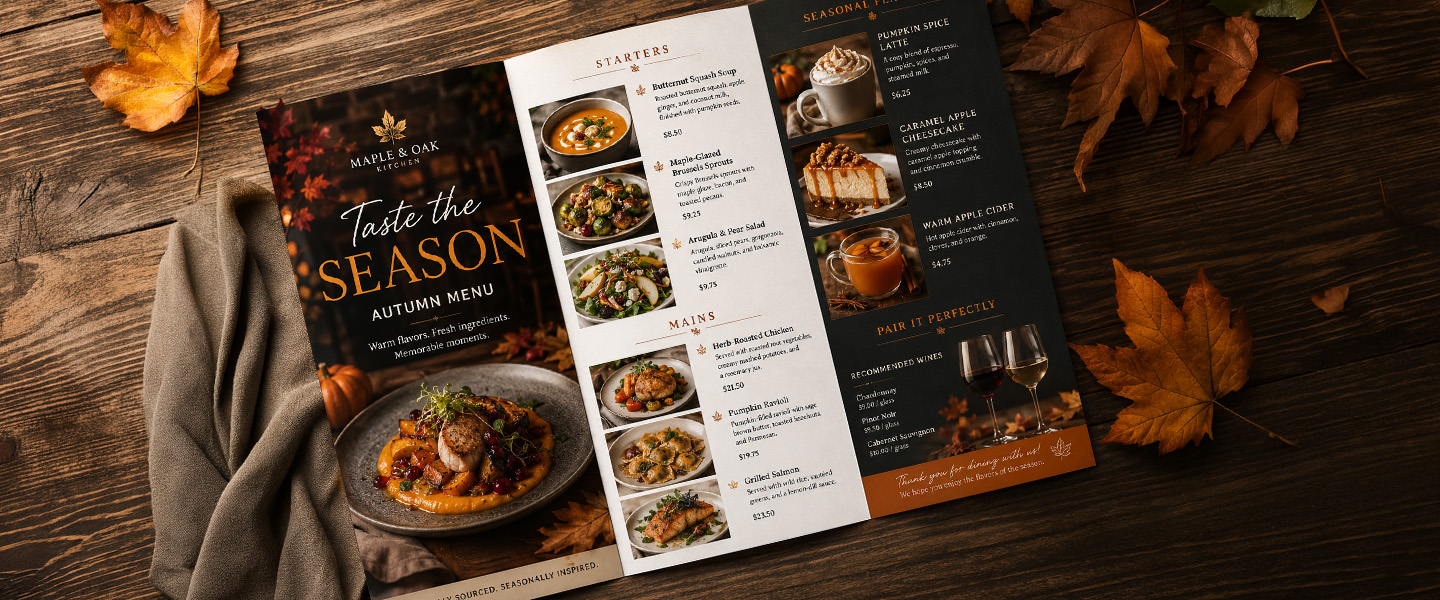
A restaurant print refresh is a seasonal review of the printed materials customers see, receive, or use when interacting with your business.
Think of it as an audit rather than a redesign.
You review existing materials and decide whether each one should be:
Kept
Updated
Reprinted
Replaced
or
Removed
A refresh might involve:
- updating outdated prices,
- removing unavailable menu items,
- introducing seasonal dishes,
- replacing damaged materials,
- refreshing promotions,
- correcting hours or contact information,
- updating QR codes,
- and making branding more consistent.
Sometimes the changes are small.
If your core menu hasn’t changed, you may only need to update a few prices or descriptions.
If your fall campaign introduces several seasonal dishes, events, and promotions, you may need more substantial changes.
The goal isn’t to redesign for the sake of redesigning.
It’s to make sure everything customers see is current, useful, readable, and consistent with what the restaurant is actually offering.
Why Refresh Restaurant Print Materials Before Fall?
Seasonal planning gives restaurants a natural reason to review customer-facing materials.
Seasonal Menu Changes
Fall often brings different flavors, ingredients, beverages, desserts, and limited-time dishes.
Depending on the restaurant, that might include:
- seasonal soups,
- autumn desserts,
- warm beverages,
- pumpkin or apple-inspired items,
- comfort-food specials,
- seasonal cocktails,
- or limited-time dishes.
If those changes affect what customers can order, your print materials may need to change too.
That doesn’t necessarily require rebuilding your entire menu.
A separate seasonal insert, promotional card, flyer, or other temporary piece may be more practical when the core menu remains unchanged.
Upcoming Holidays and Events
Fall contains several marketing opportunities in a relatively short period.
Restaurants may be preparing for:
- football season,
- Halloween,
- Thanksgiving,
- fall festivals,
- school and university events,
- community gatherings,
- corporate events,
- holiday catering,
- and early holiday parties.
Not every restaurant needs a campaign for every occasion.
Choose the events that genuinely fit your customers and concept.
Changing Customer Habits
Seasonal changes can affect when, why, and how customers visit restaurants.
Patio-heavy summer promotions may become less relevant.
Takeout might become more important for certain audiences.
Sports viewing, school activities, community events, and holiday gatherings may create new promotional opportunities.
The National Restaurant Association regularly tracks how consumer behavior, convenience, affordability, celebrations, and seasonal activity influence restaurant demand.
Your print strategy should reflect what your customers are actually doing rather than simply changing colors because fall has arrived.
Outdated Information Can Create Confusion
Imagine seeing one price on a printed menu and another when ordering.
Or scanning a QR code that no longer works.
Or taking home a menu containing outdated opening hours.
Small inconsistencies can create unnecessary friction.
Review:
- prices,
- hours,
- menu items,
- phone numbers,
- URLs,
- addresses,
- QR codes,
- dates,
- and promotional terms
before reprinting anything.
Fresh Materials Can Improve Presentation
Sometimes the information is correct, but the physical piece has seen better days.
Restaurant materials can be:
- folded,
- stained,
- scratched,
- faded,
- torn,
- or heavily handled.
If an important customer-facing piece is visibly worn, replacing it can help maintain a cleaner, more consistent presentation.
Start With a Restaurant Print Audit
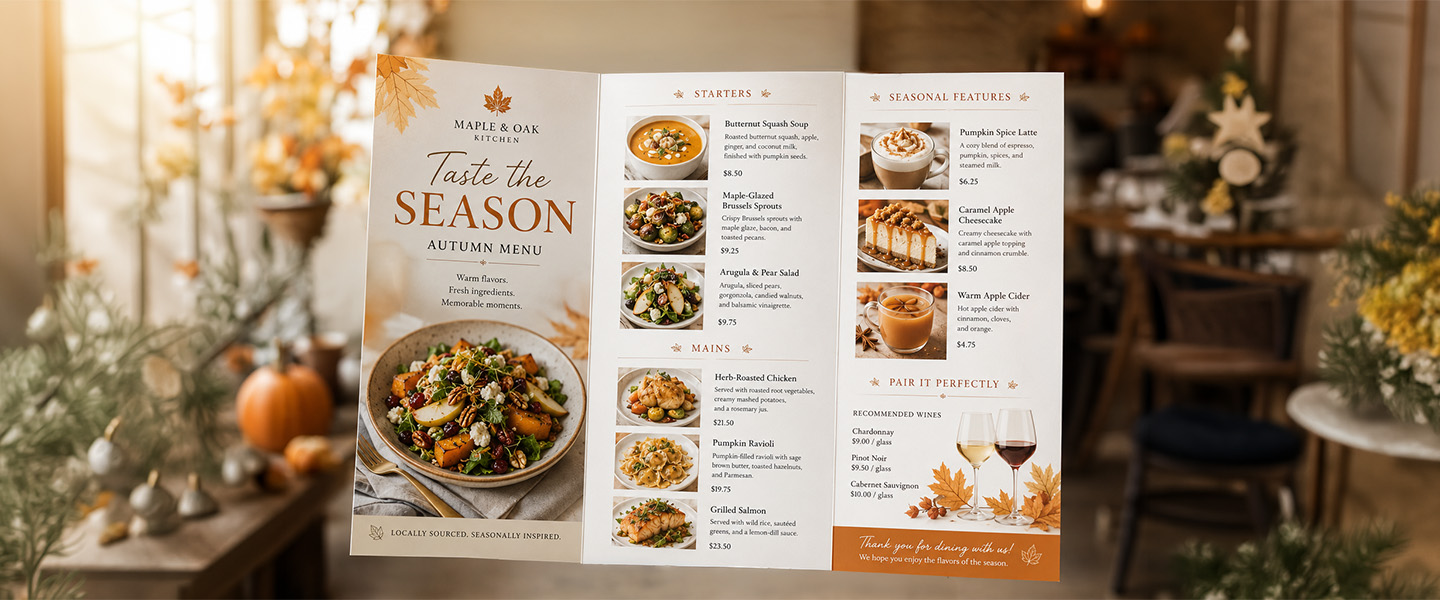
Before ordering new materials, find out what you already have.
Create a simple inventory.
Depending on your restaurant, review materials such as:
- dine-in menus,
- takeout menus,
- promotional cards,
- flyers,
- posters,
- postcards,
- business cards,
- loyalty materials,
- event materials,
- catering materials,
- window promotions,
- counter displays,
- and other customer-facing printed pieces.
Then review each one using the same questions.
Accuracy
- Are prices current?
- Are all listed items still available?
- Are descriptions correct?
- Are the hours accurate?
- Are phone numbers correct?
- Do URLs still work?
- Do QR codes lead to the intended destination?
Relevance
- Does the promotion still apply?
- Is the message appropriate for fall?
- Does the piece support a current business goal?
- Is there outdated seasonal information?
Condition
- Is the material damaged?
- Is it faded?
- Does it look heavily worn?
- Is it still appropriate to give to a customer?
Branding
- Is the current logo being used?
- Are colors consistent?
- Does the typography match other materials?
- Is the tone consistent?
- Do menu items have the same names across channels?
Once you’ve completed the audit, divide materials into four categories:
| Status | Action |
| Current | Keep using |
| Outdated | Update information |
| Damaged | Reprint or replace |
| No Longer Relevant | Remove |
This prevents unnecessary printing because you’re only replacing materials that actually need attention.
Restaurant Print Materials to Update Before Fall
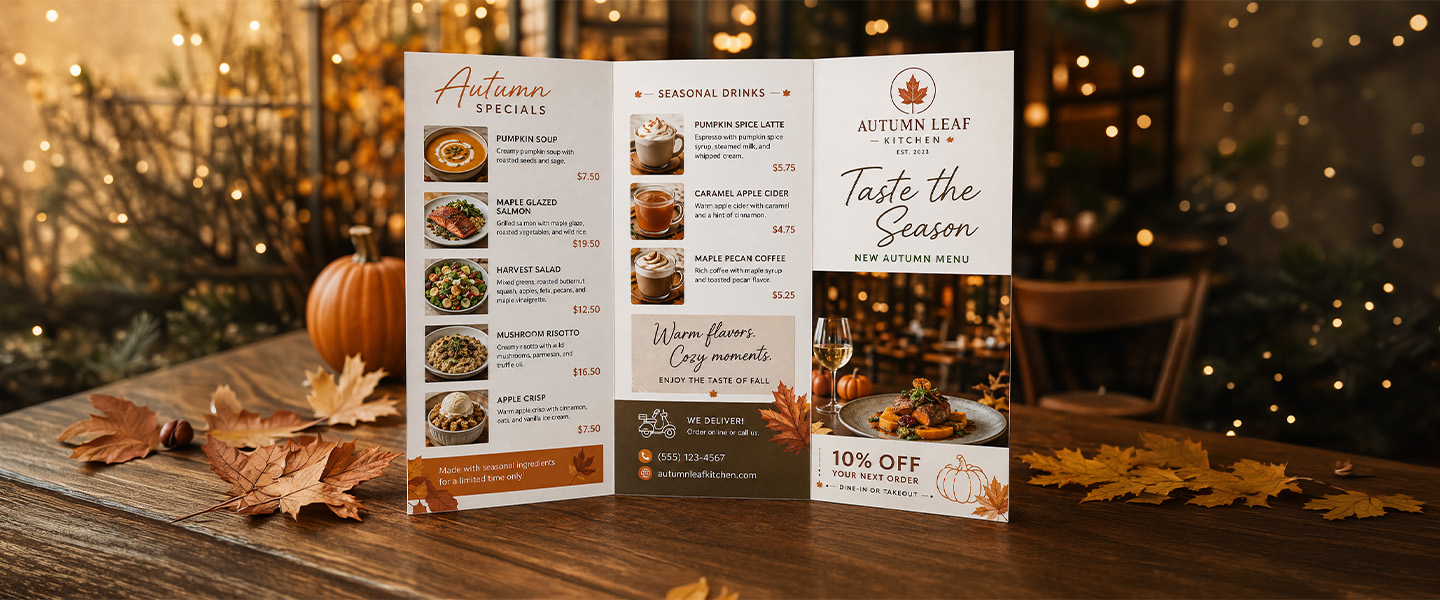
Now work through your customer-facing materials in order of importance.
1. Menus
Start with the information customers use to make purchasing decisions.
Review:
- seasonal dishes,
- prices,
- ingredients,
- descriptions,
- item availability,
- category names,
- readability,
- and overall design consistency.
Pay particular attention to discrepancies between your printed menu and other channels.
If an entrée is called one thing on your printed menu and something different online, decide which naming convention should be used.
The same applies to prices and descriptions.
A fall update doesn’t automatically mean a complete redesign.
If only a small part of your offering changes seasonally, consider whether a temporary promotional piece makes more sense than replacing every menu.
For additional menu-design guidance, read Menu Design Tips for Small Restaurants: How to Make Every Dish Sell Itself.
2. Takeout and To-Go Menus
Takeout materials need their own review because customers may use them away from the restaurant.
Check:
- current menu options,
- pricing,
- ordering instructions,
- phone number,
- website,
- pickup information,
- hours,
- and QR codes.
A customer looking at an old takeout menu at home doesn’t have a server nearby to explain that a price or dish has changed.
Make the information as self-explanatory as possible.
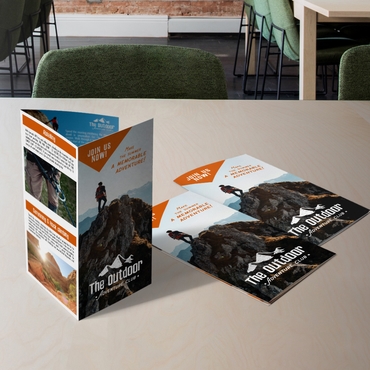
Folded Brochures or Flyers can be useful formats for restaurant information depending on the amount of content and layout you need.
3. Table Promotions
The table is a valuable place to introduce offers customers might not otherwise notice.
Small printed promotional pieces can highlight:
- seasonal drinks,
- appetizers,
- desserts,
- limited-time offers,
- upcoming events,
- featured menu items,
- loyalty programs,
- or holiday reservations.
Keep the message focused.
If you’re promoting a new fall dessert, you don’t also need to explain every upcoming event on the same piece.
One strong offer is often easier to notice than five competing messages.
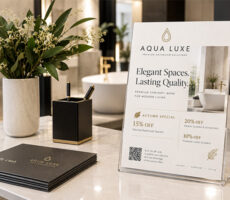
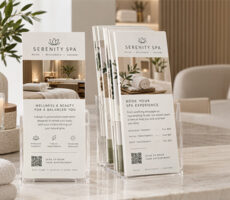
Rack Cards and other compact print formats may work for certain countertop or promotional displays depending on how the restaurant plans to present them.
4. Flyers
Flyers can support restaurant promotions inside and outside the business.
Consider them for:
- seasonal promotions,
- catering services,
- fall events,
- community activities,
- special menus,
- holiday reservations,
- opening announcements,
- or local partnerships.
A flyer should quickly answer:
What’s happening?
Why should I care?
When is it happening?
What should I do next?
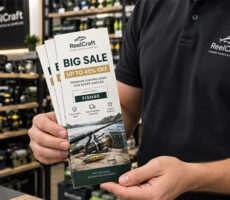
Don’t turn it into a miniature menu unless the campaign actually requires one. If you’re creating a seasonal promotion, our guide to designing flyers that actually convert covers layout, messaging, hierarchy, and calls to action.
5. Posters
Review every poster currently displayed.
That includes posters:
- near the entrance,
- inside the restaurant,
- in storefront windows,
- near pickup areas,
- and at community locations where permitted.
Remove promotions that have ended.
Then consider whether Posters could support upcoming:
- events,
- seasonal dishes,
- catering,
- holiday reservations,
- game-day promotions,
- or limited-time offers.
Make the most important information visible from the expected viewing distance.
A poster people see from several feet away needs a different hierarchy from a menu they hold in their hands.
6. Postcards and Direct Mail
Fall can also be an opportunity to reconnect with local customers.
Postcards can support campaigns such as:
- fall menu announcements,
- seasonal offers,
- customer re-engagement,
- catering promotions,
- holiday reservations,
- grand openings,
- anniversaries,
- and local events.
Keep the campaign focused around a specific reason to return.
For example:
Our Fall Menu Has Arrived
is more specific than:
Come Visit Us
The postcard can then feature a few seasonal highlights and a clear CTA.
For more campaign inspiration, see our guide to postcard design ideas that get results.
If you’re mailing the campaign, also check the appropriate postcard dimensions and postal requirements before printing.
7. Business Cards and Contact Materials
Restaurant Business Cards may be used for:
- catering inquiries,
- event contacts,
- managers,
- private dining,
- partnerships,
- or general restaurant information.
Check whether they still show the correct:
- phone number,
- website,
- address,
- email,
- social or digital destination,
- and branding.
If your cards include a QR code, scan it.
Don’t assume it still works because it worked when the cards were originally printed.
How to Prepare Print Materials for Fall Promotions
Once you’ve completed the audit, build your fall print plan.
1. Identify Important Fall Dates
Start with the calendar.
Depending on your restaurant and community, relevant dates might include:
- football games,
- local festivals,
- school events,
- Halloween,
- Thanksgiving,
- corporate gatherings,
- holiday reservation periods,
- and catering deadlines.
2. Decide Which Promotions You’re Actually Running
Don’t design materials for ideas that haven’t been approved.
Finalize the campaign first.
For each promotion, define:
- offer,
- audience,
- dates,
- participating locations if applicable,
- terms,
- CTA,
- and distribution plan.
3. Confirm Seasonal Menu Changes
Get final confirmation on:
- dishes,
- ingredients,
- names,
- descriptions,
- pricing,
- and availability.
This reduces the chance of having to reprint because information changed after the order was placed.
4. Review Existing Materials
Determine whether an existing design can be updated instead of starting over.
If last year’s catering flyer still fits the brand, for example, you may only need to update:
- photography,
- dates,
- prices,
- contact information,
- and offer details.
5. Identify What Needs Updating or Replacing
Prioritize based on:
Accuracy first.
Upcoming promotions second.
Cosmetic improvements third.
6. Finalize Prices, Dates and Details
Do not send seasonal materials to print while important information is still tentative.
A beautiful flyer with the wrong date isn’t useful.
7. Update Designs Consistently
Use the same:
- logo,
- colors,
- typography,
- photography style,
- messaging,
- and naming conventions
across the campaign.
8. Proofread Everything
Check details one final time.
Pay particular attention to:
- prices,
- dates,
- times,
- addresses,
- phone numbers,
- URLs,
- QR codes,
- spelling,
- and offer terms.
9. Order With the Campaign Date in Mind
Work backward from when the materials need to be in use.
Leave time for:
- design approval,
- printing,
- delivery,
- distribution,
- and unexpected changes.
The goal isn’t simply to have materials ready for fall.
They need to be ready before the promotion begins.
Fall Marketing Opportunities for Restaurants
Once essential information is current, think about where refreshed print materials can support seasonal marketing.
Seasonal Menu Launches
A new fall menu gives customers a reason to return.
Promote selected dishes through:
- flyers,
- posters,
- postcards,
- counter materials,
- and other in-restaurant promotions.
Focus on a few standout items rather than trying to reproduce the entire menu everywhere.
Football and Sports Season
For restaurants where sports are relevant to the customer base, fall can create opportunities around:
- game-day specials,
- group dining,
- takeout,
- watch parties,
- and catering.
Make sure any event-specific materials clearly communicate dates, times, and offer conditions.
Halloween Promotions
Halloween can work for restaurants offering:
- themed menu items,
- limited-time desserts,
- family activities,
- events,
- or seasonal promotions.
Avoid forcing a Halloween campaign if it doesn’t fit the restaurant.
Seasonal relevance should support the brand, not replace it.
Thanksgiving and Holiday Planning
Restaurants offering Thanksgiving dining, catering, private events, or holiday parties may need to start communicating before customers make their plans elsewhere.
Potential materials include:
- catering flyers,
- reservation reminders,
- postcards,
- posters,
- special-menu materials,
- and event information.
The more planning your service requires, the earlier customers may need the information.
Local Fall Events
Look beyond major holidays.
Fall calendars can include:
- school events,
- festivals,
- farmers markets,
- sports tournaments,
- university events,
- neighborhood gatherings,
- charity events,
- and community celebrations.
If your restaurant participates, sponsors, caters, or is located near the event, consider whether a targeted promotion makes sense.
Which Restaurant Print Materials Should You Prioritize?
If your budget or timeline is limited, don’t try to update everything equally.
Start with the materials that directly affect the customer experience.
| Priority | Print Material | Why Update It |
| Essential | Menus | Prices and offerings need to be accurate |
| Essential | Takeout Information | Keeps ordering and contact details current |
| High | Table Promotions | Highlights seasonal items close to the purchasing decision |
| High | Posters | Promotes important offers and events |
| High | Flyers | Supports local and seasonal campaigns |
| Medium | Postcards | Helps reconnect with local customers |
| Medium | Business Cards | Keeps contact information current |
The priorities may change depending on your business.
A restaurant that relies heavily on catering, for example, might move catering flyers and business contact materials higher.
A neighborhood restaurant launching several fall events might prioritize posters and flyers.
Use the table as a starting point—not a universal rule.
How to Refresh Restaurant Print Materials on a Budget
A seasonal refresh doesn’t need to mean a large print order.
Update Only What Needs Updating
If a material is accurate, on-brand, in good physical condition, and still useful, keep it.
Don’t replace something simply because a new season started.
Prioritize Customer-Facing Information
Accuracy should come before decorative seasonal changes.
If you can choose between correcting outdated prices and creating a new autumn-themed postcard, fix the prices first.
Refresh Existing Designs
Templates can reduce unnecessary redesign work.
Keep the core structure and update:
- offers,
- dates,
- images,
- seasonal colors,
- or selected content.
Use Consistent Templates
A repeatable system for flyers, posters, postcards, and other promotions makes seasonal updates easier.
It also helps maintain brand consistency.
Focus on Materials Connected to Real Promotions
Print with a purpose.
If you’re not running a Halloween event, you don’t need Halloween materials just because it’s October.
Avoid Overprinting Seasonal Materials
Evergreen materials can often be ordered in larger quantities.
Highly seasonal materials are different.
Once the event or offer expires, leftover pieces may have little value.
Estimate quantities based on where and how the materials will actually be distributed.
Plan Fall and Early Holiday Campaigns Together
Even if the materials are ordered separately, planning them together can reduce last-minute decisions.
For example, while preparing October promotions, confirm:
- Thanksgiving plans,
- catering deadlines,
- holiday reservation dates,
- and early winter events.
That gives your team a clearer view of what’s coming next.
The U.S. Small Business Administration recommends building marketing plans around goals, audiences, promotional channels, budgets, and an action plan rather than treating individual promotions in isolation.
How to Keep Restaurant Print Materials Consistent
Customers may encounter your restaurant through:
- a menu,
- a postcard,
- a flyer,
- your storefront,
- your website,
- social media,
- or a delivery platform.
Those touchpoints don’t need to look identical, but they should clearly belong to the same restaurant.
Logo Usage
Use the current logo consistently.
Remove old logo versions from templates and shared design folders so they don’t accidentally return in future campaigns.
Brand Colors
Seasonal campaigns can introduce supporting colors without abandoning your core identity.
A fall campaign doesn’t require every restaurant to suddenly become orange and brown.
Typography
Maintain recognizable headline and body-copy styles.
Using completely different fonts for every seasonal promotion can make materials feel disconnected.
Photography
Try to maintain a consistent visual standard.
Mixing professional food photography with low-quality images can weaken the overall presentation.
Tone of Voice
A playful family restaurant and a fine-dining restaurant shouldn’t necessarily communicate fall promotions in the same way.
Keep seasonal messaging consistent with the established personality of the business.
Contact Information
Use one approved source for:
- phone numbers,
- addresses,
- websites,
- hours,
- and other essential information.
This reduces inconsistencies between materials.
Menu Naming
Use the same dish names across print and digital channels whenever practical.
Customers shouldn’t have to wonder whether two differently named items are actually the same dish.
Print and Digital Consistency
When a menu price changes, don’t think only about the printed menu.
Ask where else that information appears.
The update may also need to happen on:
- your website,
- online ordering,
- QR-code destination,
- digital menu,
- social channels,
- and third-party platforms you control.
Consistency doesn’t mean every channel looks identical.
It means customers aren’t receiving contradictory information.
Common Restaurant Print Refresh Mistakes to Avoid
Updating Prices in Only One Place
A price change should trigger a review of every relevant customer touchpoint.
Don’t correct the dine-in menu while leaving old prices on takeout materials.
Printing Before Seasonal Details Are Final
Wait until essential information has been approved.
Otherwise, a last-minute menu or event change can make newly printed materials outdated immediately.
Forgetting to Remove Expired Promotions
Audit what’s already displayed before adding new materials.
Last month’s promotion shouldn’t still be competing with this month’s offer.
Using Outdated QR Codes or URLs
Scan every QR code before reprinting.
Also verify that printed URLs lead to active, mobile-friendly pages.
Ordering Too Many Seasonal Materials
Estimate quantities based on the actual campaign duration and distribution plan.
A Thanksgiving-specific flyer has a short useful lifespan.
Waiting Until the Promotion Has Started
Print materials need to support the campaign—not arrive halfway through it.
Build production and delivery into the marketing timeline.
Using Inconsistent Branding
A new season doesn’t require a new visual identity.
Keep recognizable brand elements consistent.
Forgetting to Proofread
Before approving the order, verify:
Prices
Dates
Times
Hours
Phone numbers
URLs
Addresses
Menu names
Offer terms
A typo in a headline is frustrating.
A wrong event date or price can affect the customer experience.
Restaurant Fall Print Refresh Checklist
Before considering your seasonal refresh complete, confirm:
Menus
- Are prices correct?
- Are seasonal items finalized?
- Have unavailable items been removed?
- Are descriptions accurate?
- Is the menu easy to read?
Takeout Materials
- Do prices match?
- Are ordering instructions correct?
- Is the phone number current?
- Does the website work?
- Have QR codes been tested?
Promotional Materials
- Have expired offers been removed?
- Are upcoming promotions finalized?
- Are dates and terms correct?
- Is there a clear CTA?
Posters and Flyers
- Can the main message be understood quickly?
- Are event details correct?
- Is important information readable at the intended distance?
Postcards
- Is there one clear campaign goal?
- Is the offer easy to understand?
- Is the CTA prominent?
- Have mailing requirements been considered?
Branding
- Is the current logo being used?
- Are colors and fonts consistent?
- Does photography match your brand?
- Is the tone consistent?
Final Review
- Have all prices been proofread?
- Have all dates been verified?
- Have all URLs and QR codes been tested?
- Has someone other than the designer reviewed the final artwork?
- Will the materials arrive before they’re needed?
If everything passes, you’re ready to print.
Why Choose Overnight Prints for Restaurant Printing?
Restaurants often need several types of print materials at once, especially when preparing seasonal campaigns.
Overnight Prints offers custom printing options that can support restaurant marketing, including:
Restaurants can upload custom artwork or use available design tools and templates depending on the selected product.
Fast delivery options are also available for eligible orders when timing becomes important.
Start with the materials your customers rely on most, then add promotional pieces that support your fall campaigns.
Frequently Asked Questions
How often should restaurants update their printed menus?
Menus should be reviewed whenever prices, dishes, ingredients, descriptions, availability, or other important information changes.
Even without major changes, a periodic audit can help identify worn materials, outdated information, and inconsistencies between print and digital channels.
Seasonal transitions can provide a convenient time to perform that review.
What restaurant print materials should be updated seasonally?
Materials tied to temporary offers or seasonal information are the most likely to need updates.
These can include:
- seasonal menu materials,
- flyers,
- posters,
- postcards,
- table promotions,
- catering information,
- and event materials.
Evergreen materials only need to be replaced when their information, branding, condition, or purpose changes.
When should restaurants start preparing fall marketing materials?
Start early enough to finalize the promotion, approve the design, print the materials, receive them, and distribute them before the campaign begins.
The exact timeline depends on the complexity of the promotion and printing requirements.
Planning several seasonal campaigns together can help reduce last-minute work.
What should restaurants check during a print audit?
Review:
- prices,
- menu availability,
- descriptions,
- hours,
- phone numbers,
- addresses,
- URLs,
- QR codes,
- promotion dates,
- physical condition,
- branding,
- and consistency with digital channels.
How can restaurants update print materials on a budget?
Prioritize materials containing outdated or inaccurate information.
Reuse effective layouts, update existing templates instead of redesigning everything, avoid overprinting seasonal pieces, and focus spending on materials connected to actual upcoming promotions.
What are the best print materials for promoting seasonal menu items?
The best format depends on where customers will encounter the promotion.
Inside the restaurant, compact table or counter materials can highlight selected items close to the purchasing decision.
Posters can create broader visibility, while flyers and postcards can promote seasonal offerings beyond the restaurant.
Are table promotions effective for restaurants?
They can be useful because customers encounter the message while already considering what to order.
Keep them focused on one or a small number of relevant offers, such as a seasonal drink, dessert, appetizer, or limited-time promotion.
How can restaurants keep print and digital information consistent?
Create a central source for essential information such as prices, menu names, hours, contact information, and promotion details.
Whenever something changes, review every channel where that information appears rather than updating print and digital separately.
What should restaurants print for fall events?
Depending on the event, useful formats may include:
- flyers,
- posters,
- postcards,
- promotional cards,
- event information,
- and special menu materials.
Choose formats based on where the audience will encounter the promotion and what information needs to be communicated.
When should restaurants start promoting holiday catering and reservations?
Start early enough to reach customers while they’re still making plans.
The exact timing depends on the restaurant, market, and type of service.
Catering or large-group reservations that require advance planning generally need earlier promotion than simple limited-time menu specials.
Conclusion
Preparing your restaurant for fall doesn’t require replacing every printed piece you own.
Start with an audit.
Look for materials that are:
outdated, inaccurate, damaged, inconsistent, or connected to an upcoming promotion.
Then prioritize.
Menus and essential customer information should generally come first because accuracy directly affects the dining and ordering experience.
Next, focus on promotional materials that support actual fall opportunities, such as:
- seasonal menu launches,
- football season,
- Halloween,
- Thanksgiving,
- catering,
- holiday reservations,
- and local events.
Finally, check that everything works together.
The same prices, menu names, contact information, branding, and promotional details should follow customers from your printed materials to your digital channels.
A seasonal print refresh isn’t about changing everything.
It’s about making sure everything you’re still using deserves to be there.
Planning early gives your team time to make those decisions before the busiest fall dates arrive.
Explore Overnight Prints for custom flyers, brochures, posters, postcards, business cards, rack cards, stickers, coasters, and other print products that can support your restaurant’s upcoming promotions.
Resources
- National Restaurant Association – Restaurant industry research, operational insights, consumer trends, and resources for restaurant operators.
- U.S. Small Business Administration – Marketing and Sales – Guidance for creating marketing plans around audiences, goals, promotional strategies, budgets, and measurement.
- American Marketing Association – Marketing strategy, branding, customer communication, and professional marketing resources.