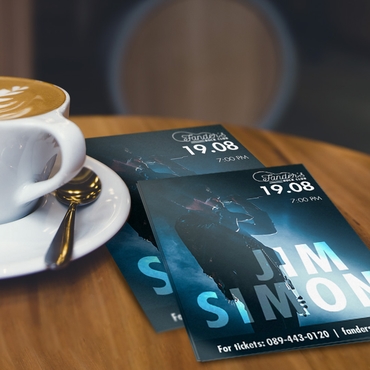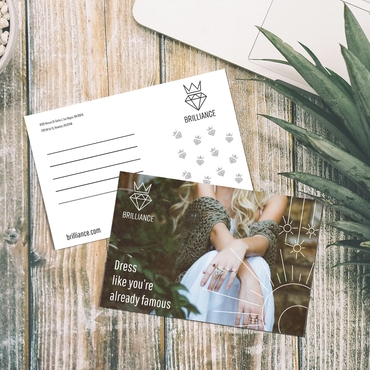
Many restaurants don’t have a marketing problem — they have a visibility problem. The issue is often not the food itself, but the print materials being used to promote the restaurant, communicate offers, and create a memorable customer experience.
In 2026, restaurant printing works best when it supports customer behavior instead of simply adding more decoration or clutter.
That’s where many restaurants lose money without realizing it.
Menus nobody reads, posters customers ignore, overcrowded flyers, generic table signs, and cheap promotional materials often create very little return. Meanwhile, simpler and more intentional restaurant print materials usually perform much better because they guide attention more effectively.
The goal is not to print more.
The goal is to print smarter.
Restaurants Often Print Things Because “Everyone Else Does”
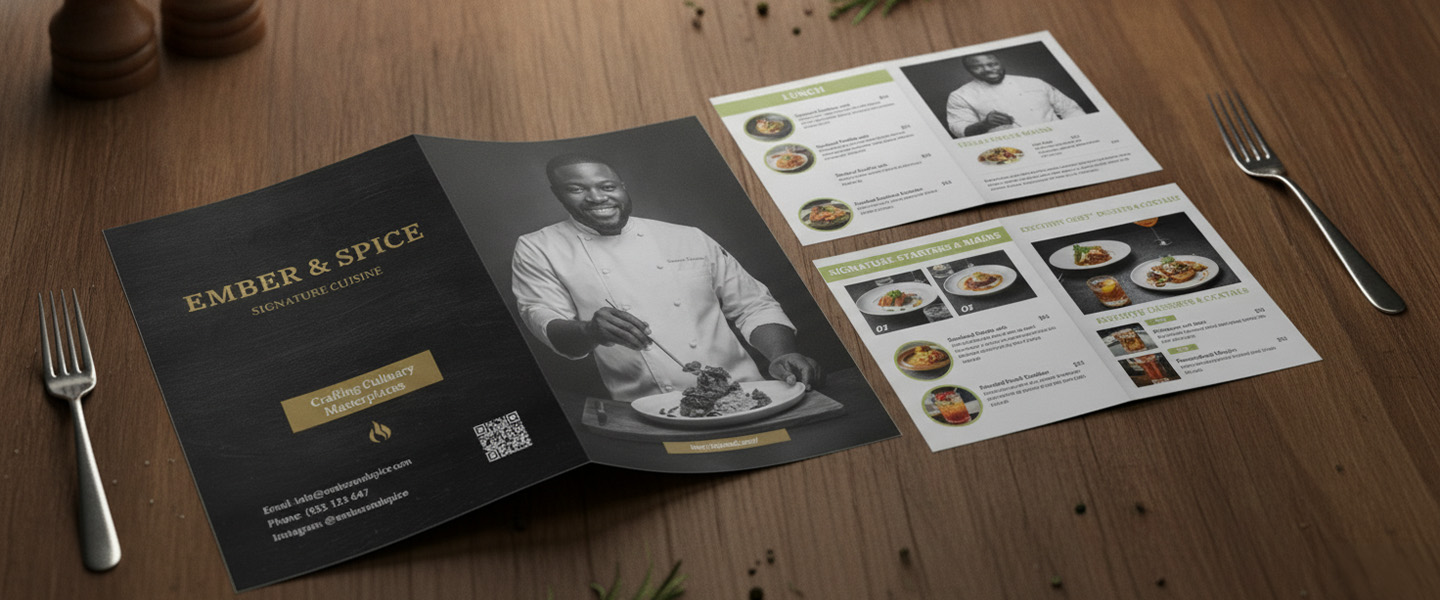
This is one of the biggest reasons restaurant marketing budgets get wasted.
Many businesses order:
- oversized menus with too much information
- generic promotional flyers
- crowded posters
- table inserts nobody notices
- low-quality signage
- seasonal materials that don’t match the brand
Not because they’ve proven effective.
But because they feel like things restaurants are supposed to have.
The problem is that modern customers scan information incredibly fast. If the design feels overwhelming, outdated, or visually noisy, people mentally ignore it almost immediately.
Restaurants today compete for attention constantly:
- social media
- delivery apps
- nearby competitors
- digital menus
- outdoor signage
- online reviews
That means physical print materials now need to work harder than before.
And unfortunately, many restaurants still print materials designed like it’s 2012.
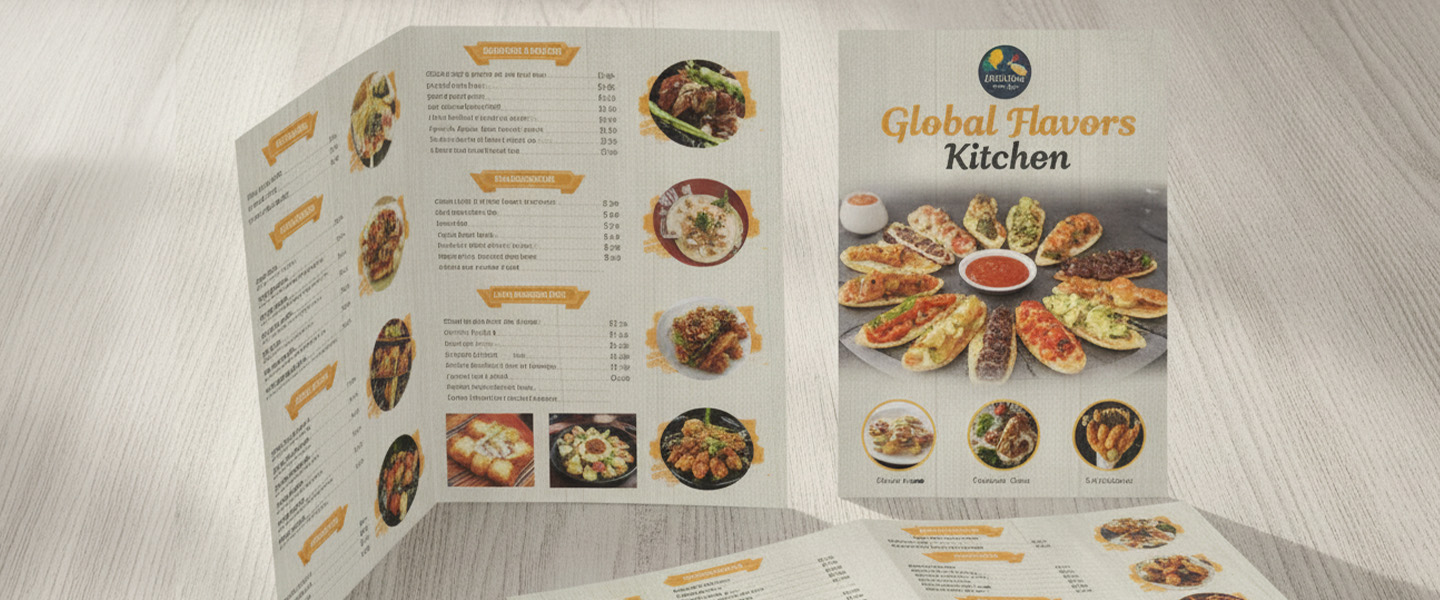
Overloaded Menus Are One of the Biggest Problems
A common misconception is that adding more menu items creates more opportunities to sell.
In reality, too many choices often reduce decision-making speed and increase customer fatigue.
Many restaurants waste money printing:
- oversized multi-page menus
- cluttered layouts
- tiny unreadable text
- too many photos
- inconsistent branding
- visually crowded sections
When menus become difficult to scan, customers stop engaging with them naturally.
The restaurants that perform best usually make decisions easier.
They guide attention toward:
- high-margin dishes
- best sellers
- signature items
- limited-time offers
Good menu printing is not only about aesthetics.
It’s about psychology.
Simple changes in spacing, typography, layout, and hierarchy can directly influence:
- order value
- speed of decision-making
- customer perception
- overall dining experience
If you’re redesigning menus, this guide on menu design tips for small restaurants explains how restaurants use print design strategically to improve customer engagement.
Cheap Posters Usually Become Invisible
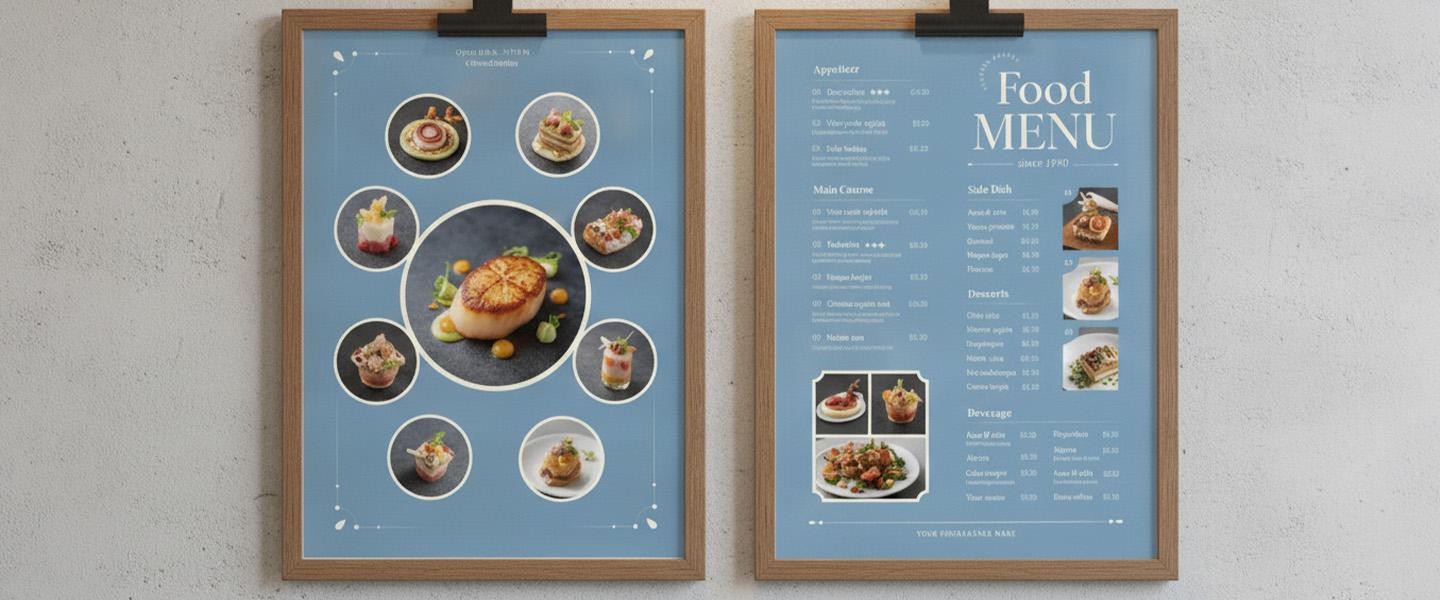
Restaurants often spend money printing posters that technically look “fine” — but fail in real-world conditions.
This usually happens because:
- the text is too small
- there’s too much information
- the colors blend into the environment
- the placement is weak
- the design lacks contrast
- the message isn’t immediately clear
Most customers decide within seconds whether to pay attention to a poster.
That means storefront and in-store signage needs to communicate quickly.
The most effective restaurant posters are usually:
- bold
- simple
- visually clean
- easy to understand from a distance
One strong offer almost always performs better than five competing messages on the same design.
Many Restaurant Flyers Never Reach the Right Audience
Flyers can absolutely still work for restaurants.
But only when they’re distributed strategically.
One of the biggest mistakes restaurants make is printing thousands of generic flyers without considering:
- who they’re targeting
- where the flyers will appear
- what action customers should take
- whether the design feels worth noticing
Restaurants often waste money by creating flyers that try to appeal to everyone.
The better approach is usually much more specific.
For example:
- lunch specials for nearby office workers
- family deals for local neighborhoods
- event promotions for weekend traffic
- limited-time offers tied to seasons or sports events
The more targeted the flyer feels, the more likely customers are to engage with it.
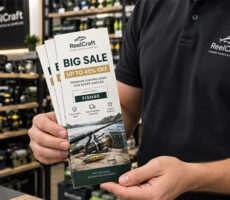
Professionally printed flyers still work extremely well for:
- local restaurants
- cafés
- bars
- food trucks
- takeout businesses
especially when combined with a clear offer and strong local distribution.
Restaurants Often Ignore the Print Materials Customers Actually Keep
This is where many restaurants miss huge opportunities.
Some print materials disappear instantly.
Others stay visible for days, weeks, or even months.
For example:
- takeout inserts
- loyalty cards
- postcards
- branded magnets
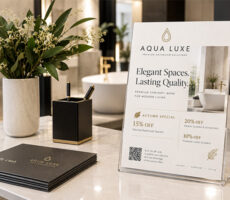
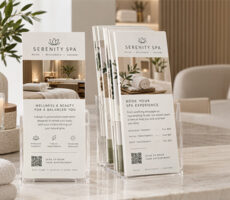
- table promotions
- thank-you cards
often create more repeated visibility than temporary signage.
That’s because customers physically keep them.
A well-designed postcard with:
- a bounce-back offer
- QR code
- discount
- seasonal menu preview
can continue driving repeat visits long after the initial interaction.
Restaurants that focus only on one-time visibility often overlook the value of repeated exposure.
Better Restaurant Printing Usually Feels More Intentional
The restaurants with the strongest branding rarely use the most complicated print materials.
Instead, they focus on consistency.
Their menus, posters, flyers, and signage usually:
- use the same colors
- follow the same typography
- maintain the same tone
- feel visually connected
That consistency makes the restaurant feel more established and memorable.
Even subtle upgrades in:
- print quality
- layout clarity
- color consistency
- paper stock
- finishing
can dramatically improve customer perception.
And in highly competitive restaurant markets, perception matters.
Because customers often decide how they feel about a restaurant before the food even arrives.
Restaurant Printing Should Support Real Business Goals
The best restaurant print materials are usually tied to a specific outcome.
Not just decoration.
For example:
- posters should increase visibility
- menus should guide decisions
- flyers should drive traffic
- postcards should encourage repeat visits
- table promotions should increase upsells
When restaurants print materials without a clear purpose, the marketing often becomes visual noise instead of something that drives revenue.
That’s why intentional printing almost always outperforms excessive printing.
Final Thoughts
Restaurants waste money on print materials when they prioritize quantity over effectiveness.
The materials customers actually notice are usually:
- easier to read
- visually cleaner
- strategically placed
- professionally printed
- tied to a clear purpose
In 2026, restaurant printing still works extremely well — but only when it supports how customers actually behave.
Simple menus often outperform crowded ones.
Targeted flyers outperform generic promotions.
Clear posters outperform overloaded designs.
And the restaurants that understand this usually create stronger customer experiences both inside and outside the dining room.
Explore professional flyers, posters, postcards, and restaurant printing options at Overnight Prints to create marketing materials customers actually notice.