Key Takeaways
- Menu design influences customer decisions before food is ordered.
- Clear layouts and visual hierarchy help customers order with confidence.
- Too many choices can create decision fatigue and reduce sales.
- Print quality affects how customers perceive value and professionalism.
- Small menu improvements can increase engagement without changing your menu items.
Introduction
Yes, restaurant menus can increase orders without changing the food. A well-designed menu guides customers’ attention, makes choices easier to navigate, and encourages higher-value purchases through thoughtful layout, organization, and presentation.
That’s why menu design is about more than aesthetics, it’s a powerful marketing tool.
Customers make dining decisions faster than ever. A menu that feels cluttered, confusing, or difficult to read can quickly reduce engagement, even if the food is exceptional. On the other hand, menus with a clear layout, logical structure, and professional print quality help customers order with greater confidence and create a stronger overall impression of the restaurant.
Often, the difference isn’t what’s on the menu, it’s how the menu guides the customer experience.
Why Menu Design Matters More Than You Think
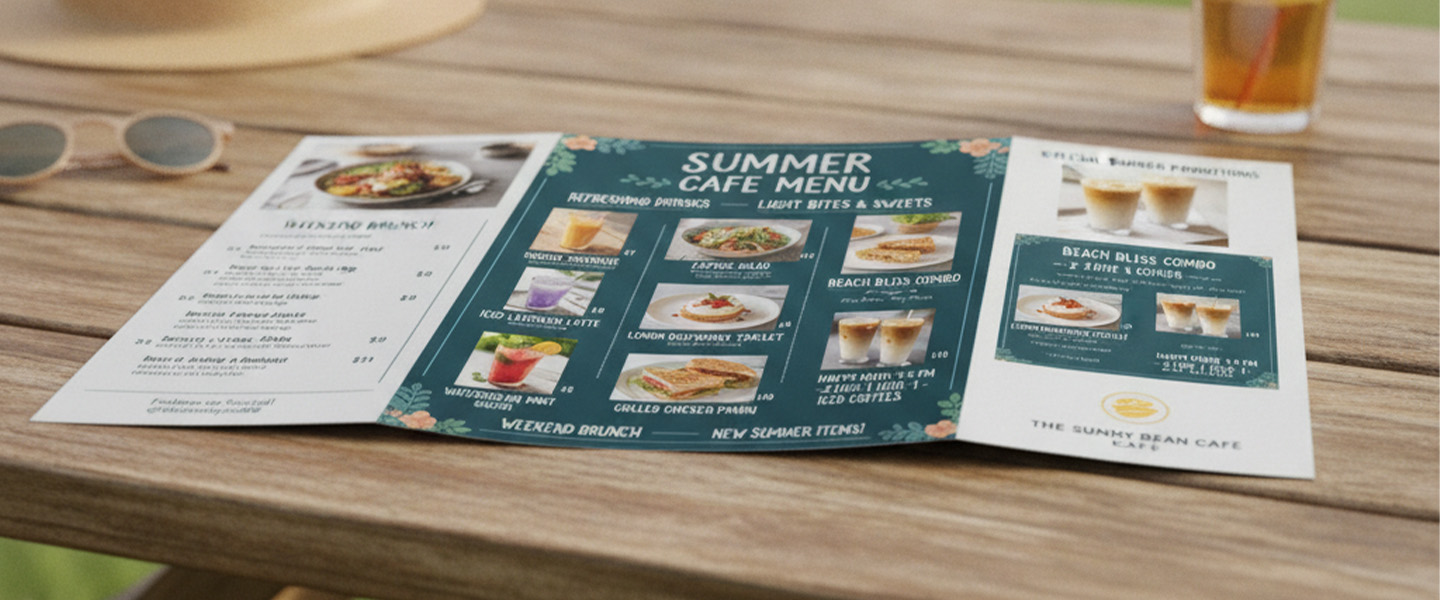
Restaurant menus do more than list food and prices—they shape how customers make decisions. Most diners don’t read every item from beginning to end. Instead, they quickly scan the menu for dishes that stand out and are easy to understand.
A clear, well-organized menu helps customers navigate their options, make decisions with confidence, and creates a stronger first impression. By guiding attention naturally, effective menu design improves the ordering experience and can increase sales without changing the food itself.
The way customers interact with printed materials matters just as much as the information they contain. Our guide on How to Design Print Materials That Actually Get Read (Not Thrown Away) explains the design principles that help printed marketing capture attention and improve readability.
What Makes a Restaurant Menu Easy to Use?
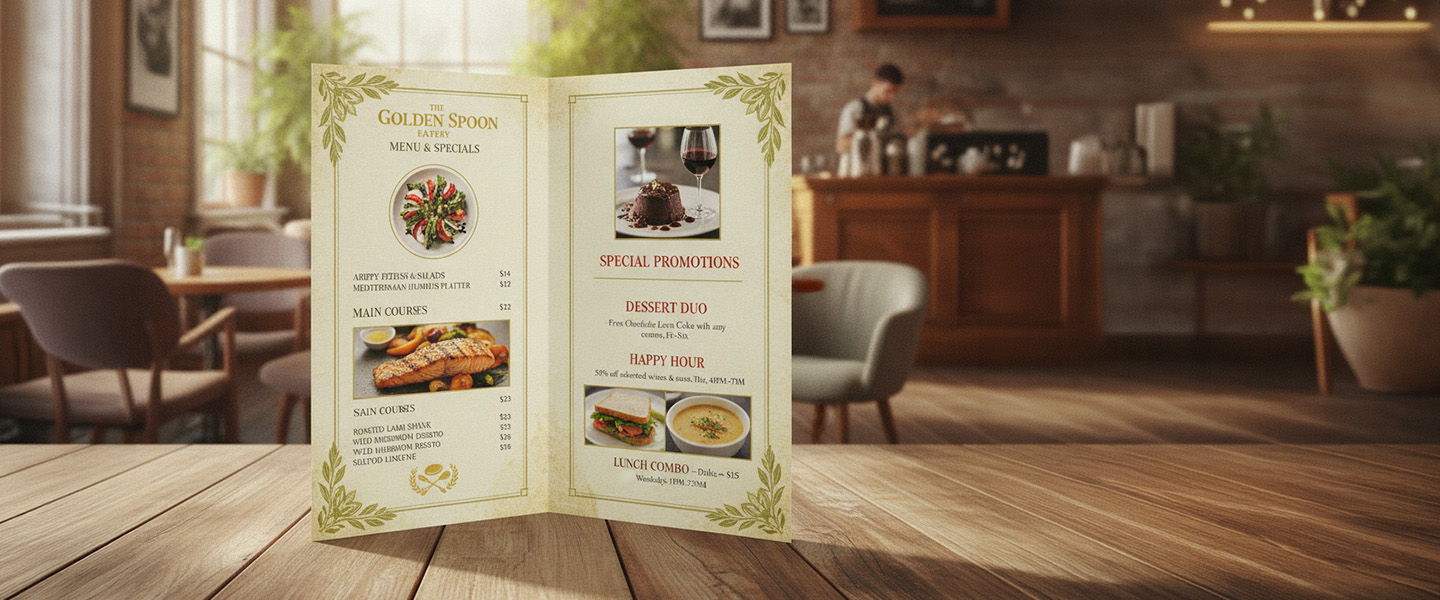
The best restaurant menus don’t happen by accident. Every design element—from the layout to the spacing—is intended to help customers find information quickly and make ordering feel simple. A menu that’s easy to navigate creates a smoother dining experience and naturally draws attention to the items you want to highlight.
Clear Visual Hierarchy
Customers should immediately know where to look first. Use headings, typography, and subtle design elements to highlight signature dishes, seasonal specials, or high-margin items without making the menu feel cluttered.
Easy-to-Scan Layout
Most diners scan a menu rather than read every item. Organize dishes into clear sections and use concise descriptions so customers can quickly compare options and make confident decisions.
Strategic Item Placement
Where an item appears on the menu can influence how often it’s ordered. Placing featured dishes in prominent locations or within visually distinct sections helps attract attention without relying on bold promotional messaging.
Comfortable Spacing
White space is just as important as the content itself. Adequate spacing between sections and menu items reduces visual clutter, improves readability, and makes the overall menu feel more inviting.
When these elements work together, customers spend less time searching and more time ordering—creating a better experience for both diners and restaurants.
Why Simpler Menus Often Increase Orders
Many restaurant owners assume that offering more choices will lead to more sales. In reality, too many options can make ordering more difficult.
When menus become crowded with long descriptions, small text, or too many categories, customers may experience decision fatigue. Instead of exploring the menu, they often choose familiar items, skip sections, or take longer to place an order.
A simpler, well-organized menu creates a smoother experience by making it easier to find and compare options. Customers feel more confident in their decisions, which can lead to faster ordering and a more enjoyable dining experience.
Simplifying a menu doesn’t necessarily mean removing dishes. It means organizing information clearly so customers can quickly understand their choices and focus on what matters most.
The same principle applies to other printed marketing materials. In What People Read First on a Flyer (According to Print Designers), we explore how customers naturally scan printed layouts and why reducing visual clutter improves engagement.
Print Quality Shapes Customer Perception
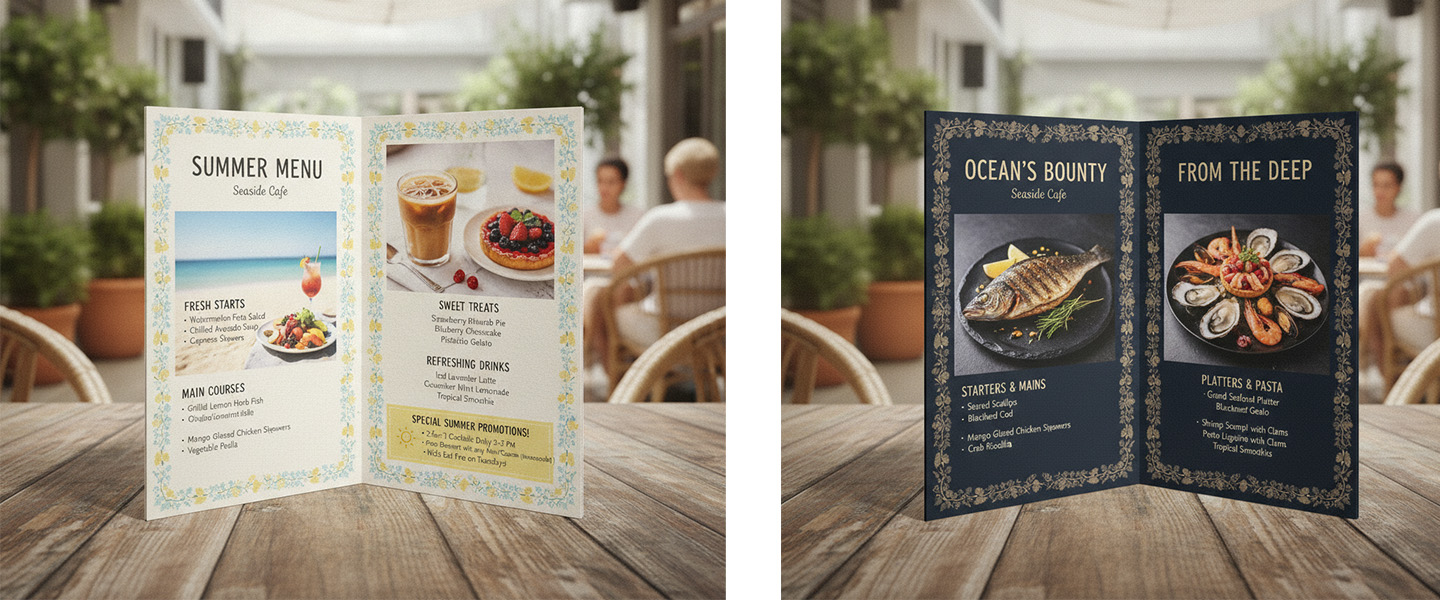
A restaurant menu is often one of the first physical interactions customers have with your brand. Before they taste the food, they form an impression based on how the menu looks and feels.
A professionally printed menu immediately communicates quality and attention to detail, while a worn, faded, or poorly printed menu can make the dining experience feel less polished—even if the food is exceptional.
Many restaurants also choose professionally printed brochures for folded menus that provide additional space for food descriptions, beverages, or seasonal specials while maintaining a polished presentation.
When printing your menus, pay attention to:
- Paper quality – Choose a paper stock that feels durable and matches your restaurant’s style, whether casual or upscale.
- Durable materials – Menus are handled every day, so selecting materials that resist wear helps maintain a professional appearance.
- Color accuracy – Sharp, vibrant colors make food photography, branding, and design elements more appealing.
- Readability – Crisp printing ensures text is easy to read and menu sections are clearly organized.
- Clean presentation – Menus should always look clean, well-maintained, and free of fading, stains, or damage.
Small improvements in print quality can have a significant impact on customer perception. A menu that looks professional helps reinforce trust, supports your brand, and creates a stronger dining experience before the first order is even placed.
Print quality affects more than durability—it influences how customers perceive your brand. Learn why in Cheap vs Premium Printing: What Customers Actually Notice, where we explain how professional printing shapes customer expectations before they make a purchase.
How to Design a Menu That Encourages Ordering
A well-designed menu should help customers make decisions—not overwhelm them. By organizing information clearly and drawing attention to key items, you can create a smoother ordering experience that benefits both your customers and your business.
Highlight Signature Dishes
Make your most popular or high-margin items stand out using subtle design elements such as boxes, icons, or section headers. This naturally draws attention without making the menu feel overly promotional.
Limit Visual Clutter
Avoid overcrowding the page with too many colors, fonts, or graphics. A clean layout makes the menu easier to scan and helps customers focus on the most important information.
Use Consistent Typography
Choose one or two easy-to-read fonts and use them consistently throughout the menu. Clear headings and readable body text create a more polished and professional appearance.
Keep Descriptions Concise
Use short, appealing descriptions that highlight what makes each dish unique. Customers should be able to understand each menu item quickly without reading long paragraphs.
Include Clear Pricing
Display prices consistently and make them easy to find. Clear pricing helps customers compare options confidently and reduces hesitation during the ordering process.
When your menu is easy to read, visually organized, and focused on guiding customer attention, ordering becomes faster, more enjoyable, and more likely to lead to additional purchases.
Restaurants Often Design Menus Around Information Instead of Behavior
This is where many menus lose effectiveness.
Restaurants frequently focus on: fitting everything, explaining everything, or maximizing space efficiency.
But customers do not experience menus like spreadsheets.
They experience them emotionally.
Good restaurant print marketing focuses less on: “How much can we include?”
and more on: “What should customers notice first?”
That shift changes everything.
The strongest menus usually create: clear visual flow, comfortable spacing, easy scanning, and natural prioritization.
Customers should never feel like they need to “work” to understand the menu.
Because once ordering starts feeling mentally exhausting, engagement drops quickly.
Quick Comparison: Menus That Increase Orders vs Menus That Reduce Engagement
| Higher-Performing Menus | Lower-Performing Menus |
| Easy to scan | Visually crowded |
| Clear hierarchy | Too many competing sections |
| Professional print quality | Worn or outdated materials |
| Focused visual emphasis | Everything highlighted equally |
| Comfortable spacing | Dense layouts |
| Simple navigation | Confusing structure |
After the table, continue naturally:
Most customers will never consciously describe these differences out loud. But psychologically, these details shape how comfortable, confident, and engaged people feel while ordering.
Menu Design Influences Perceived Value (Restaurant Menus Also Influence Perceived Pricing)
A restaurant’s menu doesn’t just present prices—it influences how customers perceive them. A clean, well-designed menu can make dishes feel more valuable, while a cluttered or outdated menu may make the same prices seem less justified.
This is largely due to pricing psychology. Customers often associate a polished presentation with higher quality, making them more comfortable paying premium prices when the overall experience feels professional.
Branding consistency also plays an important role. When your menus, posters, table displays, and other printed materials share the same visual style, they reinforce your restaurant’s identity and create a more cohesive dining experience.
By combining thoughtful menu design with consistent branding, restaurants can strengthen customer trust and improve the perceived value of both their food and overall experience.
Common Restaurant Menu Mistakes
Even great food can be overlooked if the menu is difficult to navigate. Avoiding these common design mistakes can make your menu easier to read, improve the customer experience, and encourage more confident ordering.
Including Too Many Menu Items
Offering too many choices can overwhelm customers and make it harder for them to decide. Organize your menu around your most popular dishes and avoid adding items that create unnecessary complexity.
Using Tiny Fonts
Small text may help fit more content on the page, but it also makes the menu harder to read. Choose font sizes that are comfortable for customers of all ages and easy to scan in different lighting conditions.
Poor Organization
A menu should guide customers naturally from one section to the next. Group similar items together, use clear headings, and create a logical flow that makes finding dishes quick and intuitive.
Keeping an Outdated Menu Design
Old branding, inconsistent formatting, or worn menus can make a restaurant feel less professional. Refreshing your menu periodically helps maintain a modern appearance and ensures it reflects your current offerings.
Refreshing your printed materials regularly helps maintain a professional image. If you’re unsure what else should be updated, read The Print Pieces Businesses Forget to Reorder (Until It’s Too Late) for a practical checklist of commonly overlooked print materials.
Choosing Low-Quality Printing
Faded colors, blurry text, damaged pages, or thin paper can negatively affect customer perception. Professionally printed menus reinforce quality and help create a better first impression.
Trying to Highlight Everything
When every dish is bold, boxed, or visually emphasized, nothing truly stands out. Instead, use subtle design elements to draw attention to a small number of signature dishes, seasonal specials, or high-margin items. A focused design is more effective than one competing for attention on every page.
Which Restaurants Benefit Most from a Menu Refresh?
Every restaurant can benefit from reviewing its menu regularly, but for some businesses, keeping menus updated is especially important. A refreshed menu helps maintain a professional appearance, highlights current offerings, and creates a better customer experience.
Cafés
Seasonal drinks, pastries, and limited-time specials change frequently. Updating printed menus helps showcase new offerings and keeps promotions relevant.
Casual Restaurants
Restaurants with diverse menus benefit from clear organization and refreshed layouts that make it easier for customers to browse appetizers, entrées, and specials.
Fine Dining
A premium dining experience starts with presentation. High-quality, professionally printed menus reinforce the restaurant’s brand and complement the overall atmosphere.
Bars & Breweries
Rotating beers, cocktails, happy hour specials, and seasonal drinks require menus that are easy to update and clearly organized so customers can quickly find what’s available.
Food Trucks
Menus should be simple, durable, and easy to read from a distance. Regular updates also help reflect changing locations, daily specials, or seasonal items. Promotional flyers can also help food trucks advertise new locations, daily specials, or upcoming events
Quick-Service Restaurants
Fast ordering depends on clear layouts and readable pricing. Well-designed menus help customers make decisions quickly, improving both the customer experience and service efficiency.
No matter the type of restaurant, a menu refresh is an opportunity to improve readability, reinforce your brand, and make ordering easier for your customers.
Final Thoughts
Some restaurant menus increase orders not because the food changes, but because the customer experience changes.
The strongest menus guide attention naturally, simplify decisions, improve readability, and create a more polished perception of the restaurant overall.
Menu design remains one of the most overlooked parts of restaurant marketing because many businesses still treat menus as information sheets instead of customer psychology tools.
But customers respond emotionally to presentation long before they consciously evaluate the food itself.
And often, small improvements in layout, print quality, and visual hierarchy can influence restaurant performance far more than businesses expect.
Explore professional Flyers, Brochures, Posters, and restaurant print materials at Overnight Prints to create menus and marketing materials designed for real customer engagement.
Frequently Asked Questions
How often should restaurants update their menus?
Review your menu at least every six to twelve months, or whenever you introduce new dishes, adjust pricing, update branding, or launch seasonal specials. Regular updates help keep your menu accurate and maintain a professional appearance.
Does menu design really affect sales?
Yes. A well-designed menu can influence what customers notice, how quickly they make decisions, and which items they choose. Clear layouts, strategic placement, and easy-to-read formatting can improve the ordering experience and encourage higher-value purchases.
Should I use printed menus or QR codes?
Both can be effective, depending on your restaurant. Printed menus provide a tactile, distraction-free experience and help reinforce your brand, while QR code menus are easy to update and reduce printing costs. Many restaurants successfully use both options together.
How many menu items should a restaurant have?
There isn’t a single ideal number, but your menu should include enough variety without overwhelming customers. Organize dishes into clear categories and focus on offering options that are easy to compare and understand.
What makes a menu easier to read?
An easy-to-read menu uses clear headings, consistent typography, adequate white space, logical organization, and concise descriptions. Highlighting key items and maintaining a clean layout also helps customers navigate the menu more comfortably.
What type of paper works best for restaurant menus?
The best paper depends on your restaurant’s style and how often menus are handled. Durable paper stocks with high-quality printing are ideal for most restaurants because they resist wear, improve readability, and create a more professional first impression.
Resources
- National Restaurant Association – Resources and best practices for restaurant operations, customer experience, and menu management.
- Cornell Center for Hospitality Research – Research and insights on hospitality management, restaurant operations, and customer behavior.
- Food and Drug Administration (FDA) – Food Code – Guidance on food service operations and menu-related best practices for restaurants and food service establishments.