The weeks before a new school year can get busy quickly. Administrators are preparing schedules and orientation information. Teachers are organizing classrooms. Families need dates and instructions. PTOs and PTAs are planning membership drives, fundraisers, and the first events of the year.
And much of that information needs to reach people before the first bell rings.
Digital communication plays an important role, but printed materials can reinforce those messages in places where students and families will actually see them.
A Flyer can go home with students.
A Poster can remind families about an upcoming event.
A Postcard can announce an important date.
A Booklet can organize information that would overwhelm a one-page handout.
The challenge is deciding what actually needs to be printed.
This back-to-school printing checklist breaks the process down for schools, teachers, and PTOs/PTAs, with practical priorities for communication, classrooms, events, fundraising, and the first weeks of the school year.
Key Takeaways
- Schools can prioritize flyers, posters, calendars, handouts, and other communication materials before students return.
- Teachers can use printed materials to organize classrooms, communicate with families, display important information, and recognize students.
- PTOs and PTAs can use print alongside digital communication to promote membership, recruit volunteers, advertise fundraisers, and increase awareness of school events.
- When budgets are limited, start with materials that communicate essential dates, instructions, and event information to the largest number of people.
- Using consistent colors, logos, fonts, and messaging can make school communications easier for families to recognize.
- Planning print materials before the back-to-school rush can reduce last-minute changes, errors, and unnecessary reprints.
What Should You Print for Back-to-School Season?
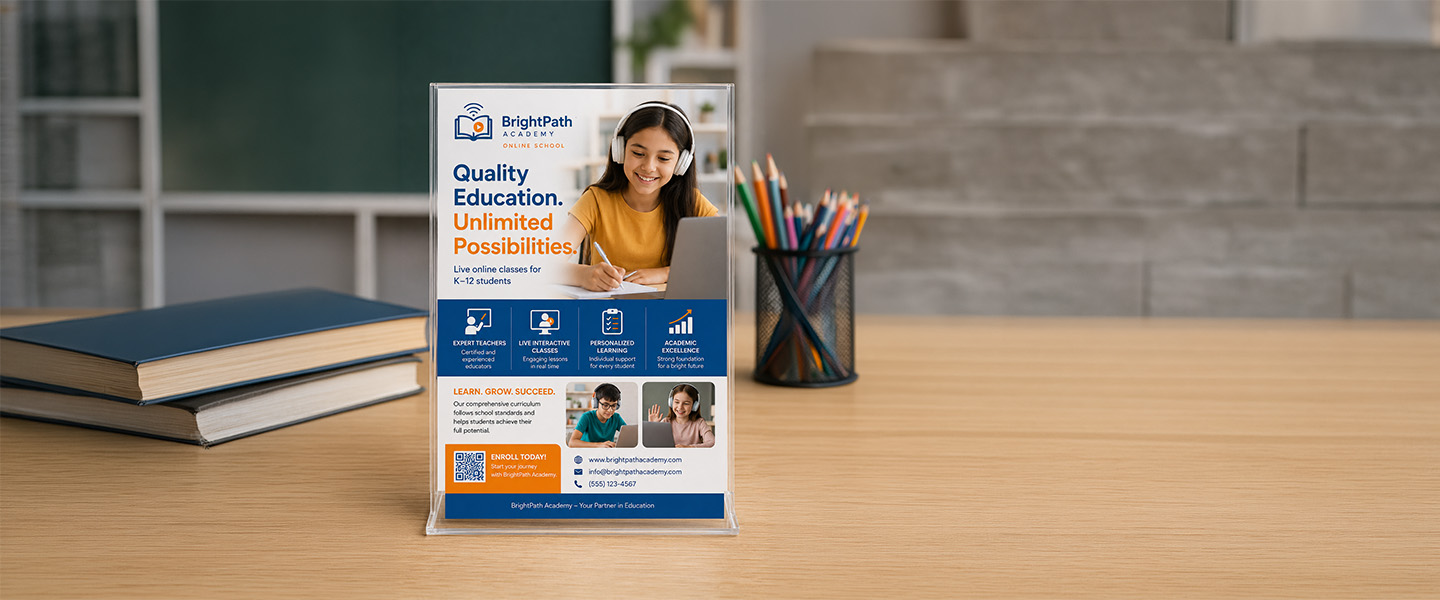
There is no universal school printing checklist because a classroom, an entire school, and a parent organization have very different needs.
However, most back-to-school printing falls into a few categories.
School Communication Materials
These help schools communicate practical information to students and families.
Examples include:
- welcome flyers,
- school calendars,
- orientation information,
- policy handouts,
- important dates,
- program information,
- and contact details.
Classroom Materials
Teachers may need printed materials to organize the classroom and establish routines from the first day.
These can include:
- labels,
- classroom signs,
- expectations,
- schedules,
- welcome information,
- and educational displays.
Welcome and Orientation Materials
The beginning of the year often brings new students, new families, and sometimes new staff.
Printed welcome materials can help explain where to go, what to bring, whom to contact, and what to expect.
Event Promotions
Open houses, back-to-school nights, sports, clubs, family activities, and school fairs all need promotion.
Schools and PTOs can combine digital announcements with printed Flyers, Posters, and Postcards to reinforce event information.
Fundraising Materials
PTOs, PTAs, teams, clubs, and other school organizations may begin fundraising soon after the year starts.
Printed materials can explain:
- what the fundraiser supports,
- important dates,
- participation instructions,
- event details,
- and how families can get involved.
Signs and Posters
Schools often need visual communication throughout buildings.
That can include:
- welcome messages,
- directions,
- reminders,
- event announcements,
- club information,
- and school-wide notices.
Parent Communication
Some information needs to be easy for parents and caregivers to reference later.
Printed calendars, schedules, reminders, and information sheets can complement emails, apps, and online portals.
Why Printed Materials Still Matter for Schools
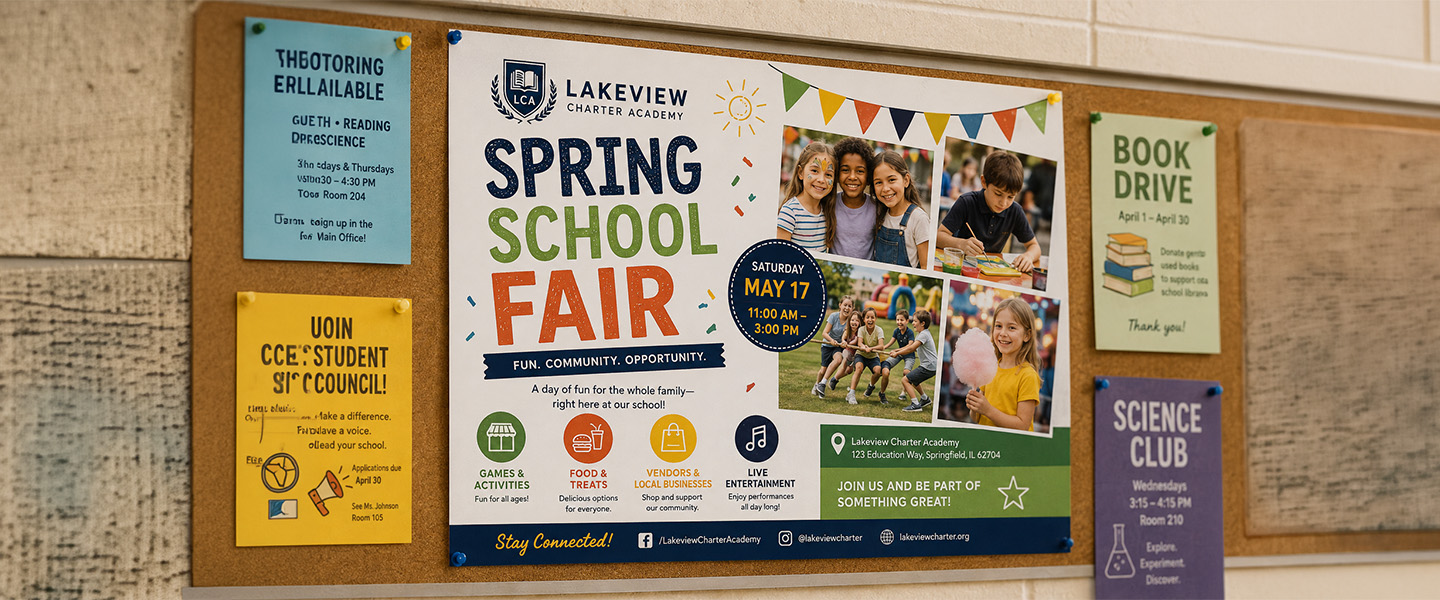
Schools increasingly communicate digitally, but print and digital communication do not have to compete.
They can support each other.
Reaching Parents and Families
Families may receive a large number of emails, notifications, app messages, and other digital communications during the first weeks of school.
Important information can be overlooked.
A printed flyer sent home with a student or a poster displayed at the school entrance creates another opportunity for the message to be seen.
For important events, schools can use both.
Send the digital announcement and reinforce it with print.
Making Information Easy to Reference
Some information needs to remain useful for weeks or months.
Examples include:
- school calendars,
- important phone numbers,
- pickup information,
- event schedules,
- classroom expectations,
- and activity dates.
A printed copy can stay on a refrigerator, bulletin board, desk, or classroom wall instead of requiring families to search through old messages.
Creating a Welcoming Environment
Back-to-school communication is not only about rules and schedules.
The physical environment matters too.
Welcome posters, classroom signs, directional materials, and school displays can help students and families navigate unfamiliar spaces.
This can be particularly useful during orientation, open houses, and the first days of school.
Promoting School Events
A family may first learn about an event through an email.
Then they see a poster at pickup.
A flyer comes home later that week.
Finally, they notice a reminder shortly before the event.
Repeating important information across channels can keep an event visible without relying on one communication method.
Back-to-School Printing Checklist for Schools
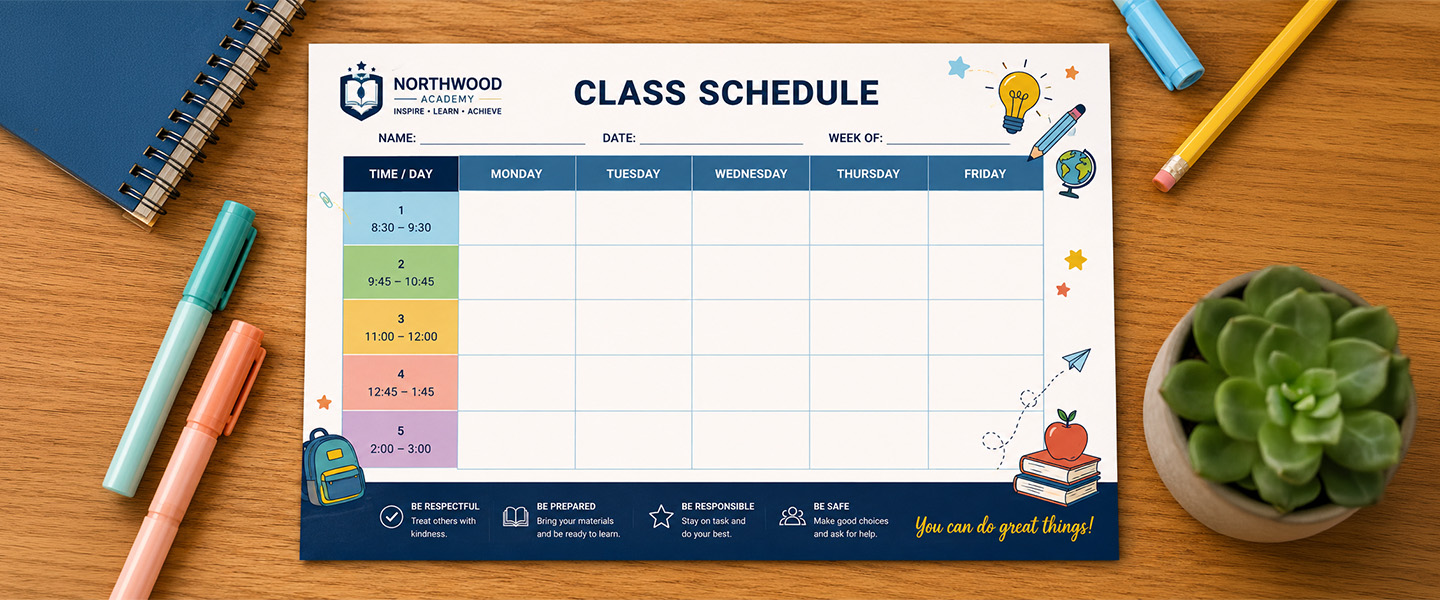
Administrators and school staff often have the broadest printing needs because their materials need to serve the entire school community.
School Welcome Materials
Before students return, consider preparing:
- Welcome Flyers
- orientation handouts
- School Calendars
- important contact information
- first-week schedules
- program information
- maps or navigation information
- transportation or pickup instructions
Keep these materials practical.
Parents should be able to scan them quickly and understand what they need to know or do.
School Signs and Posters
Posters can help communicate information in hallways, entrances, offices, cafeterias, libraries, and other high-traffic areas.
Consider printing:
- welcome posters,
- directional information,
- event announcements,
- important reminders,
- club or activity information,
- school-wide campaigns,
- and upcoming dates.
When creating school posters, remember that people may see them while walking.
Keep the headline large and the message focused.
For help choosing dimensions, see What Size Poster Actually Works Best for Storefronts, Events & Promotions?.
Parent Communication
Identify the information families will need during the first few weeks.
That might include:
- school policies,
- important dates,
- program information,
- staff contact information,
- event flyers,
- informational handouts,
- and school calendars.
Avoid putting every piece of information on one flyer.
If a topic requires detailed explanations across multiple pages, a Booklet may provide a more readable format.
School Events
The beginning of the year often includes:
- orientation,
- open houses,
- back-to-school nights,
- parent meetings,
- sports registration,
- club activities,
- and community events.
Depending on the event, useful print materials may include:
Create the core event design first, then adapt the same visual system across different materials.
Back-to-School Printing Checklist for Teachers
Teachers have a different challenge.
Their print materials often need to serve three groups at once:
students, families, and the teacher themselves.
Classroom Organization
Printed materials can help establish routines from the beginning of the year.
Consider:
- classroom labels,
- storage labels,
- classroom signs,
- desk or area labels,
- schedules,
- organizational materials,
- and routine reminders.
Custom Address Labels or Stickers may be adaptable for certain labeling and organizational needs, depending on the application.
Keep classroom organization visually consistent so students can quickly understand what different labels and signs mean.
Student and Parent Communication
The first week usually brings a lot of information.
Teachers may need:
- welcome letters,
- classroom expectations,
- important information sheets,
- contact information,
- supply reminders,
- schedules,
- parent handouts,
- and upcoming classroom dates.
A simple Flyer can work for concise information, while Notecards can provide a more personal format for shorter messages.
Classroom Displays
Classroom walls can reinforce information students use regularly.
Possible materials include:
- educational posters,
- classroom rules,
- motivational displays,
- schedules,
- subject-specific reference information,
- and bulletin board materials.
Prioritize readability over decoration.
A classroom poster should be useful from where students actually sit—not only look attractive when viewed up close.
Student Recognition
Small printed materials can also support recognition throughout the year.
Teachers can use adaptable print products such as Notecards, Postcards, or Stickers for:
- achievement messages,
- positive notes,
- student recognition,
- classroom milestones,
- and encouraging messages home.
The format can be simple.
What matters is making the recognition specific and meaningful.
Back-to-School Printing Checklist for PTOs and PTAs
PTOs and PTAs have a particularly important communication challenge at the beginning of the school year.
They need to introduce themselves to new families while simultaneously recruiting volunteers, promoting events, planning fundraisers, and explaining how parents can participate.
Print can help make those opportunities visible throughout the school community.
Membership and Volunteer Recruitment
Do not assume new families already understand what the organization does.
Create materials explaining:
- who the PTO or PTA is,
- what it supports,
- how families can participate,
- volunteer opportunities,
- upcoming meetings,
- and how to get in touch.
Useful formats can include:
Keep the first call to action simple.
Instead of listing ten different ways to participate, direct families toward one clear next step.
Fundraising
Fundraisers often need repeated promotion.
Possible print materials include:
- fundraiser flyers,
- Posters,
- promotional Postcards,
- reminder materials,
- event information,
- and thank-you Notecards.
Every fundraiser promotion should clearly explain:
What is happening?
When does it happen?
What does the fundraiser support?
How can families participate?
Avoid making parents search for essential information.
School Events
PTOs and PTAs may support or organize:
- back-to-school nights,
- family nights,
- school fairs,
- sports activities,
- community events,
- seasonal celebrations,
- teacher appreciation activities,
- and fundraising events.
Depending on the scale, promotional materials can include Flyers, Posters, Postcards, programs, and other event materials.
Start promoting major events early enough that families have time to plan.
Parent Communication
PTO communication continues beyond individual events.
Consider creating:
- event calendars,
- meeting reminders,
- volunteer information,
- fundraising updates,
- important announcements,
- and contact materials.
A consistent visual identity can make PTO communications easier to recognize among other materials families receive from the school.
Which Print Materials Should You Prioritize?
When the budget is limited, start with materials that communicate important information to the largest number of people.
| Priority | Print Material | Best For |
| Essential | Flyers | Important announcements, event details and parent communication |
| Essential | Posters | School-wide information and event promotion |
| Essential | Handouts | Policies, schedules, orientation and practical information |
| High | Postcards | Reminders, invitations and targeted communication |
| High | Calendars | Important dates and longer-term reference |
| Optional | Booklets | Detailed guides, programs and multi-page information |
| Optional | Stickers | Student engagement, labeling and recognition |
| Optional | Notecards | Personalized communication and thank-you messages |
“Optional” does not mean unnecessary.
It simply means those materials should usually come after the school’s core communication needs are covered.
How to Plan Back-to-School Printing on a Budget
School budgets rarely feel unlimited.
The goal should therefore be to print strategically rather than simply print less.
Identify Essential Materials First
Separate your list into:
Must print
Useful to print
Nice to have
Start with materials containing information students or families need to act on.
Combine Information When It Makes Sense
Several small handouts may sometimes be consolidated into one clearly organized piece.
For example, a welcome flyer could contain:
- important dates,
- contact information,
- first-week reminders,
- and a QR code directing families to detailed online resources.
However, do not combine so much information that the result becomes difficult to read.
Use Consistent Templates
Create reusable templates for:
- event flyers,
- posters,
- PTO announcements,
- classroom communication,
- and school reminders.
Then update the headline, image, date, and details rather than redesigning every material from scratch.
Order Practical Quantities
Estimate how materials will actually be distributed.
Ask:
- Does every student need one?
- Does every household need one?
- Will copies be available at the front office?
- Is this only for event attendees?
- Will extras be useful later?
This helps prevent both shortages and unnecessary excess.
Prioritize Reusable Materials
Avoid adding dates to materials that do not need them.
A general “Welcome to Our School” poster may be usable for multiple years.
A poster saying “Welcome to the 2026–2027 School Year” has a much shorter useful life.
Use dates where they provide value.
Plan Seasonal Events Early
Back-to-school is only the beginning.
Look ahead to:
- fall activities,
- sports,
- fundraisers,
- parent meetings,
- school fairs,
- teacher appreciation,
- and other recurring events.
Planning several campaigns together can make design and printing more organized.
Avoid Last-Minute Reprints
Before sending anything to print, confirm:
- dates,
- times,
- locations,
- names,
- contact details,
- QR codes,
- and URLs.
A two-minute final check can prevent an entire order from becoming unusable.
How to Keep School Print Materials Consistent
Schools produce communication from many different people.
Without basic guidelines, materials can quickly look unrelated.
Consistency makes communications easier to recognize.
Use School Colors Consistently
Start with the school’s established color palette.
That does not mean every flyer needs to look identical, but recognizable colors can visually connect different communications.
Use the Correct Logo
Keep an approved version of the school or organization logo available to teachers, administrators, and PTO leaders.
Avoid stretched, pixelated, or outdated versions.
Limit Fonts
Choose a small group of readable fonts and use them consistently.
Decorative fonts may work for occasional headlines, but practical information should remain easy to read.
Keep Messaging Clear
Use a recognizable hierarchy:
Headline
Essential information
Supporting details
Call to action
Do not make families search through several paragraphs to find the event date.
Check Contact Information
Use consistent:
- school names,
- department names,
- email addresses,
- phone numbers,
- websites,
- and social handles.
Connect Different Print Formats
A flyer, poster, and postcard for the same event should look like parts of the same campaign.
Use the same:
- headline,
- main image,
- colors,
- event details,
- and overall visual direction.
That repetition can make the event easier to recognize.
Common Back-to-School Printing Mistakes to Avoid
Waiting Until the Last Minute
Back-to-school preparation already involves multiple deadlines.
Leaving printing until the final days reduces the time available to review artwork, correct information, and respond to unexpected changes.
Printing Before Details Are Finalized
Do not print 1,000 flyers while the event time is still being discussed.
Confirm important details before submitting the order.
Using Text That’s Too Small
Trying to fit too much information often leads to tiny typography.
If you need to shrink the text dramatically, reconsider how much information belongs on the piece.
Overloading Flyers
A flyer is not a school handbook.
Focus on what someone needs to understand immediately.
For additional guidance, see What People Read First on a Flyer.
Forgetting Contact Information
Every piece should make the next step clear.
Depending on the message, include an appropriate:
- email,
- phone number,
- website,
- QR code,
- office,
- or contact person.
Using Inconsistent Branding
When every department creates materials independently, school communications can become difficult to recognize.
Simple shared templates can solve much of this problem.
Ignoring Distribution
A poster belongs somewhere people will see it.
A flyer needs a plan for how it reaches families.
A postcard needs a specific audience.
Decide how the material will be distributed before choosing the quantity and format.
Skipping Proofreading
School communications frequently contain information that is easy to get wrong:
- student or staff names,
- dates,
- times,
- room numbers,
- addresses,
- phone numbers,
- and URLs.
Proofread them separately rather than relying only on a general visual review.
A Simple Back-to-School Printing Timeline
Planning backward from the first day of school can make the process much easier.
4–6 Weeks Before
Identify major printing needs.
Create the list of:
- welcome materials,
- orientation information,
- calendars,
- PTO materials,
- event promotions,
- and classroom resources.
Confirm which materials require new designs.
2–4 Weeks Before
Finalize information and prepare artwork.
Confirm:
- dates,
- schedules,
- contact information,
- event details,
- and quantities.
Submit larger or more important print orders.
1–2 Weeks Before
Review remaining classroom and event needs.
Prepare smaller communication materials and organize how finished pieces will be distributed.
Final Week
Focus on placement and distribution rather than creating everything from scratch.
Install posters.
Organize handouts.
Prepare welcome packets.
Make sure teachers and volunteers have the materials they need.
Planning earlier does not eliminate every last-minute change.
It simply means one change does not disrupt the entire back-to-school printing plan.
Why Choose Overnight Prints for Back-to-School Printing?
Overnight Prints offers multiple custom print products that schools, teachers, PTOs, and PTAs can adapt for communication, events, organization, and community activities.
Options include:
With online design and artwork-upload options, organizations can create coordinated materials for different back-to-school needs while keeping school colors, logos, and messaging consistent.
Planning early also gives schools and organizations more time to review artwork and select the printing and delivery options appropriate for their deadlines.
Frequently Asked Questions
What should schools print before the new school year?
Priority materials may include welcome flyers, orientation information, calendars, schedules, important contact information, parent handouts, posters, event announcements, and other materials students and families need during the first weeks.
The exact list depends on the school and how information is distributed.
What print materials are useful for teachers?
Teachers can use printed classroom signs, labels, schedules, welcome information, parent handouts, educational posters, stickers, notecards, and other organizational or recognition materials.
Prioritize materials that will continue to be useful beyond the first few days.
What should PTOs print for back-to-school events?
PTOs and PTAs can consider flyers, posters, postcards, calendars, event materials, volunteer information, fundraiser promotions, and membership materials.
Each piece should include a clear next step for families who want to participate.
How can schools save money on back-to-school printing?
Start with essential communication materials, use reusable templates, combine related information when appropriate, order practical quantities, reuse undated materials, and confirm details before printing to avoid unnecessary reprints.
Are flyers or postcards better for school event reminders?
Flyers are useful when you need more room for event information or want to distribute materials broadly.
Postcards can work well for concise reminders, invitations, or messages with one primary call to action.
The better option depends on the amount of information and how the piece will be distributed.
What should be included on a back-to-school flyer?
Include a clear headline followed by the essential information.
Depending on the purpose, that may include:
- date,
- time,
- location,
- audience,
- what families need to bring or do,
- contact information,
- and a clear next step.
Avoid filling the flyer with information that can be placed on a website or detailed handout instead.
When should schools order back-to-school print materials?
Start planning several weeks before students return.
Major materials such as calendars, orientation information, welcome pieces, and large event promotions should be finalized early enough to allow time for proofing, printing, delivery, and distribution.
What are the best print materials for school fundraisers?
Flyers and posters can build awareness, while postcards can provide concise reminders or invitations.
The best combination depends on the fundraiser, audience, budget, and how families will receive the information.
Whatever format you choose, clearly explain what the fundraiser supports and how people can participate.
Conclusion
Back-to-school printing looks different depending on who is preparing.
Schools may need to prioritize communication, orientation, calendars, signs, and event materials.
Teachers can focus on classroom organization, family communication, displays, and student recognition.
PTOs and PTAs can use print to introduce their organization, recruit volunteers, promote fundraisers, and encourage families to participate in school events.
You do not need to print everything.
Start with the materials people genuinely need, organize them by priority, keep the design consistent, and confirm important details before placing an order.
Most importantly, plan early.
A simple printing checklist created several weeks before students return can make it easier to coordinate materials, reduce last-minute corrections, and keep communication consistent throughout the beginning of the school year.
Explore custom printing options from Overnight Prints for upcoming school activities, classroom communication, fundraisers, and back-to-school events.
Resources
- U.S. Department of Education – Federal education information and resources for schools, educators, students, and families.
- National PTA – Resources covering family engagement, PTA leadership, programs, advocacy, and school communities.
- National Education Association – Resources, professional information, and materials for educators and public schools.