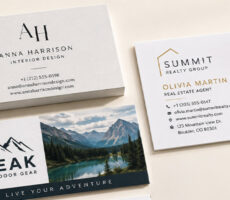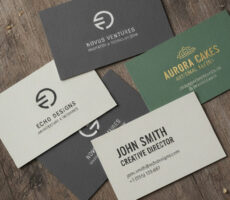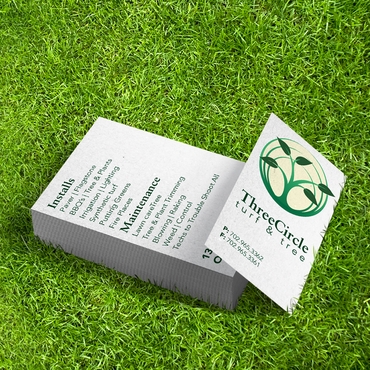
Choosing the right business card finish affects how your card looks, feels, and represents your brand. Choose matte business cards for a clean, professional look and easy readability; choose glossy business cards when you want photos and colors to stand out; and choose soft-touch business cards when you want a more premium, velvety feel.
For most professional and text-heavy designs, matte is the most versatile choice, while glossy works best for visual designs and soft-touch for brands that want to make a tactile impression.
Matte vs. Glossy vs. Soft-Touch Business Cards: Quick Comparison
| Finish | Best for | Appearance | Texture | Color vibrancy | Easy to write on? | Main drawback |
| Matte | Professional services, consultants and text-heavy designs | Clean and non-reflective | Smooth | Moderate | Usually yes | Colors may appear less vibrant |
| Glossy | Photography, real estate, retail and colorful designs | Bright and reflective | Slick | High | Difficult | Glare and fingerprints may be noticeable |
| Soft-touch | Luxury brands, agencies and premium services | Elegant and understated | Velvety | Moderate | Limited | Not ideal when notes must be added |
Quick answer: Choose matte for clarity and professionalism, glossy for vibrant visuals, or soft-touch for a premium tactile experience.
Most People Choose a Finish Based on Looks, That’s the Problem
When ordering business cards, most people focus on colors, layout, or logos.
The finish? It’s usually an afterthought.
But the finish is the first thing people feel.
It’s what decides if your card:
- Feels premium or cheap
- Looks clean or distracting
- Gets kept… or thrown away
If your goal is to make a strong first impression, the finish matters just as much as the design.
What This Guide Will Help You Decide
Instead of listing options, this guide will help you answer one question:
Which finish makes the most sense for your brand and how you use your cards?
We’ll break down when each finish works best, and when it doesn’t.
Matte Business Cards: Clean, Professional, Reliable
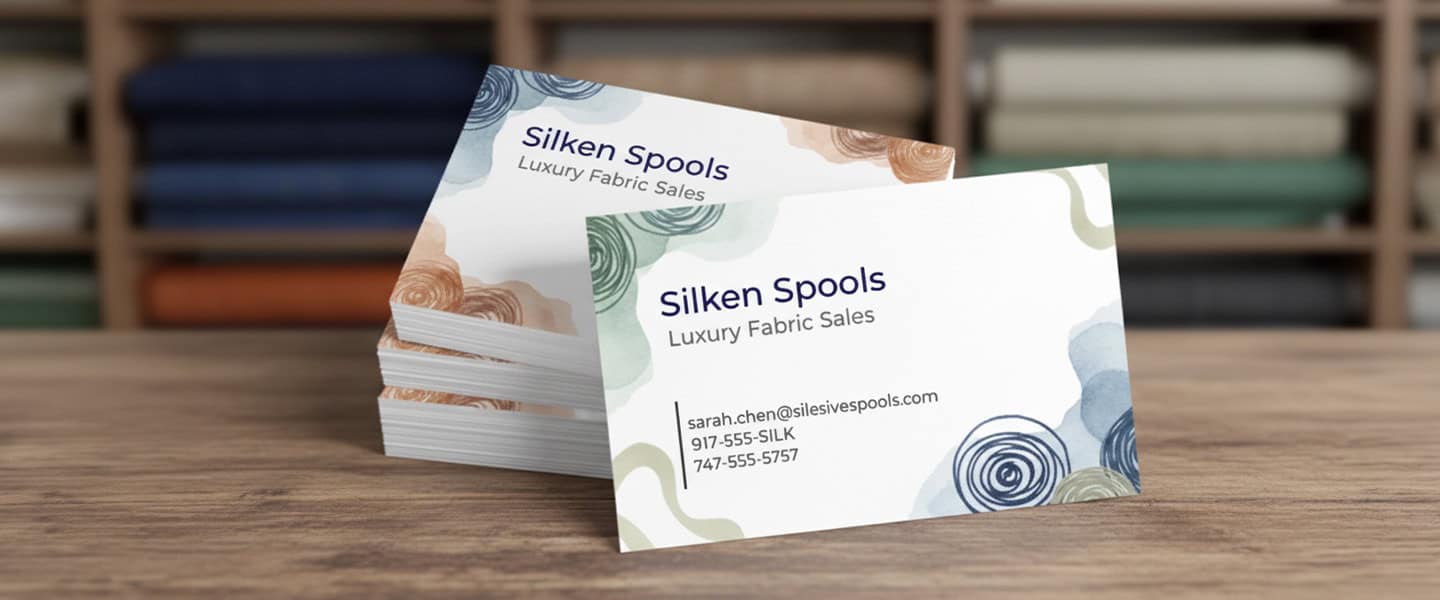
A matte finish is often the safest and most versatile choice.
It has a smooth, non-reflective surface that makes text easy to read and gives your card a clean, modern feel.
Business Cards with a matte finish work especially well if you want to come across as:
- Professional
- Minimal
- Easy to trust
This is why matte is common in industries like:
- Consulting
- Legal services
- Corporate roles
Another advantage: you can easily write on matte cards, which is useful for notes or appointments.
If your brand is more about clarity than flash, matte is a strong choice.
Matte Business Card Pros and Cons
Pros:
- Easy to read under different lighting
- Creates a clean, professional appearance
- Usually easier to write on
- Works well with minimalist and text-heavy designs
Cons:
- Colors may appear less vibrant than on glossy cards
- May feel understated for highly visual brands
Glossy Business Card Pros and Cons
Pros:
- Makes colors and photographs appear more vibrant
- Creates an attention-grabbing appearance
- Works well for image-focused designs
Cons:
- Can produce glare under bright lighting
- May show fingerprints
- More difficult to write on
Soft-Touch Business Card Pros and Cons
Pros:
- Creates a distinctive velvety texture
- Helps premium brands feel more memorable
- Offers an elegant, non-reflective appearance
Cons:
- Not ideal when people need to write on the card
- The tactile benefit cannot be fully communicated digitally
- May not be necessary for simple or frequently replaced cards
Glossy Business Cards: Bold, Bright, Attention-Grabbing
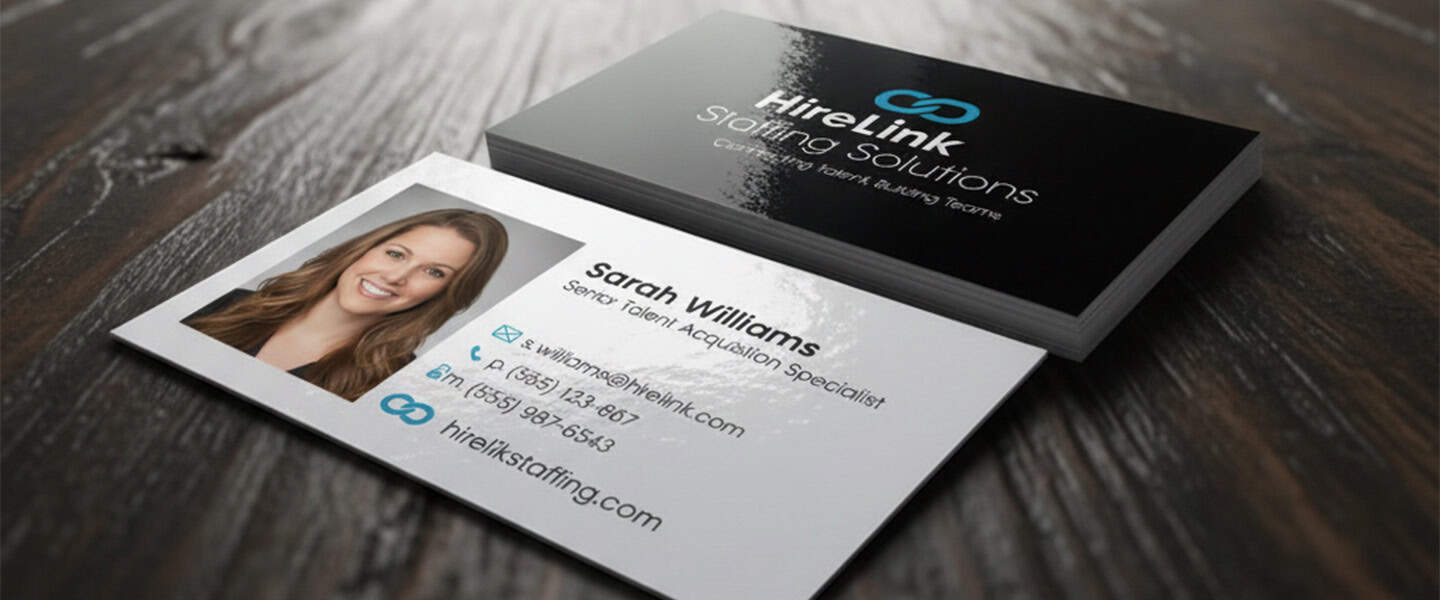
Glossy finishes reflect light, which makes colors appear more vibrant.
If your design includes:
- Photos
- Bright colors
- Strong visuals
Then glossy can make a noticeable difference.
Premium Business Cards with a glossy finish are often used by:
- Real estate agents
- Photographers
- Retail brands
Because they help visuals stand out.
But there’s a trade-off.
Glossy cards can:
- Be harder to read under certain lighting
- Feel less subtle
- Show fingerprints more easily
If your goal is to grab attention quickly, glossy works, but it’s not always the most refined option.
Soft-Touch Business Cards: Premium Without Being Loud
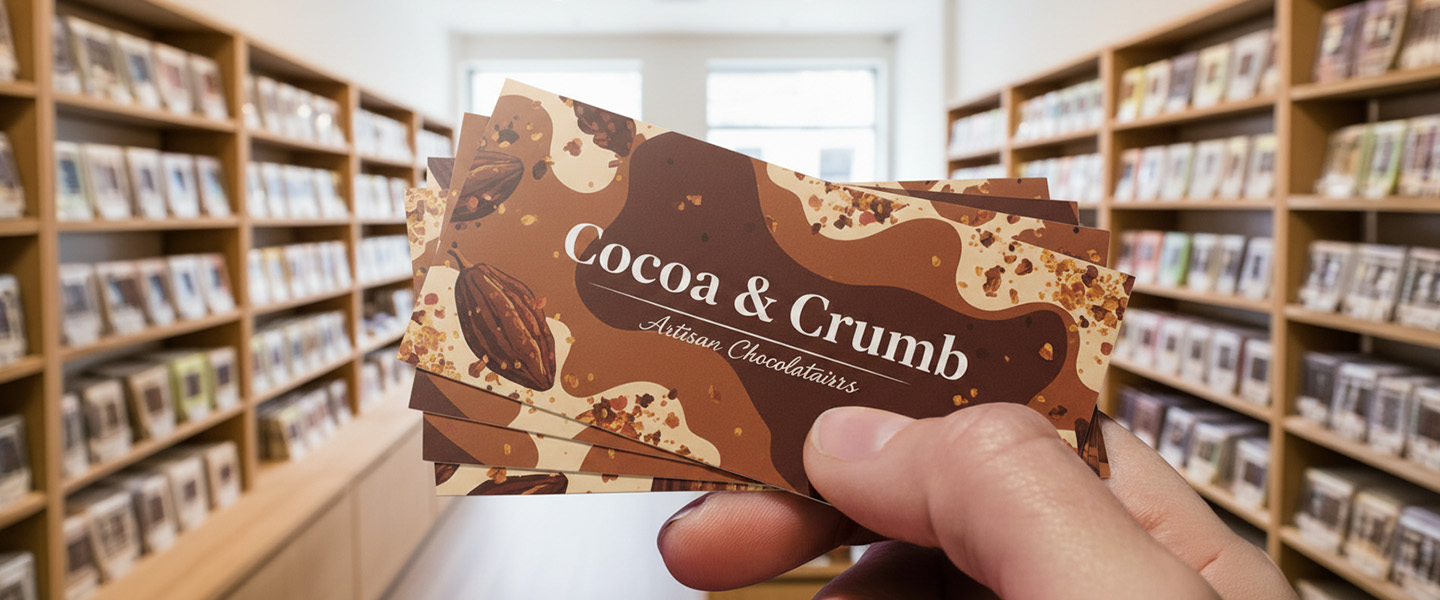
Soft-touch finishes are designed to feel different.
They have a velvety texture that immediately signals quality and intention.
When someone holds a soft-touch card, they notice it—even if the design is simple.
Premium Business Cards with soft-touch finishes are often chosen by:
- High-end brands
- Creative professionals
- Agencies
Because they create a quiet but strong impression.
They don’t rely on shine or color, they rely on feel.
If your brand is positioned as premium, this is one of the strongest choices.
What Each Finish Looks Like in Real Life
Seeing the difference can make the decision much easier.
Matte Business Card Example
Example image: minimalist consulting or legal business card.
Notice how the text remains easy to read from every angle, with no glare or reflections.
Glossy Business Card Example
Example image: real estate or photography card with vibrant colors.
The glossy coating makes colors pop and creates a more attention-grabbing appearance.
Soft-Touch Business Card Example
Example image: luxury brand or agency card.
Soft-touch cards stand out because of how they feel. The velvety texture creates a premium experience the moment someone picks up the card.
Which Business Card Finish Should You Choose?
Choose matte if your card contains substantial text, needs to be easy to read, or represents a professional and understated brand.
Choose glossy if your design relies on photographs, bright colors or visual impact.
Choose soft-touch if tactile quality and premium brand perception are more important than shine or color intensity.
If you are still unsure, matte is generally the most versatile starting point because it balances readability, professionalism and usability.
Matte vs Glossy Business Cards: What’s the Difference?
This is one of the most common questions — and for good reason.
Both finishes can look great, but they behave very differently.
Matte business cards:
- No shine → easier to read
- More subtle and professional
- Easier to write on
Glossy business cards:
- Reflect light → colors look brighter
- Better for images and bold designs
- Harder to read under glare
Simple rule:
- Matte = clarity and trust
- Glossy = attention and visuals
Soft-Touch vs. Matte Business Cards: What’s the Difference?
Matte and soft-touch business cards both have a non-reflective appearance, but they feel noticeably different.
Matte business cards have a smooth, clean surface that prioritizes readability and practicality. They’re a strong choice for consultants, corporate professionals, legal services and other businesses that want a polished but understated card.
Soft-touch business cards have a velvety texture that feels softer and more premium in the hand. They’re better suited to luxury brands, creative agencies and businesses where the tactile experience is part of the impression.
The simplest way to choose:
- Choose matte for professionalism, readability and everyday versatility.
- Choose soft-touch for a more luxurious and memorable tactile experience.
If you’re deciding between the two, think about what matters more: practicality and clarity with matte, or texture and premium feel with soft-touch.
What People Often Overlook
A business card isn’t just something you hand out.
It’s something people experience.
And that experience is shaped by:
- Touch
- Light
- Texture
If your finish doesn’t align with your brand, it creates friction, even if the design looks good.
If you’re still refining your overall card strategy, this guide on How to Make Your Business Cards Stand Out (Even on a Budget) can help you think beyond just finishes.
Common Mistakes When Choosing a Business Card Finish
- Choosing glossy for text-heavy designs → hard to read
- Choosing matte when visuals need to stand out
- Ignoring how the card feels in hand
- Not matching finish to brand positioning
Fix: Always match finish to your goal (clarity, attention, or premium feel).
Frequently Asked Questions About Business Card Finishes
- Are matte or glossy business cards better?
Matte business cards are better for a clean, professional look, easy readability, and text-heavy designs. Glossy business cards are better for vibrant colors, photographs, and eye-catching graphics. The best choice depends on your brand and how you plan to use your cards.
- What is the difference between soft-touch and matte business cards?
Both matte and soft-touch business cards have a non-reflective appearance. Matte cards have a smooth, practical finish that works well for everyday networking, while soft-touch cards have a velvety texture that creates a more luxurious feel. Choose matte for versatility or soft-touch for a premium tactile impression.
- What is the best finish for business cards?
The best business card finish depends on your design and industry. Matte is a versatile choice for professional services, glossy works well for photography and colorful branding, and soft-touch is ideal for luxury brands or businesses looking for a distinctive texture.
- What are soft-touch business cards?
Soft-touch business cards have a special finish that gives the surface a smooth, velvety feel. Unlike glossy cards, they have a non-reflective appearance. They are often used by luxury brands, creative agencies, and professionals who want their business cards to feel more premium.
- Can you write on matte business cards?
Matte business cards are generally easier to write on than glossy or soft-touch cards. They are a practical option for businesses that need to add appointment times, personal notes, or other handwritten information. Writing performance can vary depending on the specific coating and pen.
- Do glossy business cards look more professional than matte?
Not necessarily. Glossy business cards can create a bold, polished appearance, especially when the design includes photographs or bright colors. Matte cards offer a more understated, professional look and are often easier to read under different lighting conditions.
- Which business card finish is best for real estate agents?
Glossy business cards can work well for real estate agents who use property photos and colorful branding. Matte cards are a good option for agents who prefer a clean, professional design with clear contact information. Soft-touch finishes can also work for luxury real estate branding.
Explore business card finishes and find the one that fits your brand, your design, and the impression you want to leave.