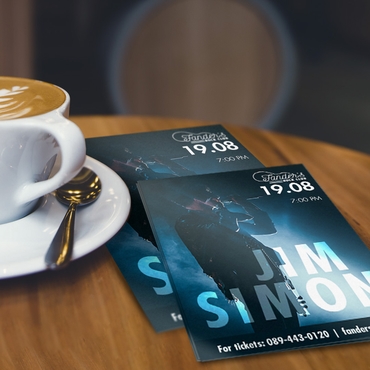
Print advertising is paid or promotional messaging delivered through physical printed media, such as newspapers, magazines, flyers, postcards, posters, brochures, and direct mail, to reach an audience and encourage awareness or action.
You probably encounter print advertising more often than you realize.
A postcard from a local dentist arrives in your mailbox.
A restaurant flyer announces its grand opening.
A poster promotes a concert happening next month.
A real estate agent sends a card showing recently sold homes in your neighborhood.
A magazine includes a full-page ad for a new car.
They’re different formats, but the basic idea is the same:
Put a physical message where the intended audience can see it.
What happens after that depends on the ad.
Some print ads are designed to make a brand recognizable.
Others want you to visit a store, attend an event, scan a QR code, use an offer, make an appointment, or buy something.
So how does print advertising actually work—and when does it make sense?
First: What Counts as Print Advertising?

Print advertising is broader than newspaper and magazine ads.
It can include advertising that appears inside an established publication as well as promotional pieces a business prints and distributes itself.
Common examples include:
Newspaper ads
Ads placed in local, regional, or national newspapers.
Magazine ads
Full-page, half-page, or smaller placements inside consumer or trade publications.
Postcards and direct mail
Promotional pieces mailed directly to households or customers.
Flyers
Single-sheet advertisements distributed in stores, at events, through local organizations, or in other permitted locations.
Posters
Larger-format advertisements designed to attract attention in physical spaces.
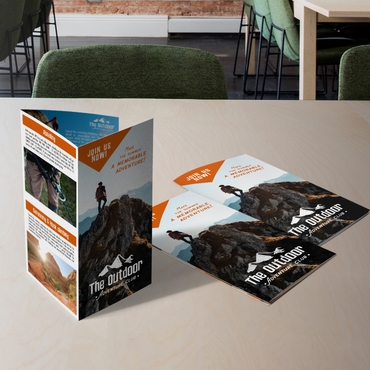
Brochures
Folded pieces that combine promotional messaging with more detailed information.
Catalogs
Multi-page printed materials showcasing multiple products.
Inserts
Printed promotions placed inside publications, packages, statements, or other materials.
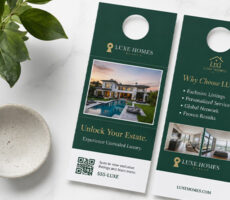
Door hangers
Advertising delivered directly to homes or businesses.
Some of these formats overlap with broader print marketing and marketing collateral.
The distinction isn’t always rigid.
A brochure sitting in your office may function as marketing collateral. The same brochure distributed as part of a customer-acquisition campaign is also supporting advertising.
What matters most is the job the printed piece is doing.
So, How Does Print Advertising Work?
Imagine a neighborhood bakery opening its second location.
It wants people within a few miles to know about the opening.
Here’s how a simple print advertising campaign might work.
The Audience
People living near the new bakery.
The Message
NOW OPEN ON MAIN STREET
Fresh bread, pastries, coffee, and breakfast seven days a week.
The Format
A postcard.
The Distribution
Mailed to households around the new location.
The Action
Bring this card for a free pastry with any coffee purchase.
The Measurement
The bakery tracks how many customers redeem the postcard offer.
That’s print advertising in practice.
The business isn’t simply “printing postcards.”
It’s connecting:
Audience → message → format → distribution → response
A beautiful postcard with no distribution strategy isn’t much of an advertising campaign.
Neither is a perfectly targeted mailing with a message nobody understands.
All of the pieces need to work together.
The First Challenge: Getting Noticed
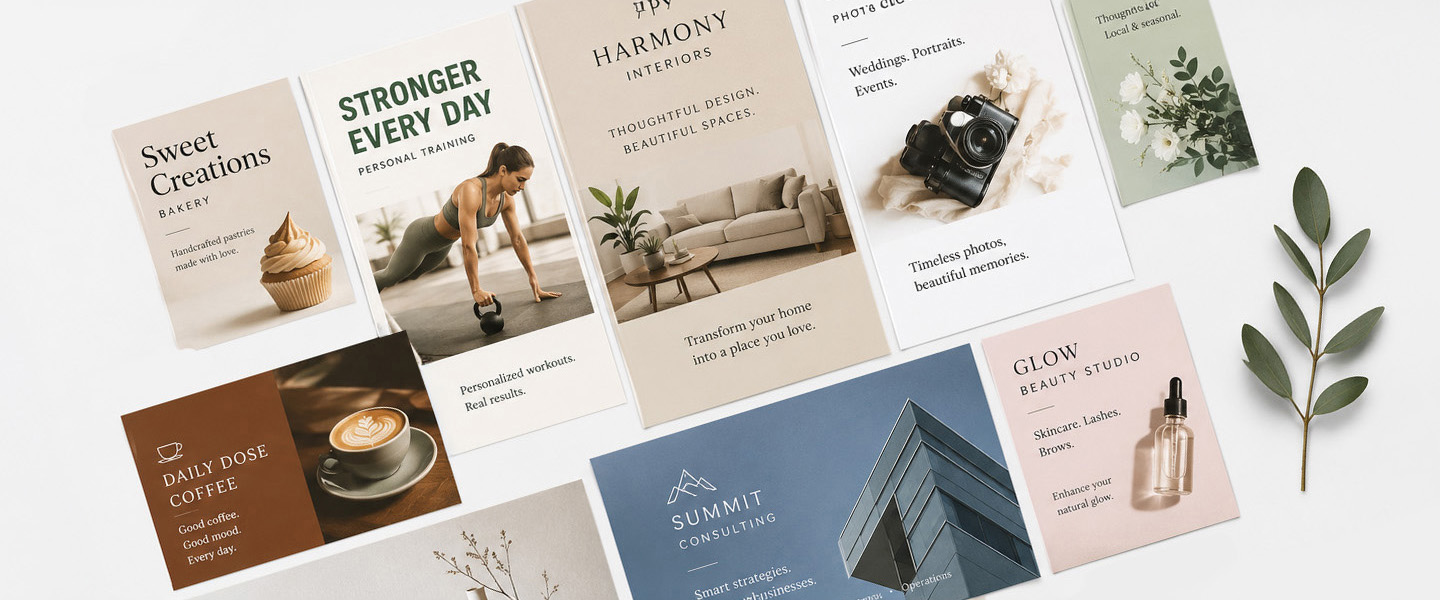
Print advertising competes for attention just like digital advertising does.
The difference is the environment.
A social ad appears between other pieces of content on a screen.
A postcard may compete with other mail.
A poster competes with everything else in the physical environment.
A flyer handed to someone has only a moment to establish relevance.
That means the first question your print ad needs to answer is:
Why should I pay attention to this?
Consider these two flyer headlines:
WELCOME TO ABC LANDSCAPING SERVICES
and
GET YOUR YARD READY FOR SPRING
The first identifies the company.
The second immediately tells the reader why the message might matter.
Your logo can establish who you are.
The headline should give someone a reason to continue.
The Second Challenge: Making the Message Clear
Once you have someone’s attention, don’t make them solve a puzzle.
A strong print advertisement should quickly communicate:
What is this?
Why does it matter to me?
What should I do next?
For example:
NEED MORE ROOM?
Secure storage units now available five minutes from downtown.
Reserve your unit today.
That’s much clearer than trying to explain every storage size, company value, security feature, price, policy, and service on the same flyer.
Print space is limited.
Use that limitation to prioritize.
Print Advertising Examples You See in Everyday Life
The easiest way to understand print advertising is to look at where different formats appear.
The Postcard in Your Mailbox
You receive:
JUST LISTED IN YOUR NEIGHBORHOOD
A local real estate agent includes a property photo, basic details, contact information, and a QR code.
This format works because the message can be geographically relevant.
The postcard doesn’t need to explain everything about the agent.
It needs to create enough interest for the recipient to take the next step.
Businesses can use custom postcards for local promotions, announcements, customer reactivation, events, and direct-mail campaigns.
If you’re writing the message yourself, see our guide to how to write a postcard.
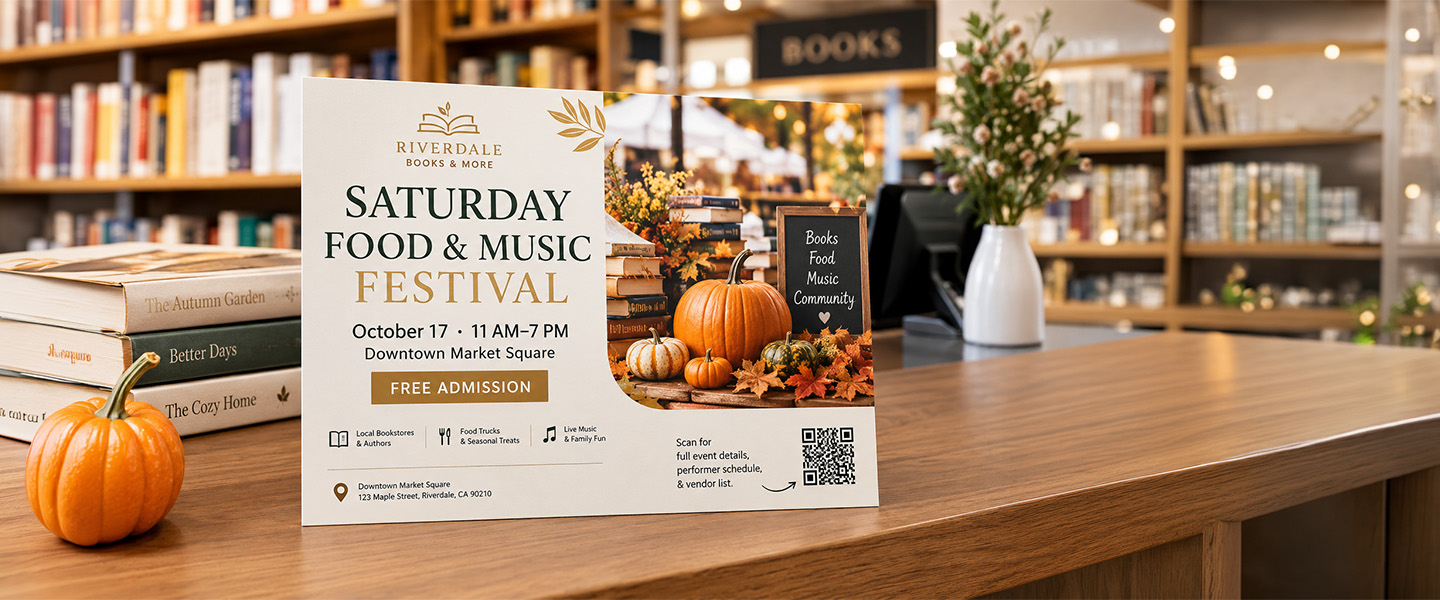
The Flyer at a Local Business
You see:
SATURDAY FOOD & MUSIC FESTIVAL
October 17 · 11 AM–7 PM
Downtown Market Square
FREE ADMISSION
This is a different advertising situation.
The person is already in a physical location, so the flyer needs to communicate quickly enough to earn a second look.
The most important information should dominate the hierarchy:
What?
When?
Where?
Why go?
Custom flyers work well for events, local promotions, announcements, openings, and other messages that benefit from quick distribution.
Our guide to what people read first on flyers explains how visual hierarchy affects what gets noticed.
The Poster You See From Across the Room
A poster has a different challenge.
People may see it from several feet away.
That means:
FALL CONCERT SERIES
may need to be much larger than:
Tickets available at example.com
A poster shouldn’t simply be a flyer enlarged to a bigger size.
Viewing distance changes the design.
The headline, imagery, and most important information need to work before someone gets close enough to read the details.
The Brochure You Pick Up
A brochure usually gets more attention than a poster because the reader has actively picked it up.
That gives you room to explain more.
Imagine a tourism brochure.
The cover creates interest.
Inside, the reader finds:
- Things to do
- Places to eat
- Map
- Itinerary
- Local tips
- Booking information
The brochure is still promotional, but it earns attention by being useful.
Our travel brochure design guide shows how this balance works for tourism materials.
For businesses that need to explain several services or products, custom brochures provide more space than a flyer or postcard.
The Ad Inside a Magazine
Magazine advertising works differently again