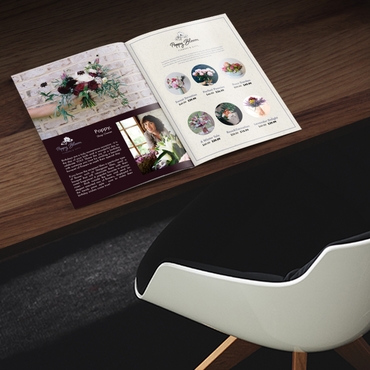
Marketing collateral is the collection of print and digital materials a business uses to communicate its brand, explain its products or services, support marketing campaigns, and help customers take the next step.
Business cards are marketing collateral.
So are brochures, flyers, postcards, sales sheets, emails, landing pages, presentations, and product guides.
But that doesn’t mean your business needs all of them.
A local plumber probably doesn’t need the same materials as a real estate agent. A restaurant has different priorities than a B2B consulting company. And a new business with a limited budget shouldn’t order ten different print products simply because they appear on a generic marketing checklist.
The better question isn’t:
“What marketing collateral exists?”
It’s:
“What does my customer need from me, and which marketing material delivers it best?”
Let’s start there.
What Is Marketing Collateral?
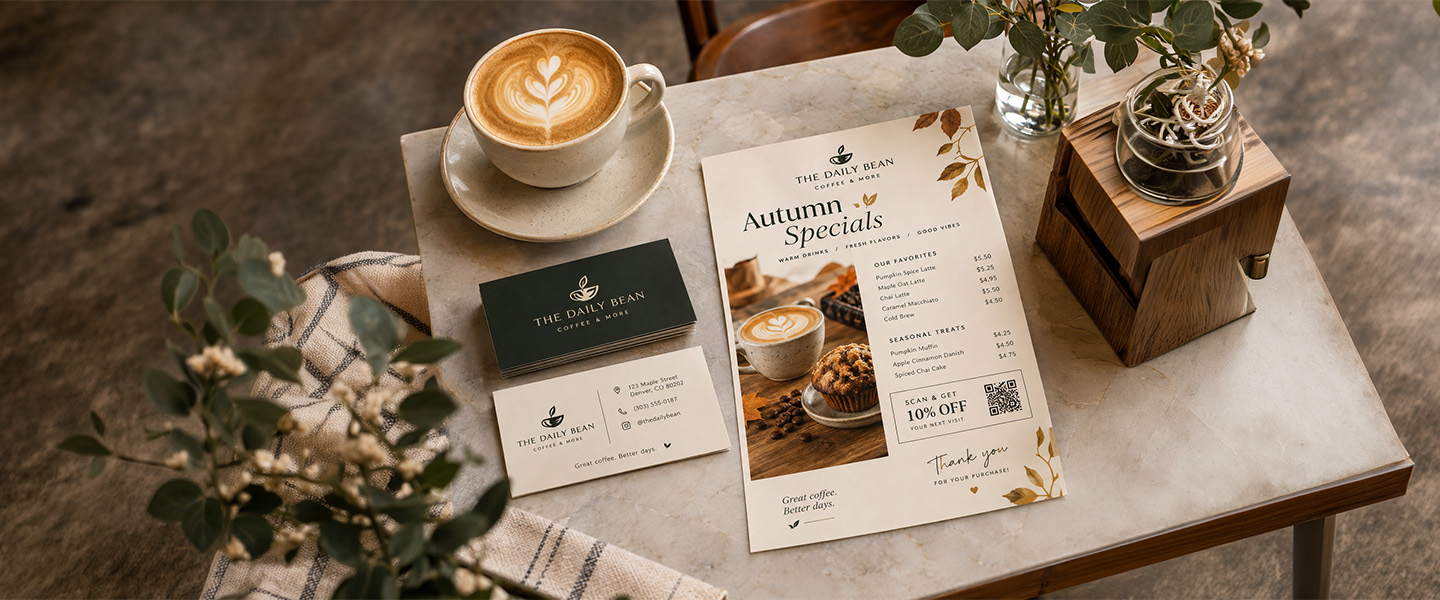
Marketing collateral refers to the materials a company creates to support its marketing, branding, sales, and customer communication.
These materials can be printed or digital.
Print marketing collateral includes things like:
- Business cards
- Flyers
- Brochures
- Postcards
- Booklets
- Presentation folders
- Rack cards
- Posters
- Stickers
- Letterhead
Digital marketing collateral can include:
- Landing pages
- Emails
- Digital brochures
- Case studies
- Videos
- Social media graphics
- Presentations
- Downloadable guides
Mailchimp defines marketing collateral as print or digital materials that support and extend a primary advertising campaign.
That distinction matters because collateral isn’t necessarily the campaign itself.
Think about a trade show.
Your booth may attract attention, but your business card gives someone your contact information.
Your brochure explains your services.
Your presentation folder organizes materials for a serious prospect.
Your follow-up email continues the conversation afterward.
Different pieces have different jobs.
What Is the Purpose of Marketing Collateral?
Marketing collateral helps customers get the information they need as they move from discovering a business to deciding whether to buy.
A piece of collateral might help someone:
Notice you.
Understand what you sell.
Compare their options.
Remember your business.
Contact you.
Make a purchase.
Come back later.
That’s why the same marketing material isn’t right for every situation.
A flyer is useful when you need to communicate something quickly.
A brochure makes more sense when customers need more information.
A business card helps someone keep your contact details.
A postcard can put a promotion directly in front of a particular audience.
The format should follow the purpose.
Marketing Collateral Examples
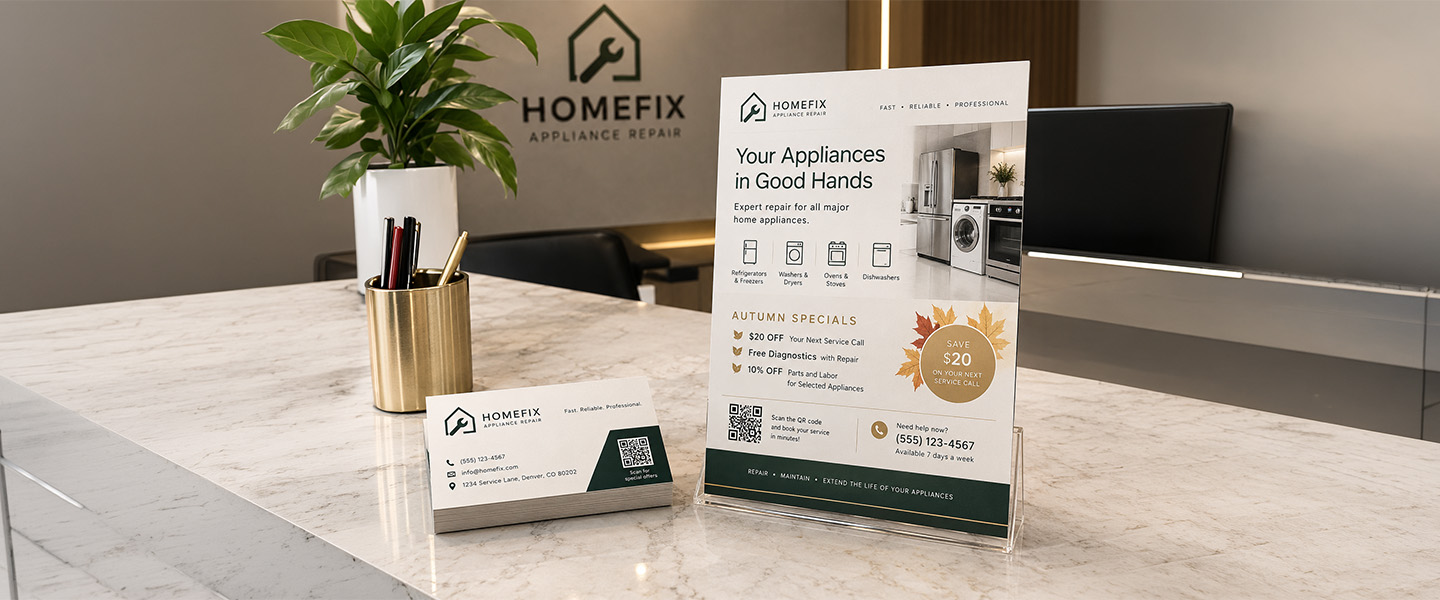
Here’s a quick overview of common marketing collateral and what each one is best suited for.
| Marketing Collateral | Best For | Example |
| Business cards | Networking and contact sharing | Giving your information after a meeting |
| Flyers | Fast promotion | Advertising an event or offer |
| Postcards | Direct mail and promotions | Reaching customers in a local area |
| Brochures | Explaining products or services | Giving prospects detailed information |
| Booklets | Longer educational content | Product guides and programs |
| Rack cards | Takeaway information | Hotels, tourism, service counters |
| Presentation folders | Organizing sales materials | Client meetings and proposals |
| Posters | Visibility | Events, promotions and in-store messaging |
| Stickers | Branding and packaging | Adding branding to products or orders |
| Letterhead | Professional correspondence | Proposals and formal letters |
| Emails | Follow-up and retention | Promotions and customer communication |
| Landing pages | Conversion | Campaign-specific offers |
| Case studies | Building credibility | Showing how you helped a customer |
| Presentations | Sales conversations | Pitches and meetings |
| Videos | Demonstration | Showing how a product works |
You probably don’t need everything in this table.
Let’s narrow it down.
What Marketing Collateral Does a Small Business Actually Need?
Most small businesses should start with a small core set of marketing materials based on how they find, communicate with, and sell to customers.
You can add more as a real need appears.
For many businesses, that core set could include the following.
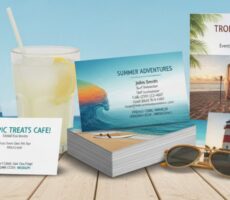
1. Business Cards
If you meet potential customers, partners, vendors, or referral sources face-to-face, business cards remain one of the simplest pieces of marketing collateral to carry.
A good business card should make it easy to answer:
Who are you?
What business do you represent?
What do you do?
How can I contact you?
Depending on the business, that could mean including:
- Name
- Job title
- Company name
- Phone number
- Website
- Logo
- QR code
Don’t treat the card like a miniature brochure.
You don’t need to put every service you offer on a 3.5 × 2-inch piece of paper.
If you’re deciding what information deserves the limited space, see our guide to what to put on a business card.
You can also create custom business cards that match the rest of your brand materials.
Who Needs Business Cards Most?
They are particularly useful for:
- Consultants
- Contractors
- Realtors
- Sales professionals
- Freelancers
- Photographers
- Designers
- Local service businesses
- B2B companies
- Anyone who networks in person
If almost every customer interaction happens online, they may be less important.
That’s the point of choosing collateral strategically: don’t print something simply because businesses traditionally have it.
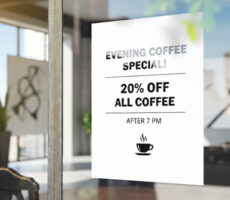
2. Flyers
Flyers work well when you need to communicate one main message quickly.
That might be:
- Grand opening
- Event
- New service
- Promotion
- Seasonal offer
- Class
- Fundraiser
- Local announcement
The strongest flyer usually has a clear hierarchy:
Headline
↓
Main benefit or information
↓
Important details
↓
Call to action
If you’re promoting a local event, for example, the reader shouldn’t have to hunt for the date.
If you’re promoting an offer, the offer shouldn’t be hidden in paragraph four.
You can use custom flyers for handouts, counters, community boards, events, and other local distribution.
Before designing yours, our guide to what people read first on flyers explains how people visually scan a flyer and which elements should get priority.
3. Postcards
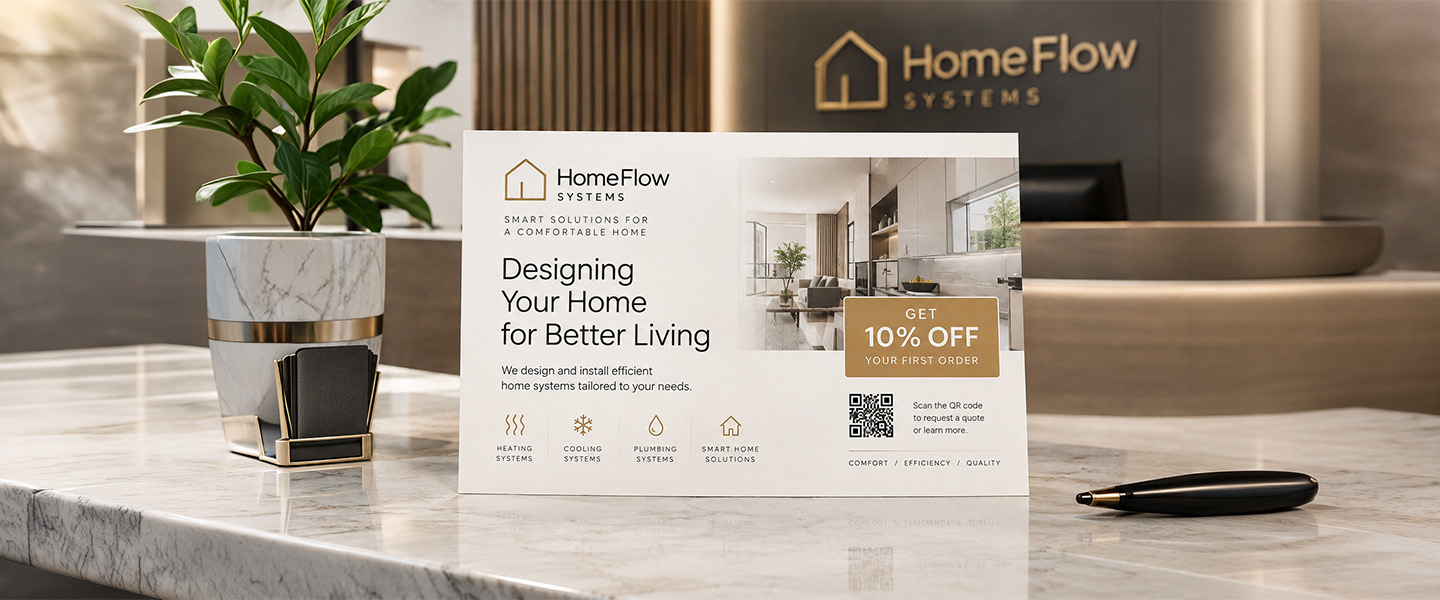
Postcards are useful when you want your message to reach people rather than waiting for people to find it.
They can be used for:
- Direct mail
- New customer acquisition
- Customer reactivation
- Promotions
- Announcements
- Grand openings
- Appointment reminders
- Event invitations
- Thank-you messages
Unlike an envelope, a postcard can display the primary message immediately.
That makes the headline and design especially important.
For example:
WE’RE NOW OPEN
is much clearer than:
EXCITING NEWS FROM ABC COMPANY
A custom postcard can also connect print and digital marketing through a QR code or short URL.
If you’re building a postcard campaign, see our guide to postcard marketing and what works.
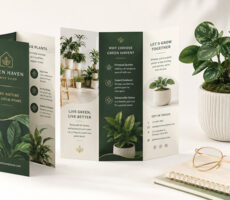
4. Brochures
Choose a brochure when customers need more information than a flyer or postcard can comfortably provide.
Brochures are useful for explaining:
- Services
- Product lines
- Packages
- Processes
- Pricing options
- Company information
- Locations
- Benefits
- Frequently asked questions
For example, a landscaping company could use a brochure to explain residential services, commercial services, maintenance packages, and how to request an estimate.
A financial services company might need more room to explain different services and what customers can expect.
The mistake is treating a brochure like a storage place for every sentence your company has ever written.
It still needs hierarchy.
You can create custom brochures when customers need a physical piece they can take with them and review later.
For more help deciding what belongs inside, see our guide to effective marketing brochure design.
5. A Strong Website or Landing Page
Marketing collateral isn’t only printed.
Your website is often one of the first places someone goes after encountering your business elsewhere.
If a potential customer receives your business card and visits the URL, the website should continue the same story.
At minimum, customers should be able to understand:
- What you do
- Who it’s for
- What makes you different
- What they should do next
- How to contact or buy from you
For individual campaigns, a dedicated landing page can be more effective than sending everyone to the homepage.
Imagine a postcard advertising:
20% OFF YOUR FIRST CLEANING
The QR code should ideally take the customer directly to information about that offer—not force them to search the website for it.
Print can create the first interaction.
Digital collateral can continue it.
6. Customer Proof
Not every piece of collateral should come from the business talking about itself.
Customers often want evidence.
Depending on your business, useful proof might include:
- Testimonials
- Case studies
- Before-and-after examples
- Project portfolios
- Customer results
- Product reviews
A B2B company might create a full case study.
A contractor might use before-and-after project photos.
A photographer might create a portfolio.
A restaurant might highlight recognizable customer reviews.
The format changes, but the job is the same:
Help potential customers feel more confident about choosing you.
7. A Sales or Service Sheet
Sometimes you don’t need an entire brochure.
You need one page that clearly explains one product, service, package, or offer.
A sales sheet can include:
- Product or service name
- Main benefit
- Key features
- Pricing or package information
- Images
- Specifications
- Contact information
- Call to action
This is particularly useful for B2B businesses and service companies where prospects frequently ask the same questions.
Instead of rebuilding the explanation every time, give your sales team a consistent resource.
8. Presentation Folders
Presentation folders aren’t necessary for every company.
But they can be useful when customers receive several physical documents at once.
Think:
- Proposals
- Contracts
- Estimates
- Property information
- Sales sheets
- Brochures
- Pricing
- Forms
- Business cards
Rather than handing someone a loose stack of paper, a custom presentation folder keeps the materials together and reinforces the brand.
They can be particularly useful for:
- Real estate
- Financial services
- Legal services
- Contractors
- Healthcare
- Education
- B2B sales
- Client presentations
If you rarely hand customers multiple documents, however, you probably don’t need them.
9. Branded Packaging Materials
For product-based businesses, marketing doesn’t stop when the sale happens.
The package itself is another customer touchpoint.
Your collateral might include:
- Thank-you card
- Product instructions
- Care card
- Referral card
- Loyalty card
- Next-order offer
- Sticker
- QR code card
This is especially useful for e-commerce businesses because customers don’t experience a physical store.
The package may be one of the few physical interactions they have with the brand.
Our guide to packaging insert ideas for small businesses includes ways to use that moment for customer education, retention, referrals, and repeat purchases.
You can also use custom stickers to add branding to packaging without redesigning the entire box or mailer.
10. Customer Retention Materials
Marketing collateral isn’t only about finding new customers.
Some materials should help you keep the customers you already have.
Examples include:
- Thank-you cards
- Loyalty cards
- Referral cards
- Appointment reminders
- Reorder reminders
- Customer postcards
- Email campaigns
- Package inserts
- Birthday offers
For example, a salon might give customers a referral card after an appointment.
A dental office might send appointment reminders.
An online retailer could include a next-order reward inside the package.
A local service company could send previous customers a seasonal reminder.
If repeat business matters to you, see our guide to customer loyalty program ideas for small businesses.
Print vs. Digital Marketing Collateral
You don’t have to choose one or the other.
Print and digital collateral often work best when they support each other.
| Print Collateral | Digital Collateral |
| Business cards | Website |
| Flyers | Digital ads |
| Postcards | |
| Brochures | Digital brochures |
| Booklets | Downloadable guides |
| Presentation folders | Digital presentations |
| Posters | Social media graphics |
| Printed sales sheets | Landing pages |
| Thank-you cards | Customer emails |
Imagine meeting a prospect at an event.
You hand them a business card.
The card includes a QR code.
The QR code opens a landing page.
The landing page contains a case study.
The prospect submits an inquiry.
They receive a follow-up email.
That’s not five unrelated marketing materials.
It’s one customer journey supported by several pieces of collateral.
Adobe similarly recommends thinking about marketing materials as connected touchpoints rather than isolated assets.
Marketing Collateral vs. Sales Collateral: What’s the Difference?
The terms overlap, but they aren’t always identical.
Marketing collateral broadly supports marketing communication, brand awareness, promotion, education, and customer engagement.
Sales collateral is more specifically used to help sales teams and prospects during the sales process.
Sales collateral might include:
- Product sheets
- Case studies
- Pricing sheets
- Sales presentations
- Comparison sheets
- Product demonstrations
- Proposals
- Brochures
Mailchimp describes sales collateral as materials sales teams use to help inform customers and move prospects through the sales process.
In practice, the same piece can serve both purposes.
A brochure sitting in your lobby might be marketing collateral.
The same brochure handed to a qualified prospect during a sales meeting is also supporting the sales process.
Don’t get too caught up in the terminology.
Focus on what the material needs to accomplish.
How to Choose the Right Marketing Collateral
Before creating anything, ask these six questions.
1. Who Is the Audience?
“Customers” isn’t specific enough.
Are you trying to reach:
- New homeowners?
- Existing restaurant customers?
- Trade show attendees?
- Local parents?
- B2B decision-makers?
- Past clients?
- Wedding guests?
The audience changes the material.
A postcard campaign for homeowners and a sales presentation for corporate procurement teams shouldn’t look or sound the same.
2. What Does the Audience Need to Know?
Someone discovering your company for the first time may need a basic explanation.
Someone comparing providers may need detailed service information.
An existing customer may only need a reminder.
Match the amount of information to the situation.
3. What Do You Want Them to Do?
Every piece of collateral should have a job.
Maybe it’s:
Call for an estimate.
Visit the store.
Book an appointment.
Scan for pricing.
Attend the event.
Keep my contact information.
Order again.
If you don’t know what you want someone to do after seeing the material, you’re not ready to design it.
4. Where Will They See It?
Context matters.
A poster needs to communicate from a distance.
A business card is held in someone’s hand.
A rack card may sit in a display with 20 others.
A postcard has only seconds to earn attention in the mail.
A brochure may be read slowly during a buying decision.
Design for the real environment.
5. How Much Information Do You Need?
This can help you choose the format.
Very little information → Business card
One focused message → Flyer or postcard
Several sections → Brochure
Longer information → Booklet
Multiple separate documents → Presentation folder
Don’t choose the format first and then force the content into it.
6. Can You Measure the Result?
Whenever possible, connect the material to something measurable.
Use:
- QR codes
- Promotional codes
- Dedicated URLs
- Landing pages
- Unique phone numbers
- Referral codes
That can help you determine which collateral actually contributes to inquiries, visits, or sales.
Marketing Collateral by Business Type
Still not sure where to start?
Here’s a practical starting point.
| Business Type | Useful Marketing Collateral |
| Restaurant | Menus, flyers, postcards, loyalty cards |
| Real estate agent | Business cards, postcards, flyers, presentation folders |
| Contractor | Business cards, flyers, door hangers, postcards |
| Salon or spa | Business cards, referral cards, loyalty cards, postcards |
| Consultant | Business cards, brochures, sales sheets, presentation folders |
| Retail store | Flyers, postcards, stickers, loyalty materials |
| E-commerce business | Package inserts, postcards, stickers, thank-you cards |
| Nonprofit | Flyers, postcards, brochures, event materials |
| Event business | Flyers, posters, postcards, programs |
| B2B company | Business cards, brochures, sales sheets, presentation folders |
These aren’t mandatory shopping lists.
They’re starting points.
A restaurant that gets nearly all of its customers through walk-in traffic may prioritize menus and in-store materials.
A realtor who spends every week meeting people may prioritize business cards and property materials.
The right mix depends on how the business actually operates.
What Marketing Materials Should a New Business Create First?
If you’re starting from zero, don’t order everything.
Build your collateral in stages.
Start With Your Brand Basics
Before producing marketing materials, establish:
- Logo
- Brand colors
- Typography
- Basic messaging
- Contact information
- Website
Consistency becomes much easier once these decisions are made.
Adobe recommends establishing a recognizable brand identity and carrying it consistently across marketing assets.
Then Create Your Essential Customer Touchpoints
Ask:
Where will customers encounter us first?
If it’s networking:
Start with business cards.
If it’s local promotion:
Start with flyers or postcards.
If it’s a sales conversation:
Start with a sales sheet or brochure.
If it’s e-commerce:
Start with your website and packaging materials.
Add Collateral When There’s a Reason
You don’t need a booklet because another company has one.
Create a booklet when customers need more information than a brochure can comfortably provide.
You don’t need presentation folders because they look professional.
Create them when you’re regularly handing customers multiple documents.
Need should drive the format.
How to Keep Marketing Collateral Consistent
Your business card, brochure, flyer, postcard, and website don’t need to look identical.
They should look like they came from the same business.
Keep key brand elements consistent:
- Logo
- Colors
- Fonts
- Image style
- Tone of voice
- Core message
Adobe emphasizes cohesive marketing materials because customers encounter brands across multiple touchpoints rather than through a single asset.
Typography is an important part of that system.
For example, don’t use an elegant serif on your brochure, a playful handwritten font on your business card, and a futuristic sans serif on your flyer unless that variation is intentionally part of the brand.
Our guide to serif vs. sans serif fonts for print can help you choose typography based on readability and brand personality.
Common Marketing Collateral Mistakes
Creating more materials doesn’t automatically create better marketing.
Avoid these common problems.
Creating Everything at Once
You probably don’t need 15 pieces of collateral on day one.
Start with the formats closest to revenue and customer communication.
Designing Each Piece Separately
If every piece looks like it came from a different company, brand recognition becomes harder.
Create reusable visual rules.
Putting Too Much Information on Small Formats
A business card shouldn’t become a brochure.
A postcard shouldn’t become a booklet.
Let each format do what it’s good at.
Forgetting the Call to Action
What should the customer do after reading?
Make it clear.
Using the Same Message Everywhere
Consistency doesn’t mean copying the same paragraph onto every marketing asset.
Adapt the message to the context.
Printing Before Proofreading
Always check:
- Phone numbers
- Email addresses
- URLs
- QR codes
- Dates
- Prices
- Offers
- Spelling
Once something is printed, you can’t click “edit.”
Review our guide to preparing files for printing before submitting final artwork.
Build a Marketing Collateral Kit Around What Customers Actually Need
Your business doesn’t need every marketing material.
It needs the right materials at the right customer touchpoints.
Start with the situations that already happen.
Do you meet prospects in person?
A business card may be essential.
Do you promote events, offers, or local services?
Do customers need more information before making a decision?
A brochure may make more sense.
Do you hand prospects several documents during meetings?
A presentation folder can keep them organized.
And if customers need longer-form information, booklets give you considerably more room.
The goal isn’t to accumulate marketing collateral.
It’s to build a small system in which every piece has a purpose.
Start with the customer. Identify what they need next. Then choose the collateral that makes that next step easier.
Frequently Asked Questions About Marketing Collateral
What is marketing collateral?
Marketing collateral is the collection of print and digital materials a business uses to support marketing, branding, sales, and customer communication. Examples include business cards, flyers, postcards, brochures, landing pages, emails, presentations, and case studies.
What are examples of marketing collateral?
Common examples include business cards, brochures, flyers, postcards, booklets, presentation folders, sales sheets, posters, emails, landing pages, case studies, videos, and digital presentations.
What is print marketing collateral?
Print marketing collateral refers to physical marketing materials such as business cards, flyers, brochures, postcards, booklets, posters, presentation folders, rack cards, and other printed pieces used to communicate with customers.
What is digital marketing collateral?
Digital marketing collateral includes materials such as landing pages, emails, digital brochures, videos, case studies, presentations, social media assets, and downloadable guides.
What marketing collateral does a small business need?
It depends on how the business reaches and sells to customers. Common starting points include business cards for networking, flyers for local promotion, postcards for direct mail, brochures for detailed information, and digital materials such as a website and email.
What’s the difference between marketing collateral and marketing materials?
The terms are often used interchangeably. Marketing collateral generally refers to individual print or digital assets that support a company’s broader marketing strategy or campaign.
What’s the difference between marketing collateral and sales collateral?
Marketing collateral can support awareness, promotion, education, sales, and retention. Sales collateral is more specifically designed to help sales teams and prospects during the buying process. Some materials, such as brochures and case studies, can serve both purposes.
Why is marketing collateral important?
Marketing collateral gives customers information in formats suited to different stages and situations. It can help introduce a business, explain products or services, support sales conversations, reinforce branding, encourage action, and maintain customer relationships.
How do you create effective marketing collateral?
Start with the audience and objective. Choose a format that suits the amount of information and where customers will encounter it. Keep branding consistent, create clear hierarchy, include a relevant call to action, and track results when possible.
How many marketing materials does a small business need?
There is no fixed number. A small business should prioritize materials that solve an actual communication or sales need instead of creating every available format. Start with essential customer touchpoints and expand as the business needs additional collateral.